Peña's Return Reshapes Astros Lineup Math in AL West Chase
By Ty Whitney ·
Houston's offensive profile shifts measurably with its shortstop back in the order after a 10-day calf injury, tilting team total and lineup construction angles.
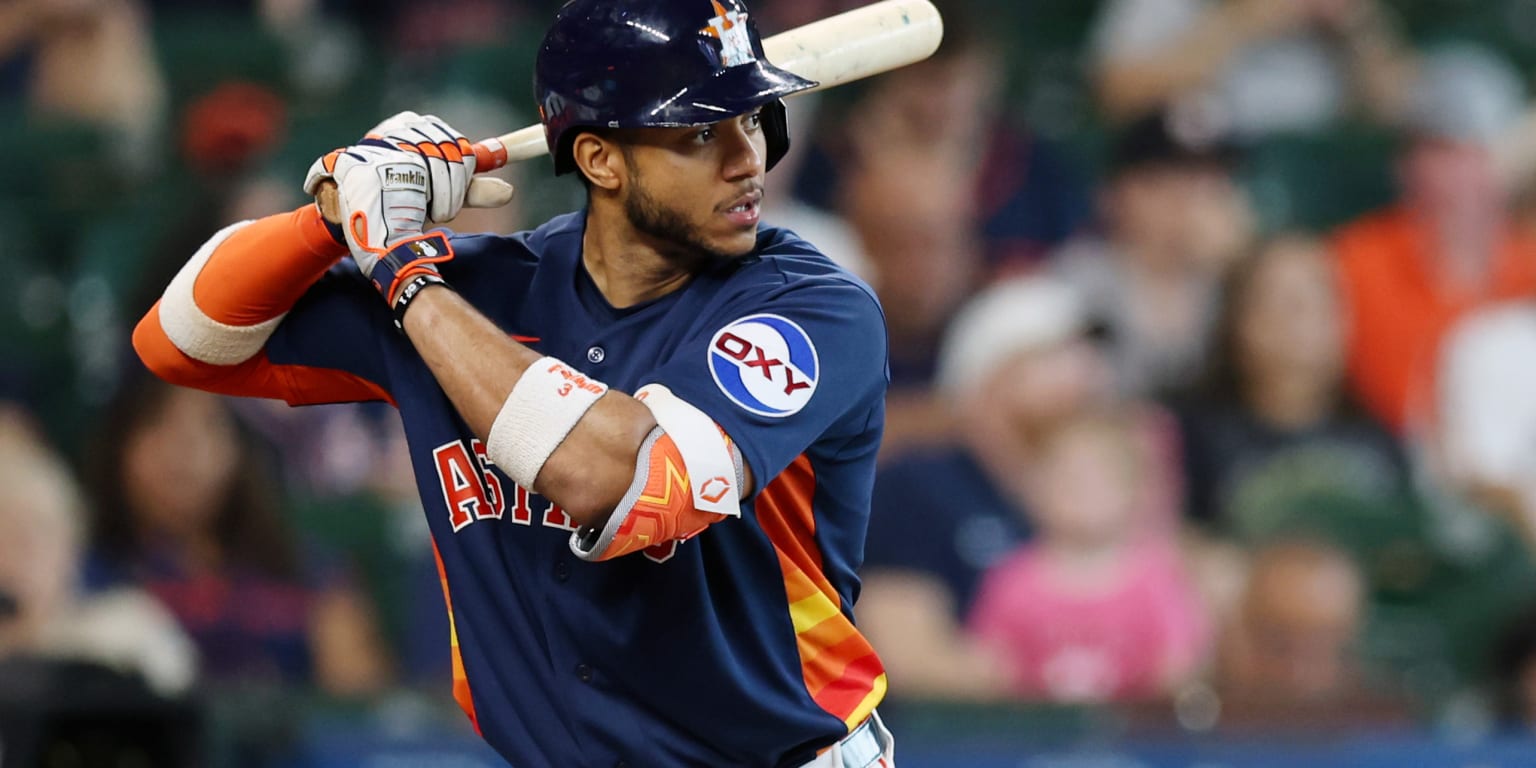
Jeremy Peña returned to the Astros lineup Friday against the Rangers, ending a 10-day injured list stint from a left calf strain suffered June 30. Manager Joe Espada reinstated him to the top of the order at Globe Life Field, signaling immediate confidence in the shortstop's availability for Houston's AL West push.
The raw context here matters for team-build analysis: the Astros are 26-22 with Peña in the lineup and 20-27 without him. That 6-game swing in record represents not statistical noise but a structural gap in offensive architecture. Peña's presence alone doesn't create eight extra wins—rather, his absence has forced the Astros to operate with a weaker middle-infield backbone and compressed run-production windows. When Peña plays, Houston gets a .307 hitter with genuine power (six homers since May 18 return from his first IL stint) occupying the leadoff slot. When he doesn't, the lineup loses both a table-setter and a secondary power source that changes how opposing pitchers construct their attack sequences.
The timing of his return matters as much as the return itself. Peña was performing at an elevated level before the strain forced him down: .381 with an .816 OPS over his final five games before the injury, and .319 with three homers and an .865 OPS throughout June. Those aren't outlier numbers inflated by a single hot series—they represent a player who had already corrected mid-season mechanical issues and was operating as a legitimate offensive engine. The calf injury interrupted that trajectory, but a 10-day absence for a strain isn't the kind of soft-tissue injury that typically leaves lingering movement restrictions or production drops. Peña should enter Friday's game closer to his June operating level than to a reduced-duty return.
For team total bettors, the Astros' offensive profile shifts upward with Peña back in the order. Houston's run-scoring output tends to follow his presence in the lineup—not because he single-handedly generates runs, but because his productivity in the leadoff spot unlocks deeper lineup efficiency. Against a Rangers rotation without elite strikeout rates, the Astros gain offensive elasticity. If Peña's recent hitting zone (the .307 post-May 18 mark across 48 games) holds true, Houston's team total should reflect a near-term bump. Books may have priced the Astros' pre-game total with Peña's absence baked in; early action on overs targeting 4.5+ could capture that reopening.
The organizational move to designate Braden Shewmake confirms Houston's confidence. Shewmake represented depth but not production; his removal from the 26-man roster signals that the Astros view Peña as healthy enough for regular duty and aren't reserving a backup infielder for precaution. That's the internal valuation signal that matters most: the front office is treating this as a clean return, not a managed ramp-up.