Peña's Hamstring Recurrence Deepens Astros' Middle-Infield Crisis
By Erik Schwartz ·
Houston's shortstop exits Monday's opener with a right hamstring injury just five weeks after returning from the same ailment, leaving the team with three infielders already sidelined.
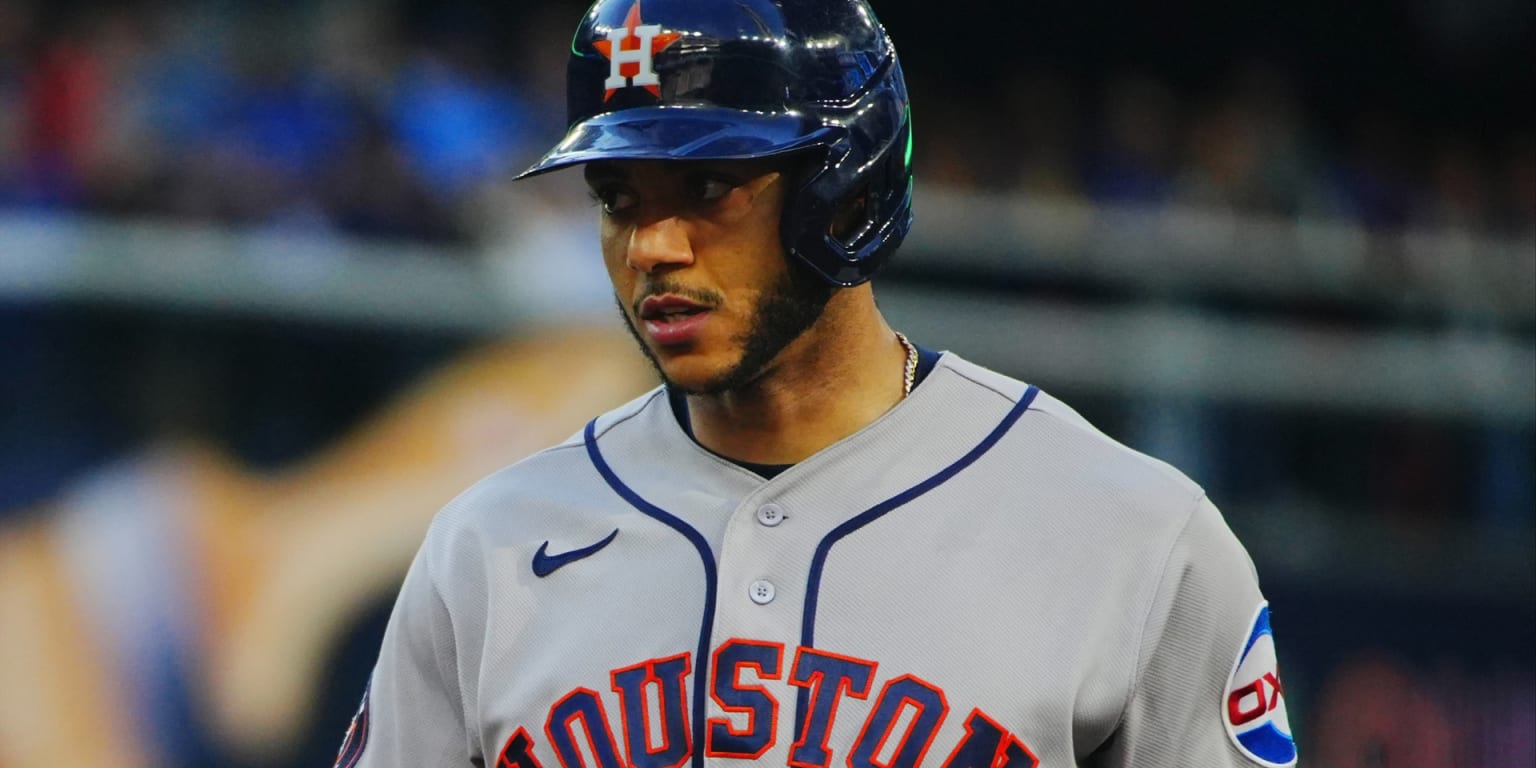
Jeremy Peña departed the Astros' series opener against Toronto in the sixth inning Monday after fouling off a pitch and immediately signaling distress in his right hamstring. The 28-year-old shortstop—1-for-2 with two stolen bases before exiting—was checked by manager Joe Espada and a trainer, then replaced by Brice Matthews. This marks the second hamstring incident for Peña in 10 weeks; he hit the injured list April 13 with a Grade 1 strain and returned May 18, meaning he'd played just over a month before reaggravating the injury. For a team already managing 10 players on the IL, the timing is catastrophic.
Houston's middle-infield depth has evaporated. Carlos Correa, Nick Allen, and Braden Shewmake join Peña on the shelf, forcing the Astros to cobble together innings from replacement-level options. Matthews, a utility piece, shifted to third base while Raynel Delgado—a bench infielder—moved to shortstop. The defensive continuity Peña had been providing, alongside his .286/.345/.453 slash line (six homers in 42 games), vanishes now. Against a Blue Jays roster that runs medium-velocity ground balls and relies on contact pitching, losing premium infield defense and bat velocity in the middle of the diamond carries measurable run-expectancy cost.
The injury also reshapes Houston's offensive profile for the short term. Peña's 42 games represent prime run-creation opportunities; his departure forces lower-OPS hitters into higher-leverage spots and compresses the Astros' margin for error in close games. Any pitcher Houston faces now knows the left side of the infield is occupied by filler—a signal to attack weak-contact hitters and lean on ground balls. Over the next 7-10 days, until the Astros' medical staff clarifies Peña's status, expect the team's run-production efficiency to dip measurably, especially in games where the pitching matchup is neutral or favors the opponent.
From a betting lens, the Astros' team total and moneyline both face downside pressure, but the effect is not uniform across all remaining June contests. Toronto's pitching staff—particularly their ground-ball specialists—benefits from the defensive degradation, making unders on Houston's run output the sharper angle than blanket moneyline fades. The market will price in Peña's absence immediately, but it may underweight the cascading effect on defensive efficiency; teams batting into weakened infield defense tend to extend at-bats and manufacture extra runs. Look for Toronto's batting line to tick upward relative to season baseline, while Houston's pitchers inherit a harder defensive load behind them.
If Peña's recurrence proves more severe than a one-game absence—and a reaggravation of the same soft-tissue injury often does—Houston's middle-infield crisis will extend beyond this series. The Astros are now one Carlos Correa clarification away from starting position players who wouldn't reach the majors in a league with full depth. That structural fragility should inform all offensive lines and team totals involving Houston for the remainder of June and into July.