Crow-Armstrong's 20-20 Repeat Arrives in Year Two—And the Cubs' Ceiling Just Got Higher
By PropBetEdge Editorial Team ·
Pete Crow-Armstrong hit his 20th homer in 92 games to join an exclusive Cubs lineage, signaling sustained offensive dominance that reshapes Chicago's win-total calculus for the remainder of the season.
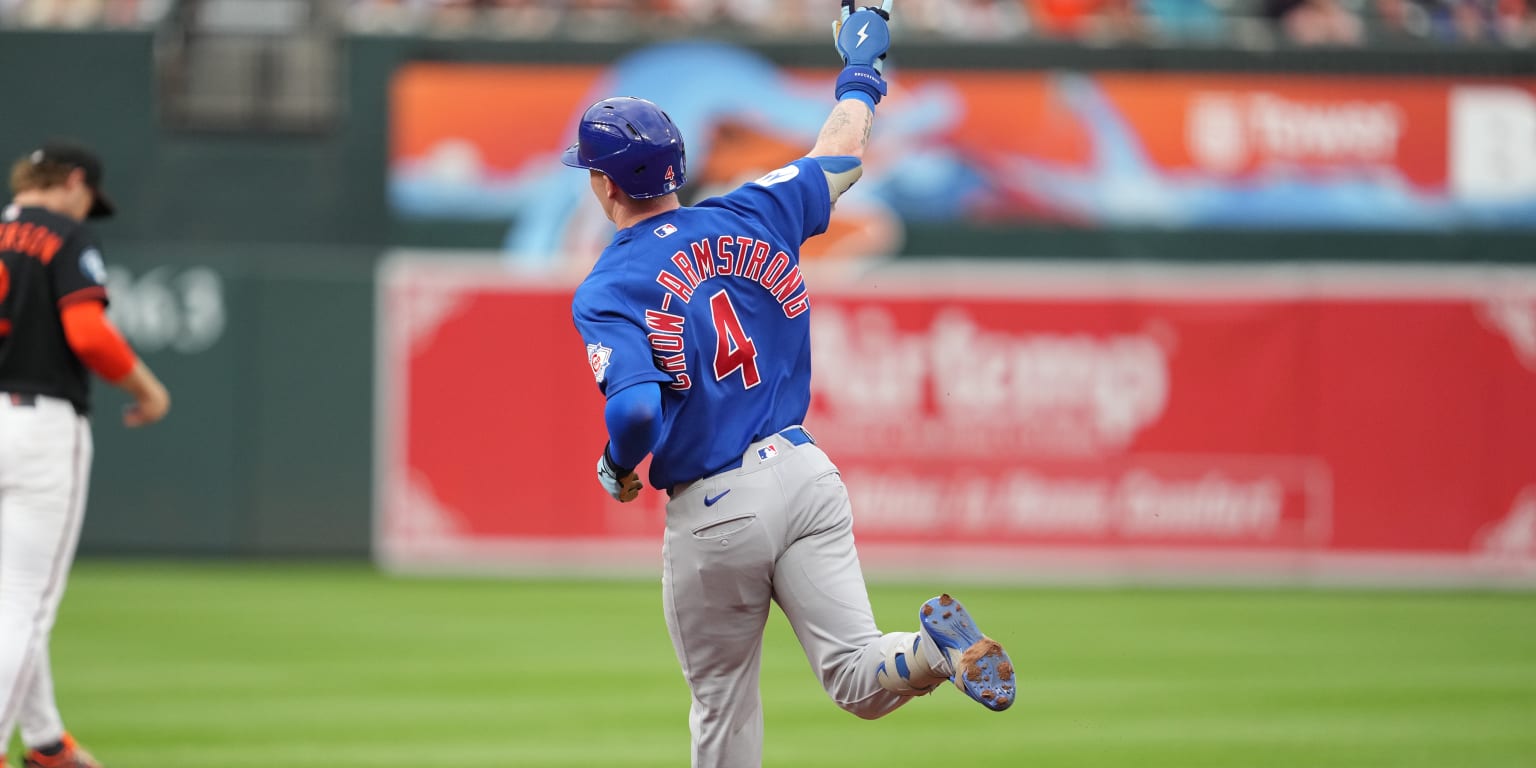
Pete Crow-Armstrong homered twice Wednesday at Camden Yards to push the Cubs past Baltimore 9-7, marking his second consecutive season reaching the 20-home run, 20-stolen-base threshold. The milestone arrived in his 92nd game of 2026—faster than his own franchise record of 96 games set last year, and matching the kind of early-season explosive output that now defines his profile. He joins Sammy Sosa (1993-95) and Ryne Sandberg (1990-91) as the only Cubs to repeat the 20-20 feat in consecutive seasons, a distinction that carries weight beyond the historical footnote. Crow-Armstrong is the first major leaguer since Alfonso Soriano in 2002-03 to log 20-20 numbers before the All-Star break in back-to-back years.
What separates Crow-Armstrong from other high-contact, high-theft players is the mechanism driving his power: he's hunting off-speed pitches in disadvantage counts and executing on them with surgical precision. Against Baltimore's Dean Kremer, Crow-Armstrong saw splitters in 0-2 and 1-1 situations—pitches Kremer had allowed for just two singles across 27 batters all season. On the 0-2 splitter, Crow-Armstrong generated enough barrel control on a sub-strike-zone offering to drive it out; he repeated the feat in the fifth on a 1-1 low-and-away splitter. Cubs manager Craig Counsell noted the dugout was "shaking their head in amazement" at the pitch selection and execution. This isn't luck. Crow-Armstrong's willingness to stay through the count on offspeed and his ability to recover bat speed on pitches below the zone is a repeatable edge that will persist against any starter attempting the same strategy.
The Cubs have now won 18 of their last 24 games, a 67-win pace over a full season. With roughly three months remaining (as of early July), the organization is positioned to sustain offensive productivity that neither regression forecasts nor conventional wisdom have fully priced in. Crow-Armstrong's 20-20 arrival by game 92 projects to a season finish in the 35-40 home run, 35-40 stolen base range—elite-tier dual production that anchors both the top of the order and the club's win expectancy. Five Cubs homered in Wednesday's game alone, indicating the offense is functioning as a unit, not riding one player's hot streak.
For prop bettors, Crow-Armstrong's sustained excellence before and after the All-Star break (roughly 65 games remain) reshapes how to model Cubs team totals and offensive output for August-September matchups. Books have likely adjusted his individual home run and stolen base lines upward following this 20-20 announcement, but the edge resides in understanding that his strikeout rate and pitch-selection discipline are not a temporary spike—they're architectural to his approach. Any line on Crow-Armstrong's HR total for the final 65 games should reflect a 0.40-0.45 HR-per-game pace, not a regression to his seasonal average. Similarly, Cubs team totals priced at historical standards for August road games against non-elite pitching may be undervaluing the cumulative impact of Crow-Armstrong's power output combined with Conforto, Kelly, and Suzuki's concurrent production (all three also homered Wednesday).
The most durable prop edge here is Cubs run total over in games featuring below-average opposing pitching depth or subpar defensive alignment. Crow-Armstrong's ability to generate impact at-bats on lower pitches means off-speed specialists will not solve the problem—velocity-dominant fastball pitchers remain the most credible counter. But across 65 remaining games, the Cubs will face enough mid-tier rotation arms and bullpen exposure that their offensive profile warrants overweight positioning relative to preseason projections. This is not a regression bet; it's a re-anchoring to observed excellence.