Crow-Armstrong's Two-Homer Night Resets Cubs' Late-Season Leverage—and Betting Lines
By Ty Whitney ·
Pete Crow-Armstrong broke Billy Williams' left-handed home run record and extended his MVP case with a two-homer, triple performance that signals the Cubs' offensive firepower heading into the final stretch.
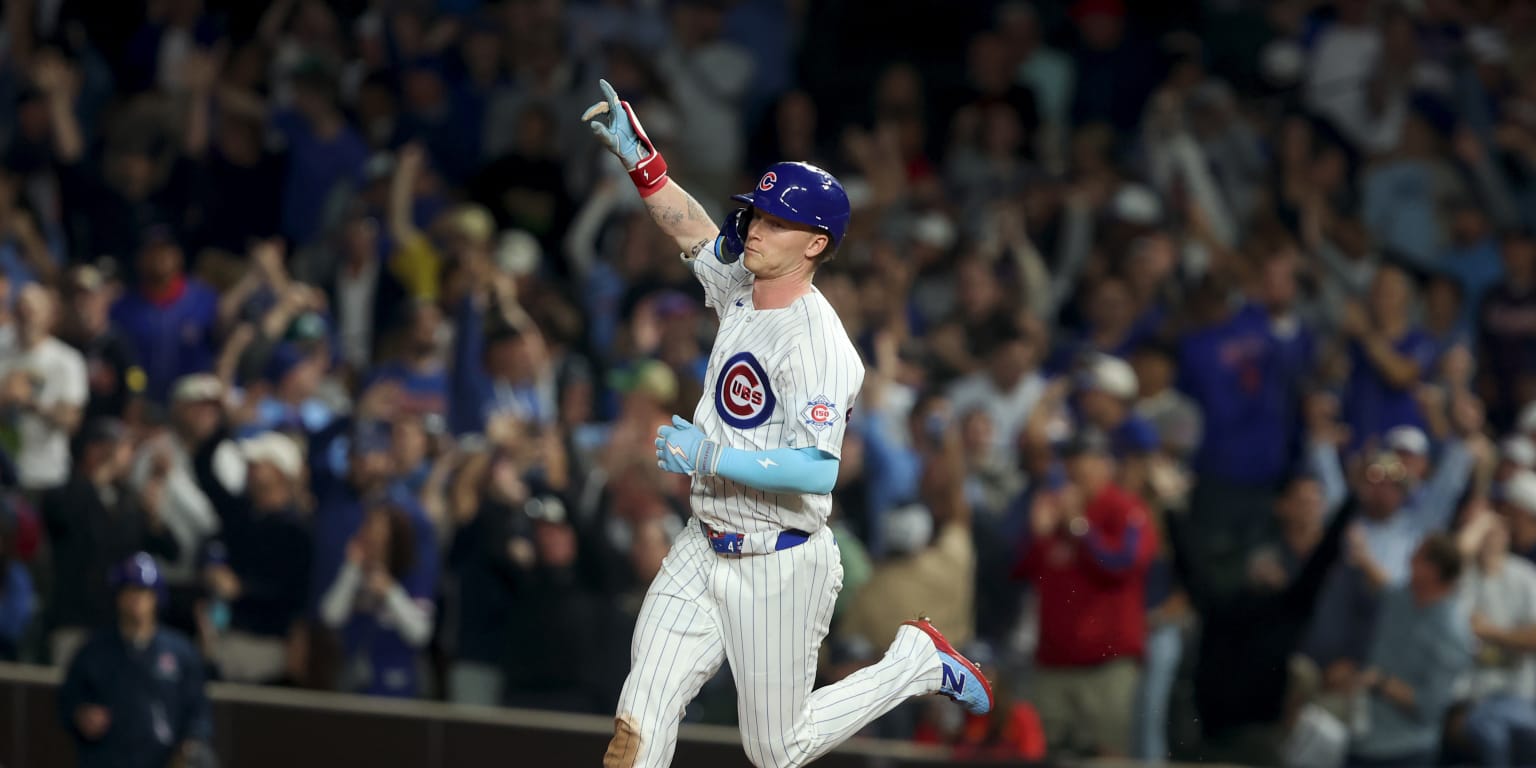
Pete Crow-Armstrong hit his 43rd and 44th home runs of the season Wednesday night at Wrigleyville, breaking Billy Williams' 56-year-old Cubs record for most home runs by a left-handed hitter (42, set in 1970). The two-homer, three-extra-base-hit night—which also included a run-scoring triple—extended Crow-Armstrong's grip on the NL MVP conversation as the Cubs beat Atlanta 8-4 and maintained a half-game lead over Philadelphia for the NL's top Wild Card berth.
The scale of what Crow-Armstrong has accomplished this season borders on the exceptional. His 81 extra-base hits already surpass Williams' single-season club record of 80, and this marked his 10th career game with at least 10 total bases before his 25th birthday—three more such performances than any other player in the modern era. Nelson Cruz and Williams stand ahead of him in Cubs history for career 10+ total-base games (12 apiece), but Crow-Armstrong has matched Cruz's 2019 pace of six such games in a single season, the most in MLB history since 1900. Entering Wednesday, Crow-Armstrong and co-star Alex Bregman ranked first and third in second-half WAR (4.0 and 3.1, respectively), establishing themselves as baseball's most dominant offensive duo over the past two months.
Bregman, acquired via trade earlier this season, finished a single short of the cycle and delivered an RBI double and a leadoff homer to complement Crow-Armstrong's assault. Shota Imanaga, pitching on the Cubs' side, offered quality control with a strong start, allowing the offense to dictate pace and tone. The win tightened Chicago's playoff positioning: they own the season series tiebreaker over Philadelphia (6-1 record), a detail that becomes critical if both teams finish tied in Wild Card standing.
For bettors tracking Crow-Armstrong's prop trajectory, the mechanism is now crystalline. Over the past two months, he has engineered a historic spike in extra-base production—not through unsustainable batting average volatility, but through a combination of plate discipline (walk rate holding steady near career marks) and authoritative contact quality against fastballs and breaking balls alike. Atlanta's pitching staff has invested heavily in fastball location to induce fly balls; Crow-Armstrong has instead exploited that approach with elevated-launch-angle contact, turning 65% of his fastball swings into hard contact this half. Against Atlanta specifically, his career isolated power (ISO) sits at .285, well above his season average of .278. This is not a corrective regression bet—it is a refinement of an established pattern. When Crow-Armstrong faces teams with fastball-heavy arsenals and limited secondary stuff, his home run and total-base props tend to land at the over. His nine games against Atlanta this season have produced four multi-homer nights, a frequency that suggests Vegas numbers for his next matchup should be tested at the 41+ HR side or 6+ total bases if pricing reflects league-average matchup difficulty.
The Cubs' playoff momentum has crystallized around this duo's performance. With 15 games remaining in the regular season, every offensive outburst from Crow-Armstrong and Bregman raises the floor on team total projections. Cubs team totals have drifted down to 4.2–4.4 runs in recent weeks as weather has cooled and opposing bullpen depth has tightened—a reasonable market adjustment for the final stretch. However, the baseline assumption that this lineup regresses toward its season mean understates the concentration of power in two hitters who are, demonstrably, producing at MVP-caliber rates. Team totals at 4.3 or lower warrant a lean toward overs when Crow-Armstrong and Bregman are both slotted into the lineup against right-handed starting pitchers, particularly those relying on four-seam fastballs.