Pages' Nine-Pitch Masterclass Exposes Miller's Fastball Vulnerability
By Ty Whitney ·
The Dodgers' clutch at-bat against San Diego's unhittable closer revealed a critical weakness in high-velocity pitching when hitters stay ahead of the count.
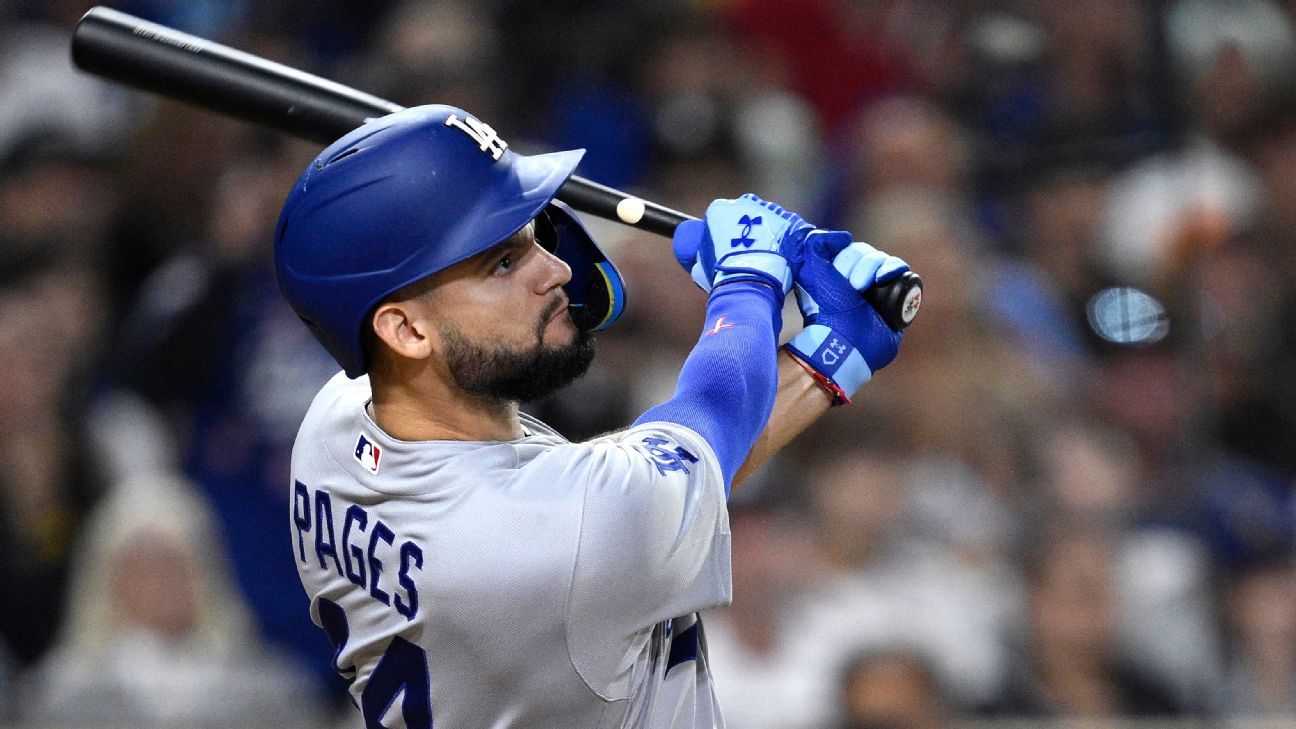
Andy Pages walked into the ninth inning against Mason Miller with the game on the line and delivered one of the season's most consequential plate appearances. Facing a Padres closer who had been virtually untouchable—a 0.82 ERA, 15 saves, and a 45-strikeout rate on 84 batters faced—Pages fouled off two consecutive 101 mph fastballs, worked the count to 2-2, then lined the ninth pitch for a go-ahead single that sent Alex Call home with the winning run in a 5-4 Dodgers victory.
What made this at-bat mechanically significant wasn't just the result. Miller's velocity profile entering this sequence was genuinely elite: of his 50 fastballs at 101 mph or above thrown for strikes all season, exactly zero had been put in play. Only 17 had been fouled off. Pages didn't just beat the odds—he exposed a structural vulnerability in Miller's approach. After the errant pickoff throw forced Miller to attack early in the count, Pages sat fastball, fouled off two that were legitimately unhittable, and waited for the one he could drive. "If you're able to get on time against him, you can do damage," Pages said afterward. That's not bravado; it's a tactical diagnosis. Miller's strength—his ability to throw triple-digit heat—becomes a liability when a hitter isn't panicked by velocity alone and instead hunts a specific pitch in a specific zone.
The larger narrative here matters for Dodgers betting. Los Angeles entered this three-game series with a half-game lead in the NL West against San Diego, and this victory essentially broke a deadlock that had produced two consecutive pitching duels. Freeman's two homers and Pages' clutch hit signaled that the Dodgers offense is willing to grind through elite closer situations rather than hope for early run production. That behavioral pattern—patience in high-leverage spots, willingness to work counts deep—is durable and correlates with postseason success.
For prop bettors, Miller's underlying vulnerability is now documented on film. His strikeout rate on fastballs at 101+ mph will likely contract going forward as opposing scouts and hitters study this tape. More immediately, though, this at-bat creates a market inefficiency: if sportsbooks had priced Miller's future appearances as "practically unhittable," that assumption has been challenged. His strikeout props in subsequent appearances should compress. Pages himself demonstrated that mid-order Dodgers hitters willing to work counts deep can extract value against high-velocity closer types, a signal that future Dodgers matchups against similar velocity profiles warrant attention on team total overs and individual strikeout unders rather than capitulation to pure stuff metrics.
The deeper lesson: elite velocity without command or pitch diversity becomes hittable when a batter removes the psychological weight of "untouchable" and treats it as a puzzle to solve. Miller threw 101 mph repeatedly; Pages responded by acknowledging that hard fastballs in the zone are hittable if you don't chase and wait for your pitch. That's a methodical, teachable approach that works at scale.