Andy Pages Is Outpacing Ohtani in LA's Batting Order—and the Market Hasn't Caught Up
By Ty Whitney ·
The Dodgers' overlooked outfielder is generating more fantasy points than the sport's No. 1 pick, a divergence rooted in Ohtani's pitcher-first workload that has real implications for how LA's offense will be valued.
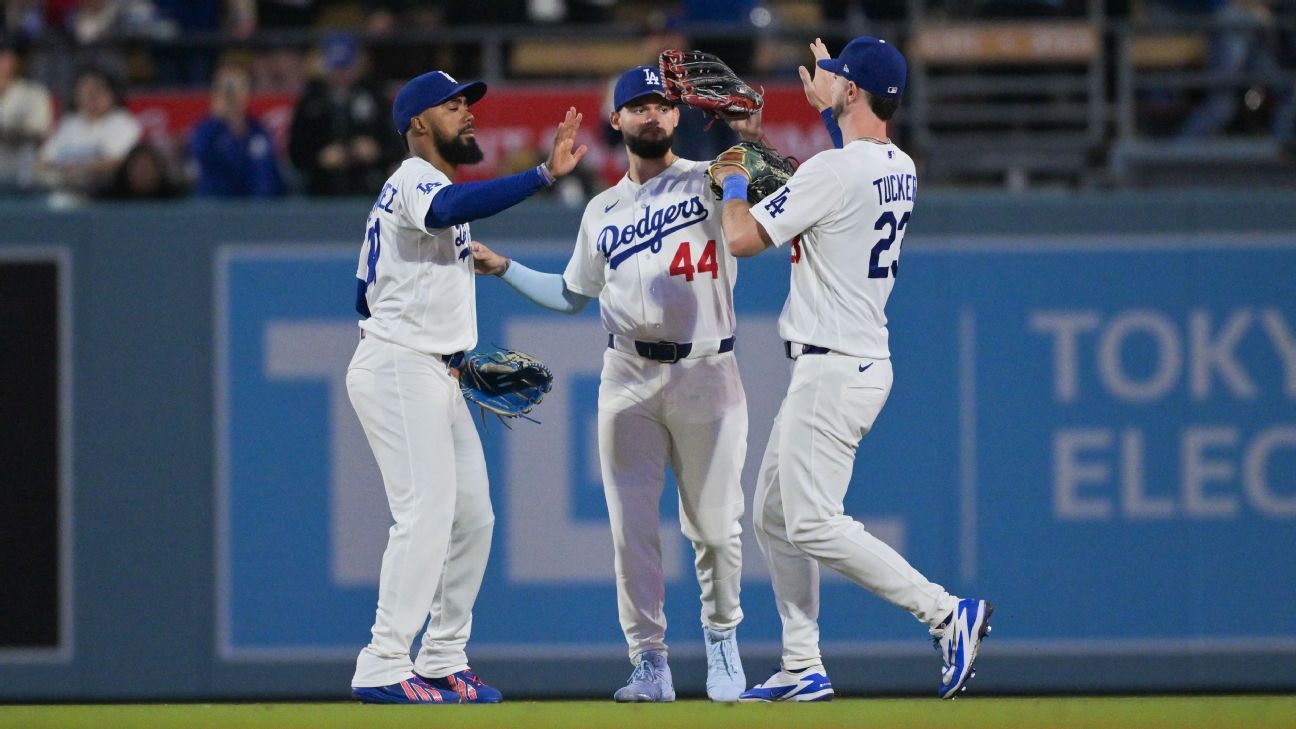
Andy Pages has become the Los Angeles Dodgers' statistical batting leader through mid-May, outscoring Shohei Ohtani, Kyle Tucker, Freddie Freeman and Mookie Betts in fantasy points—a fact that inverts every pre-season expectation about how the defending World Series champions would generate offense. Pages, 25, entered Wednesday hitting .318/.363/.545 with nine home runs, 35 RBIs and six stolen bases, putting him on pace for 35 homers, 135 RBIs and 24 steals over a full season. He was a pick 190 afterthought in fantasy drafts; the market treated him as organizational depth, not a building block.
The mechanism behind Pages' outperformance is straightforward and sustainable: Ohtani's dual role as pitcher-hitter has compressed his batting appearances. When Ohtani pitches—which has increased in frequency as the Dodgers prioritize his Cy Young candidacy—he doesn't hit. That workload reduction has dropped him to 49th among all hitters in roto scoring despite being the consensus No. 1 overall pick. Pages, meanwhile, is batting sixth on average and getting consistent at-bats without the dual-role constraints. Over a full season, that plate-appearance edge compounds into meaningful production gaps.
The Dodgers' offense remains elite—they're averaging five runs per game—but the distribution of that production has shifted away from the names that commanded draft premiums. Ohtani's hitting line (.240 average, 24 HR pace) represents a dramatic step back from his 54.5-homer, .296-average norm. The team isn't recalibrating; if anything, the front office is doubling down on his pitcher identity, with backup catcher Dalton Rushing waiting in the wings for additional plate appearances on days Ohtani takes the mound. Pages, freed from the organizational pressure to double-duty, is simply executing at a rate the market underestimated.
For prop betting on Dodgers team totals and run-production lines, this distinction matters operationally. The pre-season projection models were built around Ohtani generating 140+ runs and 116 RBIs while also eating 30+ quality starts. He's on pace for neither. Pages' emergence doesn't increase the Dodgers' absolute run total—that output has to go somewhere—but it redistributes it away from the highest-ceiling bats and into a lower-variance middle-order contributor. That makes team totals more predictable but potentially lower-ceiling. A Dodgers team total projected at 4.7 runs before the season was anchored partly on Ohtani's 140-run expectation; if he finishes closer to 100, the aggregate doesn't spike even if Pages adds 25 runs that weren't in the forecast. The edge, then, is in fading aggressive team total overs tied to early-season Ohtani projections and instead bracketing the actual run-rate the team is sustaining—which, despite the star power, is moderate and dispersed.
Pages' durability in the top 15 also signals that the Dodgers' offense is more dependent on depth and consistency than on heroics from any single name. That's bearish for chalk overs on Ohtani's individual props going forward and bearish for team totals built on pre-season star-power assumptions. The market still prices Ohtani like a .296/.300-run hitter; the Dodgers and the data are telling you he's a .240/.100-run hitter this season, because everything else (the pitcher workload, the organizational priority) is working against his batting numbers.