MLB · transaction
Padres Gamble on Honeywell's Durability: A Bullpen Depth Play That Won't Move October Needle
San Diego's acquisition of the injury-ravaged right-hander signals organizational depth thinking, not a postseason lever.
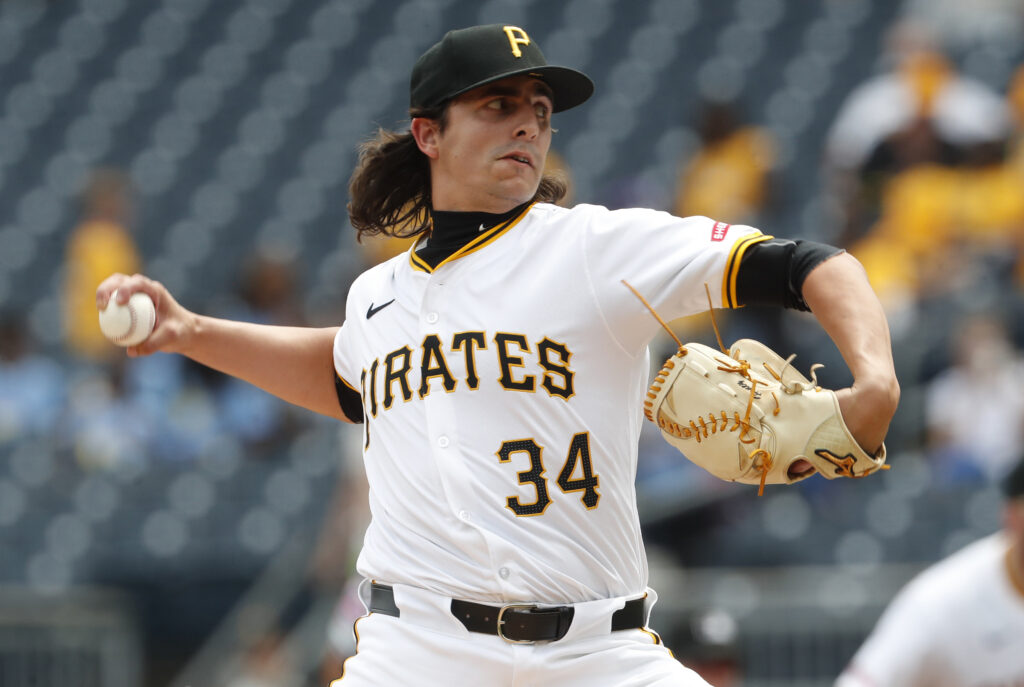
The Padres signed right-hander Brent Honeywell Jr. to a minor league deal on Friday, reuniting with the 31-year-old after nearly two years of inactivity. Honeywell last pitched in affiliated baseball during spring training with the Giants in March 2025 before getting released. Per Yahoo Sports reporting, he'll report to Triple-A El Paso and theoretically remain available for a late-September call-up if he rebuilds quickly enough.
Honeywell's trajectory reads like a career defined by what-if moments. Drafted by Tampa Bay a decade ago as a consensus top prospect, he endured Tommy John surgery in 2018, an elbow fracture in 2019, nerve decompression in 2020, and a stress reaction in 2022 that wiped out an entire season. By the time he finally pitched in the majors consistently, his prime had already been mortgaged to injury recovery. His best statistical season came in 2024 with the Dodgers: a 2.63 ERA in 37⅔ innings, a 0.72 HR/9 rate that suggested real competence, and a functional 42.2% ground-ball rate. The strikeout rate—12.1%—was anemic, but his mid-90s four-seamer and signature low-80s screwball generated sufficient contact management to stay serviceable. That performance, however, was a mirage. His 4.97 xERA and 5.00 SIERA both indicated he was running roughly 2.5 runs ahead of true talent. The postseason exposure confirmed it: nine earned runs in 8⅔ innings, including a five-run meltdown in World Series mop-up duty, sealed his fate. Los Angeles non-tendered him the following offseason.
The Padres already possess a league-leading bullpen by WAR (6.8) and have posted a 2.50 ERA since August 4th across 39⅔ innings. That dominance raises an immediate question: why add a pitcher with minimal recent arm activity and a history of durability failure? The answer is organizational positioning rather than tactical urgency. San Diego sits 66-57 in the Wild Card picture with six consecutive wins, holding a legitimate postseason path. A bullpen of this caliber doesn't need a reclamation project in September. Honeywell represents an infrastructure hedge—a low-cost lottery ticket that either stays buried (most likely) or provides emergency depth if injury strikes their current rotation of elite arms. The timeline itself constrains his upside: nearly two full calendar years away from competitive baseball means any call-up before late September is unrealistic. Even optimistic projections have him pitching for El Paso through the better part of the month, then facing a compressed integration window.
From a betting lens, Honeywell's signing carries virtually no immediate impact on Padres bullpen totals or individual relief appearance odds. The market prices San Diego's bullpen strength around their current roster, and a single Triple-A depth add doesn't alter that calculus. Where bettors should remain alert: if Honeywell does get called up for garbage time in late September, his propensity for ground-ball contact (42.2% clip in 2024) combined with two years of deconditioning could create an exploitable mismatch. However, the probability he faces high-leverage situations is negligible. His name appears on the roster as insurance, not as a September savior. Any over totals on Padres bullpen ERA or strikeout volume should remain unchanged; his presence is too peripheral and too likely to remain unused.
The real lesson is organizational pragmatism. Contenders don't waste roster spots on proven contributors who've fallen through—they invest in depth that costs nothing and either develops into utility or stays out of sight. Honeywell fits that mold perfectly. His injury history and two-year absence mean the ceiling is floor-level utility; his signing is not a statement, and the market shouldn't treat it as one.
MLB Intelligence — Baseball intelligence beyond the box score. Open MLB Intelligence →