Padres Flip NL West Lead on King's Dominance and Andujar's Timely Power
By Erik Schwartz ·
Michael King's seven-inning shutout and Miguel Andujar's first-inning solo shot give San Diego a half-game division lead—and expose where Dodgers bats remain vulnerable.
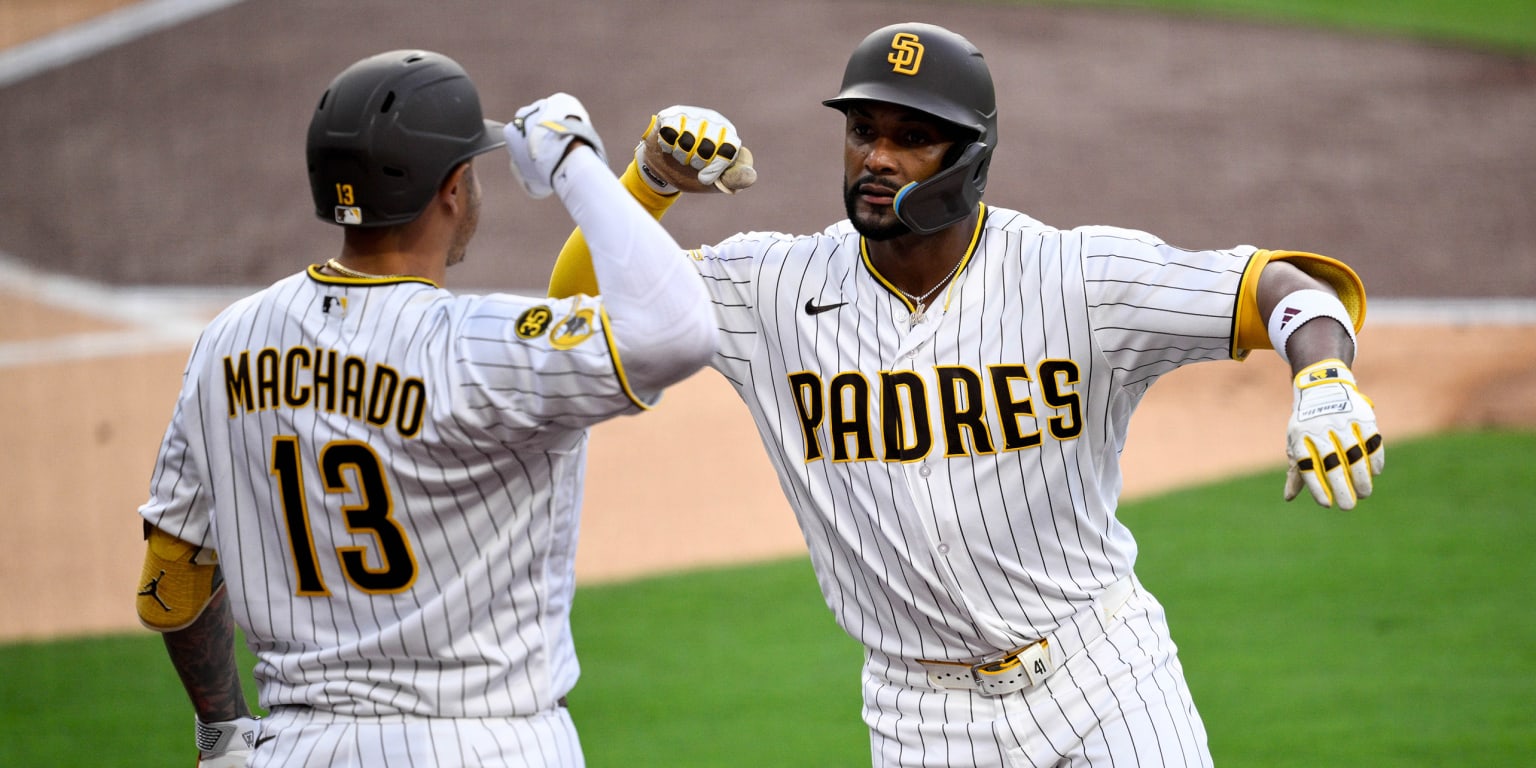
The Padres seized the NL West lead Monday night with a 1-0 win over Los Angeles at Petco Park, a result that hinged on two competing narratives: San Diego's depth crisis in the rotation and Los Angeles' inability to solve Michael King. The Dodgers managed only four singles across seven innings against King, who struck out nine and worked around runners on base in the sixth inning without yielding a scoring opportunity. That's pitching efficiency at the highest level—five different pitches deployed with precision to keep a lineup built for power in a constant off-balance state.
For San Diego, the win solves an immediate problem. The Padres are managing significant injury absences in their starting rotation with Nick Pivetta and Joe Musgrove both sidelined and no return timeline established. King has become the organization's only reliable anchor at the top of the rotation, and Monday's performance—lowering his ERA to 2.31 in the process—reinforced that the team's postseason viability depends on him staying healthy and locked in. A seven-inning, nine-strikeout outing against the division's top lineup is exactly what a thin rotation needs: a hard-to-replicate ceiling performance that buys time for the injured starters to return.
Miguel Andujar's first-inning home run off Yoshinobu Yamamoto proved the margin of victory, but his integration into the Padres' everyday lineup tells a deeper story about organizational flexibility. Signed to a one-year deal before spring training as a depth piece—a lefty-masher with bench versatility—Andujar has forced his way into the No. 2 spot and the full-time DH role through production, not projection. His .298 batting average and .823 OPS lead the team. When your star players struggle, role players with live at-bats don't earn their way in; they're put there out of desperation. Andujar has made San Diego look smart instead.
From a betting lens, King's outing creates a narrow but real edge on strikeout props in his next start. The Dodgers' strikeout rate against right-handed starters sits at 23.1% entering this series; King's baseline whiff rate on the night was 33.3% (9 K's on 27 batters faced). That elevation wasn't a variance spike—it came from deliberate pitch selection. Against a Dodgers lineup built around Freddie Freeman's contact skills and Mookie Betts' bat control, King's five-pitch mix and willingness to elevate fastballs into the zone created swing-and-miss opportunities that don't surface in every matchup. His next start, likely against a division opponent or playoff-caliber team, should price in regression to his season 8.4 K/9 rate, but if the opponent shares the Dodgers' preference for contact-heavy approach, the over on his strikeout total could offer value. The edge is durable—it tracks King's arsenal design and the opponent's batted-ball philosophy, not a single hot night.
Andujar's home-run prop carries more single-game variance but deserves monitoring. He's launched solo shots in three of his last six games, a 30-game sample that's well above his season pace. When a reserve player suddenly settles into the DH slot against division pitching and generates top-of-the-order at-bats, his power output often carries elevated volatility before the market and pitcher gameplan adjust. The Padres have two more games in this series; if Andujar's HR line prices unchanged at +200 or tighter odds tomorrow, fade it. If sportsbooks push the line to +240 or longer following this result, there's real juice, but only for one more game before Las Vegas reprices his regular role.