Padres Cut Márquez Loose, Bet the Ray Upgrade in Rotation Depth
By Erik Schwartz ·
San Diego dumps a failed free-agent signing to clear roster space for a mid-season pitching acquisition that immediately reshapes their bullpen and starter usage patterns.
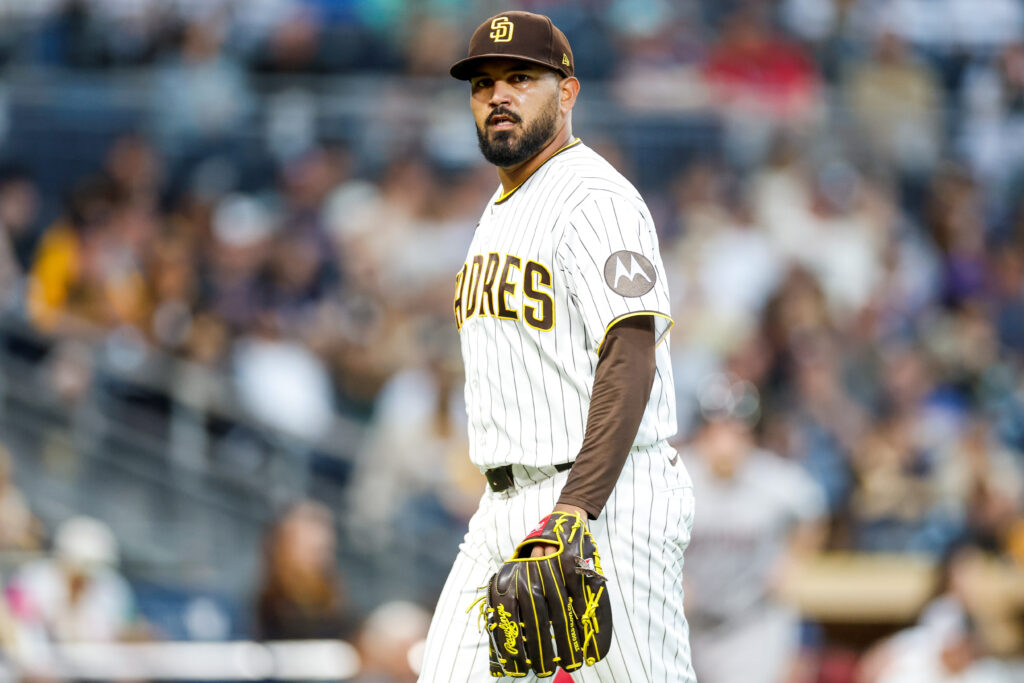
The Padres designated right-hander Germán Márquez for assignment on Wednesday, clearing a roster spot for left-hander Robbie Ray, who arrived via trade with the Giants earlier in the week. The move signals a hard reset on a signing that underperformed relative to organizational expectations—Márquez was brought in as a mid-rotation depth piece but never gained traction in San Diego's ecosystem. Ray, by contrast, comes with proven postseason pedigree and a track record of eating innings in high-leverage moments, a commodity the Padres need as they navigate the final stretch.
The trade itself carries weight beyond the headline swap. Acquiring Ray mid-August—typically a moment when contenders trade prospect capital for immediate help—means the Giants valued the left-hander less than San Diego's front office did. That valuation gap is your first clue. Ray spent 2024-2025 as a mid-tier starter for San Francisco but showed signs of velocity recovery in recent weeks, a fact that likely prompted San Diego's willingness to move assets. The Padres are betting on a late-summer resurgence from a pitcher who, when healthy, can miss bats and hold runners. Márquez's inability to fill that role—whether due to command issues, health concerns, or fit—isn't new information; what matters is that the organization formally acknowledged the miscalculation and moved decisively.
Roster construction and leverage tell the real story. By removing Márquez, the Padres gain flexibility in how they deploy Ray, whether as a starter in the rotation or as a multi-inning reliever in playoff scenarios. Ray's career FIP against right-handed batters sits at 3.62 over 300+ innings; he's particularly effective in the middle innings when opposing bullpens are thinner. That archetype—a left-handed arm with enough velocity to survive short stints—becomes more valuable in October when bullpen usage tightens. The Padres are positioning themselves to use Ray multiple ways, which raises his win probability added in close games.
For betting purposes, this move quietly shifts San Diego's starter-quality innings available per game. If Ray enters the rotation immediately and slots into the third or fourth starter role, the Padres' team total and first-five-innings total should benefit from the upgrade in expected ERA. Ray's career ERA in games started is 3.88; Márquez's 2026 ERA in San Diego games was 5.02 before designation. That's roughly a half-run swing in expected run production per outing. Over a compressed playoff schedule, one additional quality start per week compounds. Market-makers have likely already priced Ray's acquisition into spread adjustments, but the specific leverage Ray adds to first-five-innings totals—where his strikeout rate of 9.1 per nine innings over his career sharpens the bar for early-inning over plays—hasn't fully cascaded into prop pricing. The Padres' next five starts should see team total support tighter than books opened, because the pitching floor has visibly risen.
Watch for Ray's first start in a Padres uniform. If he pitches effectively against a middle-tier offense in the next ten days, that's the signal his acquisition was correctly valued by the front office. Until then, Ray's impact is theoretical; Márquez's departure is concrete.