Fermin's Unlikely Homer Masks Deeper Padres Offensive Fragility
By Erik Schwartz ·
A pinch-hit two-run shot from a slumping catcher breaks a six-game losing streak, but San Diego's reliance on fringe players signals an urgent need for star production.
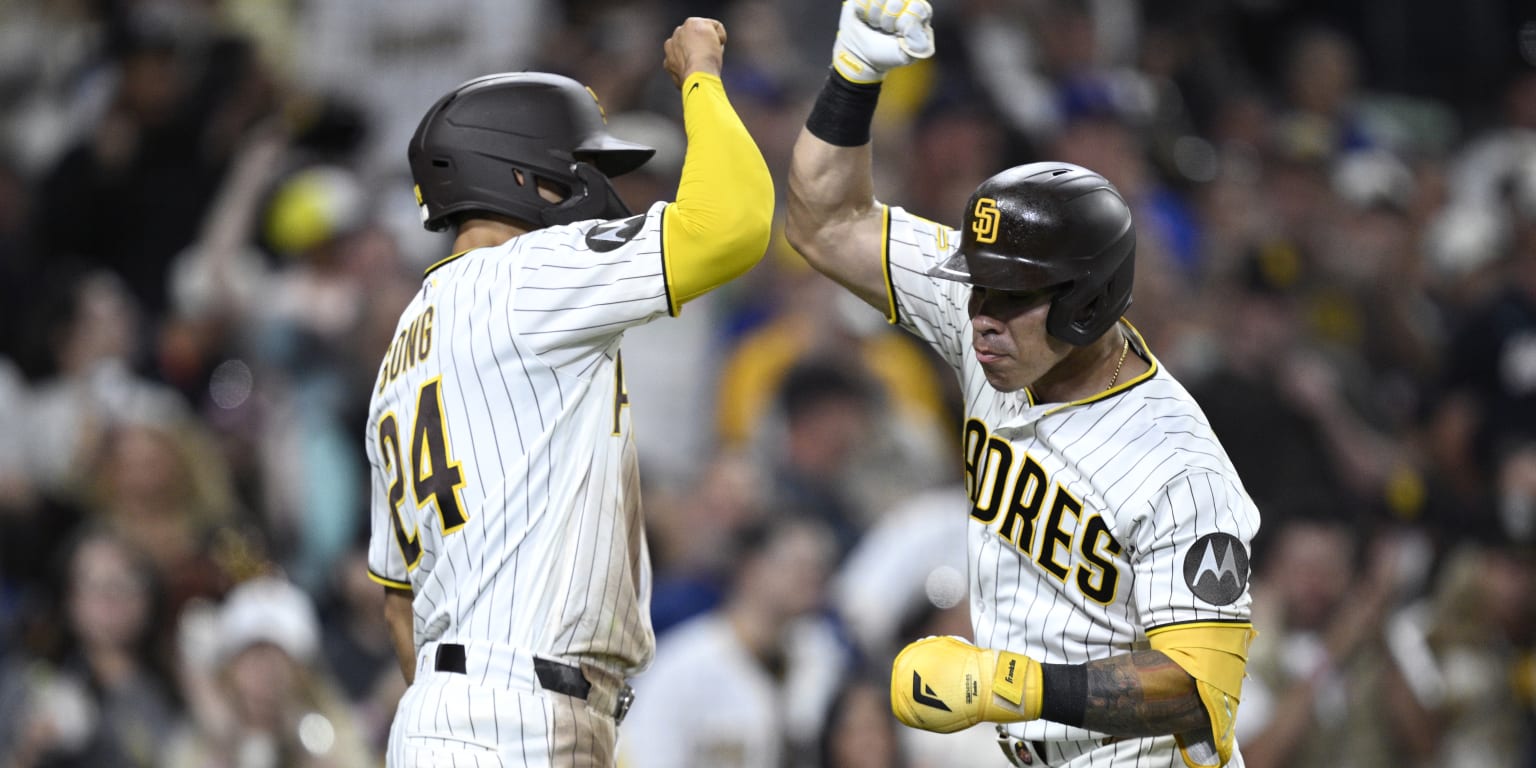
Freddy Fermin, 0-for-30 entering Saturday night and frequently benched in favor of pinch-hitters, delivered the decisive blow in the Padres' 3-2 victory over the Mets at Petco Park. His first-pitch sinker blast into left field broke a six-game losing skid and provided the narrative cushion San Diego badly needed. Manager Craig Stammen stuck with his defense-first catcher despite the alarming drought, and the gamble paid off in immediate, visible form—but the larger picture underneath that celebration tells a different story.
The Padres have constructed their current roster around a tier of star position players meant to drive run production. Instead, they're increasingly dependent on production from role players and benchwarmer types, a structural vulnerability that no single at-bat—however timely—actually corrects. Sung-Mun Song reached base all three times at the plate from the No. 8 spot, another fringe contributor stepping into the void left by injuries to Jake Cronenworth and the departures of Ramón Laureano and Nick Castellanos. These contributions matter tactically in one game, but they don't substitute for consistent offensive firepower from the core. Stammen explicitly acknowledged the strategy during his postgame comments: the bottom of the order's job is to create runway for the stars to hit with runners in motion. The Padres shouldn't need to build their win condition around that calculus.
Griffin Canning provided the other encouraging note, delivering five innings of one-run ball against a Mets lineup—five strikeouts, three hits, heavy slider-changeup mix that kept hitters off-balance. Canning's signing was premised on replicating the form he flashed in his first three months with New York last season before tearing his Achilles in mid-June and spending the remainder of 2025 recovering. Saturday's outing resembled that version: a mid-rotation arm capable of eating innings cleanly and limiting damage. If Canning can remain healthy and consistent, he stabilizes the back end of the rotation. But one clean start doesn't resolve the Padres' central problem, which is that their bats have gone quiet when it matters most.
For prop bettors, the win itself is a narrative relief valve that may artificially elevate the next few San Diego totals. Books will likely adjust team run expectancy upward based on the offensive contributions from Fermin and Song, compressing spreads and pushing team totals slightly higher as the market applies narrative recency to what is fundamentally a performance anomaly. Fermin's 0-for-30 stretch and his minimal seasonal at-bats (he's a bench catcher) mean this home run is a high-variance data point in a much larger distribution of poor offensive output. Song's role remains contingent on Cronenworth's IL status; once the primary option returns, his playing time and production opportunities evaporate. The market will likely overprice Padres offensive upside for the next 48-72 hours based on Saturday's result, which historically corrects quickly once the next game or two reveal whether the core players have actually stepped up offensive production or if the win was built on the fringe.
Canning's performance is more durable information. A healthy, capable mid-rotation starter who pitches efficiently reduces expected opponent runs and makes under tickets more attractive on nights he takes the ball. But that edge is narrow—one strong outing in a recovery arc doesn't eliminate injury risk or establish a new baseline. Watch Canning's pitch-location data and velocity over his next three starts; if both remain consistent with Saturday's sharp execution, his starts become under bets. Until then, the Padres' win is a one-off, not a correction.