San Diego's Trade Deadline Math Doesn't Add Up—Yet the Padres Will Buy Anyway
By Erik Schwartz ·
The Padres sit a half game from a playoff spot despite ranking last in batting average, on-base percentage, and slugging—and A.J. Preller is already shopping at the deadline.
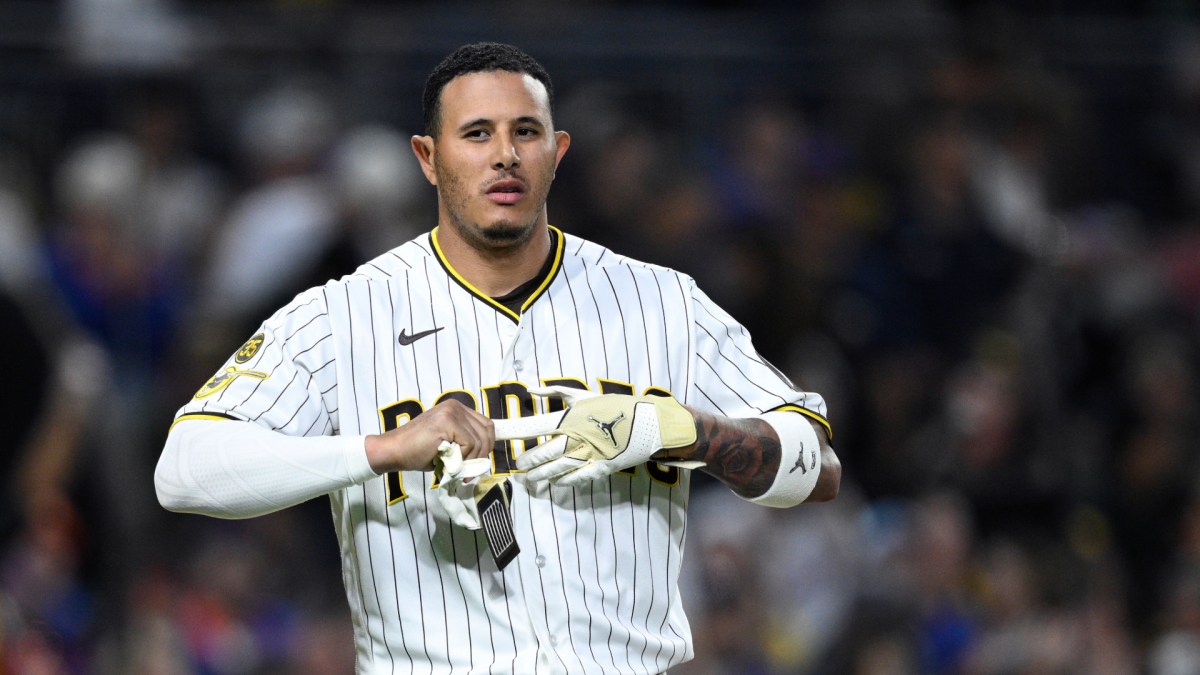
The Padres look nothing like a team positioned to make a playoff run, let alone contend for a World Series. They've dropped 11 of 13 games and sit 14-22 since April 27, a stretch that has exposed the fragility beneath a 33-31 record. Yes, they're only a half game out of a wild-card spot in a historically weak NL, but proximity to the playoffs doesn't cure the fundamental illness: an offense ranked dead last in batting average (.214), on-base percentage (.289), and slugging percentage (.355). They're scoring just 3.77 runs per game—the league minimum for contention. That stretch where they won 16 of 19 in April now reads as statistical noise, not organizational direction.
The problem isn't depth or developmental talent. It's the superstars themselves. Manny Machado, on a $350 million deal through 2033, has become one of the worst hitters in baseball at .169/.254/.342. Fernando Tatis Jr., with eight years and $272 million remaining, has exactly one home run to his name and is slugging .328—nearly 70 points below league average. Jackson Merrill, the 23-year-old cornerstone locked into a 10-year, $156 million contract, has hit .202/.275/.329 and is flashing zero signs of a turnaround. Xander Bogaerts adds another $178 million of dead weight at .226/.300/.348. These aren't depth issues. These are four of the five most expensive position players on the roster simultaneously underperforming. Yu Darvish's rotation presence is uncertain after multiple injury setbacks; Joe Musgrove remains a question mark following Tommy John surgery; and Michael King and Randy Vásquez are carrying a rotation that has little margin for error.
Into this wreckage walks A.J. Preller, one of baseball's most aggressive trade-deadline operators, reportedly gearing up to buy. The logic is defensible on surface: the Padres have made the playoffs four of the last six seasons, and the 2026 NL is genuinely weak. A mid-rotation rental and a bat or two could push them into October. But trading away controllable assets for another team's rental pitcher won't fix an offense where the franchise cornerstones are either broken, aging out, or both. Machado will turn 34 next month with seven years and $275 million left. Bogaerts is 33. Tatis's injury history means the elite version may never return. These aren't aging curves that reverse mid-season via trade-deadline acquisition.
From a betting perspective, the Padres present a cautionary tale about sunk-cost narratives. The market will eventually price in San Diego's offensive collapse—if it hasn't already—and July activity (any trade-deadline moves Preller makes) will be digested quickly into team total and run-line pricing. The real trap is fading unders on Padres games purely because they "added a starter." Their run-scoring problem isn't fixable by mid-season acquisition; it's structural. Machado's ability to hit, Tatis's power ceiling, and Merrill's plate discipline are all in genuine decline or stalled development. A 2-3 win improvement from a deadline acquisition doesn't move the needle on an offense this dysfunctional. The smart angle isn't predicting which rental helps them scrape into the wild card. It's recognizing that their offensive floor—sub-3.8 runs per game—is unlikely to budge significantly, regardless of pitching reinforcements.
Preller will pull the trigger on a deal or two before July 31. The Padres will probably make the playoffs. But the betting market will correctly recognize that this is a team whose ceiling is a first-round exit, and their baseline run production is too fragile to support consistent overs or moneyline plays at reasonable odds.