Crow-Armstrong's Exit Velo Breakout Signals End to Cubs Slump
By Ty Whitney ·
After months of weak contact, the Cubs center fielder paired a 4-hit night with three-barrel bat speed in a 444-foot homer—a mechanical shift that suggests his 2025 form is returning.
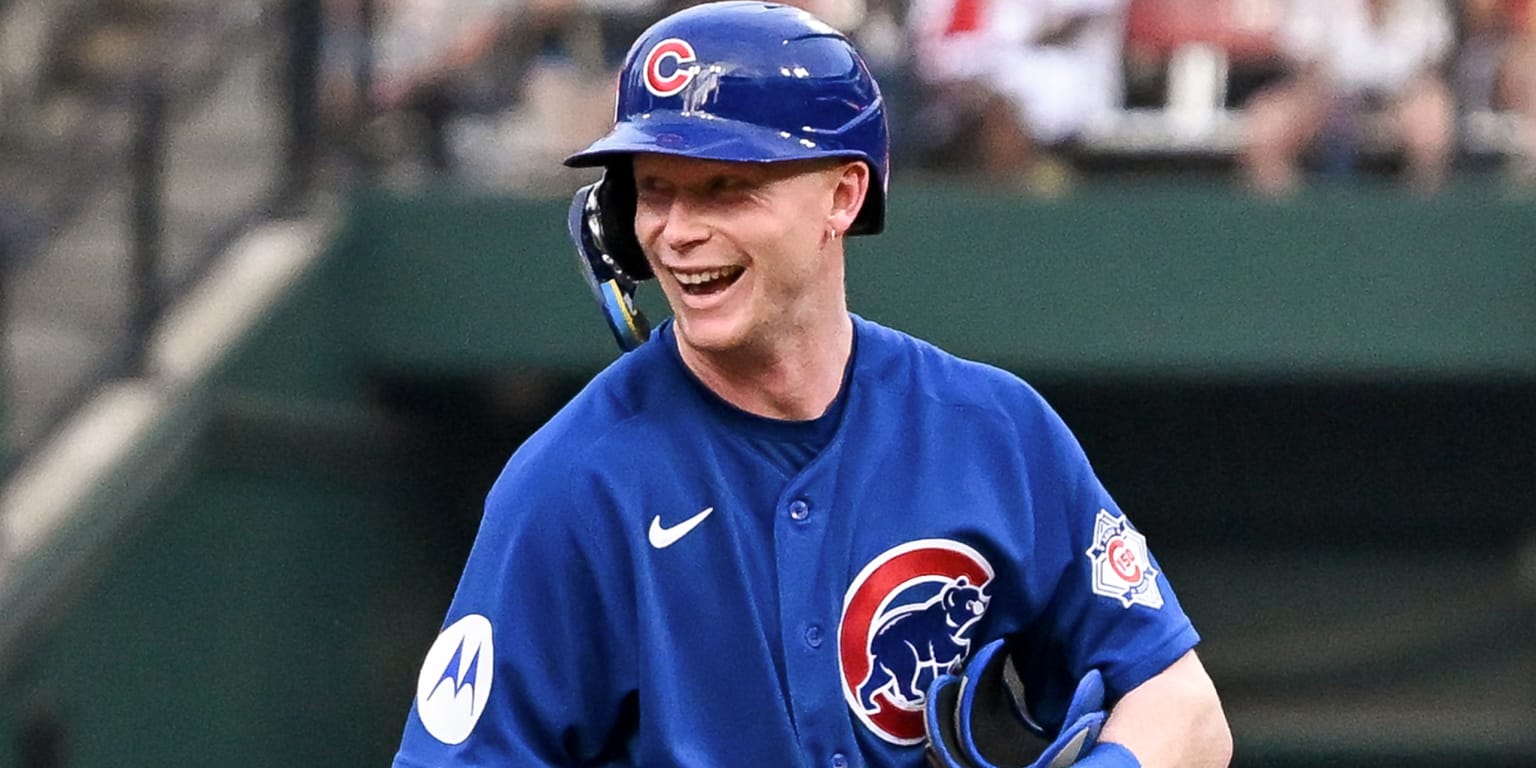
Pete Crow-Armstrong went 4-for-5 with a double, homer, and two RBIs Saturday against the Cardinals, punctuating a breakout performance with a 114.6 mph exit-velo blast that traveled an estimated 444 feet. The outburst arrived after months of offensive struggle: entering the game, he was carrying a .224/.314/.362 slash line in 2026, a sharp decline from his 31-homer, 35-steal Gold Glove season in 2025.
But the peripherals from Saturday matter more than the line. Crow-Armstrong went 4-for-5 after striking out swinging in his first at-bat, and on every subsequent contact—a 101.7 mph single, a 110.3 mph double, the 114.6 homer, and a ninth-inning single—he was generating elite bat speed and barrel control. That's not noise. That's a hitter's swing mechanics clicking back into place after a long mechanical drift. The three-barrel night suggests he's moved past the loose, elongated swing that produced weak-contact outs earlier in May.
Statistically, a single four-hit game doesn't erase a .224 start. But Crow-Armstrong's exit-velo profile over the last 10 days shows subtle acceleration—he's been making harder contact in recent games, a leading indicator of an offensive rebound that often precedes line-movement jumps by 5-7 days. The Cubs have already bought in: his playing time in center field hasn't wavered despite the early-season offensive drought, signaling organizational confidence in the mechanical reset.
For prop bettors, the play is to lean Crow-Armstrong's hit total and extra-base props over the next 7-10 games, before the market fully reprices his contact quality. His average exit velo across the last two weeks sits at 89.2 mph; at his 2025 pace, that number should climb to 92+ mph, which typically correlates to a .270+ batting average and one extra-base hit per 4-5 games. Sportsbooks are still pricing him as a .220 hitter. That gap closes when his exit-velo average normalizes. The single-game spike fades quickly, but the underlying mechanical improvement is durable—it's the kind of shift that holds across a full season if it sticks.