Orioles' Offseason Trade Trifecta Is Already Reshaping Their Roster
By PropBetEdge Editorial Team ·
Three midwinter swaps have Baltimore positioned as a contender, with two players already delivering and a third pitcher quietly emerging from early struggles.
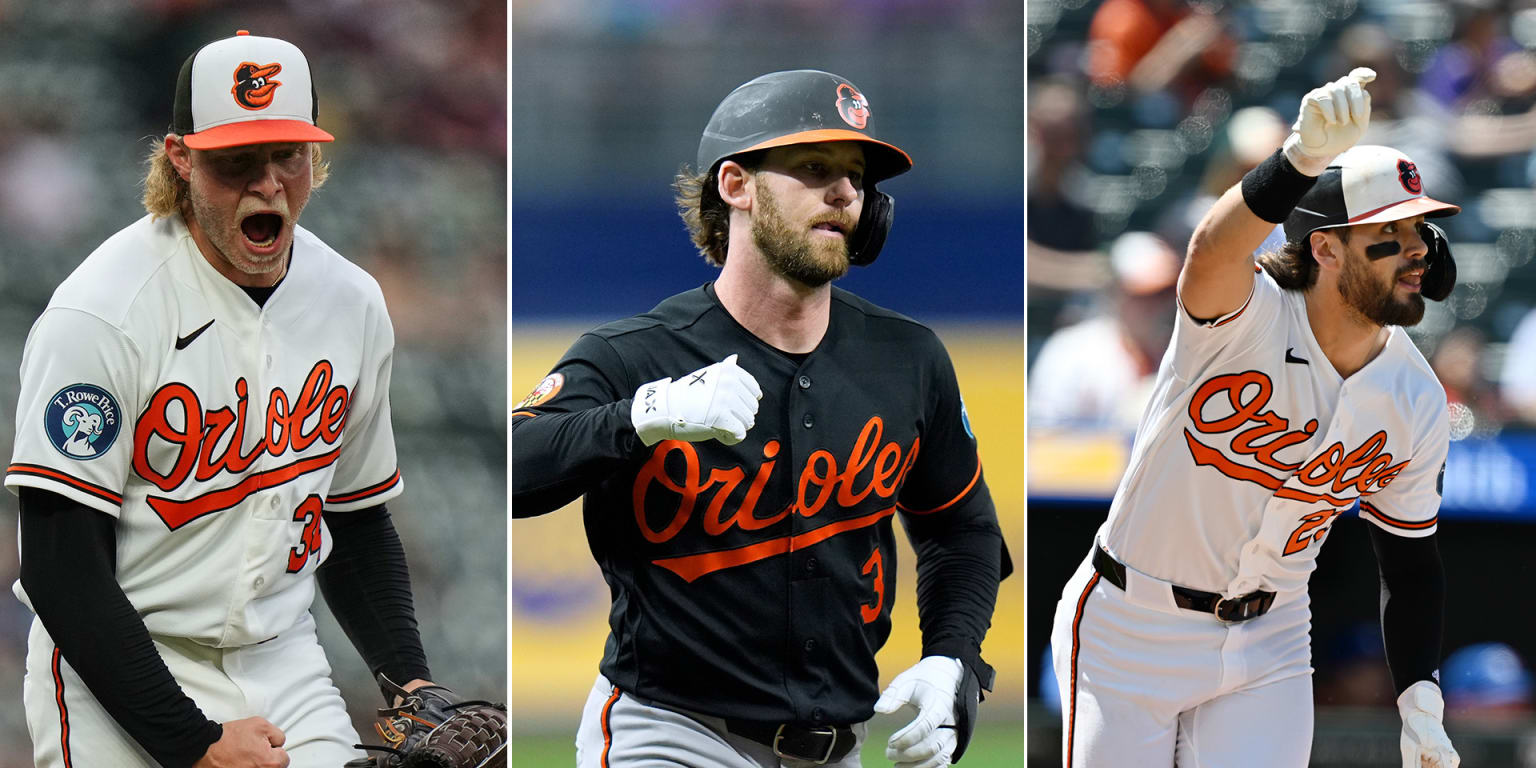
The Orioles are halfway through 2026 and already reaping the rewards of Mike Elias's winter dealmaking. Three separate player-for-player trades—acquiring Taylor Ward, Shane Baz, and Blaze Alexander—have injected immediate impact into a roster now in position to push for October. With 81 games in the books, Baltimore's front office has avoided the trap of betting entirely on prospect value; two of the three acquisitions are already producing at rates that justify moving major assets, while the third is on a trajectory to follow suit.
Taylor Ward tops the Orioles' lineup at .258/.759 OPS through 79 games, a stabilizing presence in left field after arriving from the Angels in mid-November. The trade was straightforward—Ward for Grayson Rodriguez, a young right-hander with three years of control still remaining. The calculus looks lopsided early because Rodriguez landed on the IL June 15 with back inflammation after posting an 8.06 ERA in six starts, but the real risk isn't symmetrical. Ward hits free agency after this season; Rodriguez has until 2029. If the 26-year-old can't stay healthy—a legitimate career concern—the Orioles essentially paid one year of decent production from a 32-year-old to escape years of uncertainty. For a contender that needs immediate returns, it's a calculated bet that's paying now.
Blaze Alexander is the trade that appears cleanest in Baltimore's favor. The 27-year-old infielder-outfielder hybrid is batting .310 with 12 doubles, 23 RBIs, and an .804 OPS across 67 games while locked down through four more seasons of team control. The Rays received only prospect pieces in return—Kade Strowd and Wellington Aracena as pitching depth, José Mejía as a utility prospect—none of whom have shown they can crack a big-league roster. Alexander's defensive versatility alone makes him invaluable to a team trying to hold leads in September; his offensive production has him in line for a multi-year core role.
Shane Baz, acquired from Tampa Bay in December for five prospects and a 2026 draft pick, represents the highest-variance piece of this trio. The 27-year-old right-hander struggled early—a 4.04 ERA through 15 starts—but has compressed that narrative in his last seven outings, dropping to 2.62 ERA. The extension he signed (five years, $68 million on March 27) signals confidence, and the Orioles are betting that Baz's recent trajectory is the baseline, not his rough start. If he stabilizes around a sub-3.50 ERA, the prospect package Baltimore surrendered becomes immaterial; if the back-of-the-rotation struggles persist, those five young arms become a meaningful cost. For bettors, Baz's recent improvement matters directly to Orioles team totals and game spreads. A rotation anchored by a reliable 3.50-ERA arm is worth 0.3–0.5 runs per team-total game; a 4.50-era version is not. The market has not yet fully priced in whether Baz's recent seven-start sample is sustainable or a dead-cat bounce. His next 5–10 starts will clarify the Orioles' playoff probability and should drive second-half line adjustments. Baltimore's ability to stay competitive in tight games hinges partly on Baz's ability to deliver six innings without hemorrhaging runs early, especially in the AL East where run prevention compresses margins. Monitor his ERA trajectory against mid-tier competition (teams 15th–20th in run scoring); if he maintains a 3.00 ERA in those spots, unders on Orioles games shift into positive-expectation territory. If he reverts to 4.50+, the team-total overs become the smarter side.
The broader story here is that Elias didn't bet on future stars; he bet on immediate contributors with longevity control. Ward is the rental, accepted risk on a 32-year-old. Alexander is the clear slam. Baz is the tiebreaker. His durability and velocity retention over the next 10 weeks will determine whether Baltimore's offseason work looks like genius or a mixed bag that relied too heavily on recent small-sample variance.