Pinch-Hit Chess in Baltimore: How Albernaz Found the Right Matchup to Beat Chicago
By Ty Whitney ·
A two-pinch-hitter sequence in the eighth inning exposed the leverage game that decides tight contests—and revealed which teams are building tactical depth at the margins.
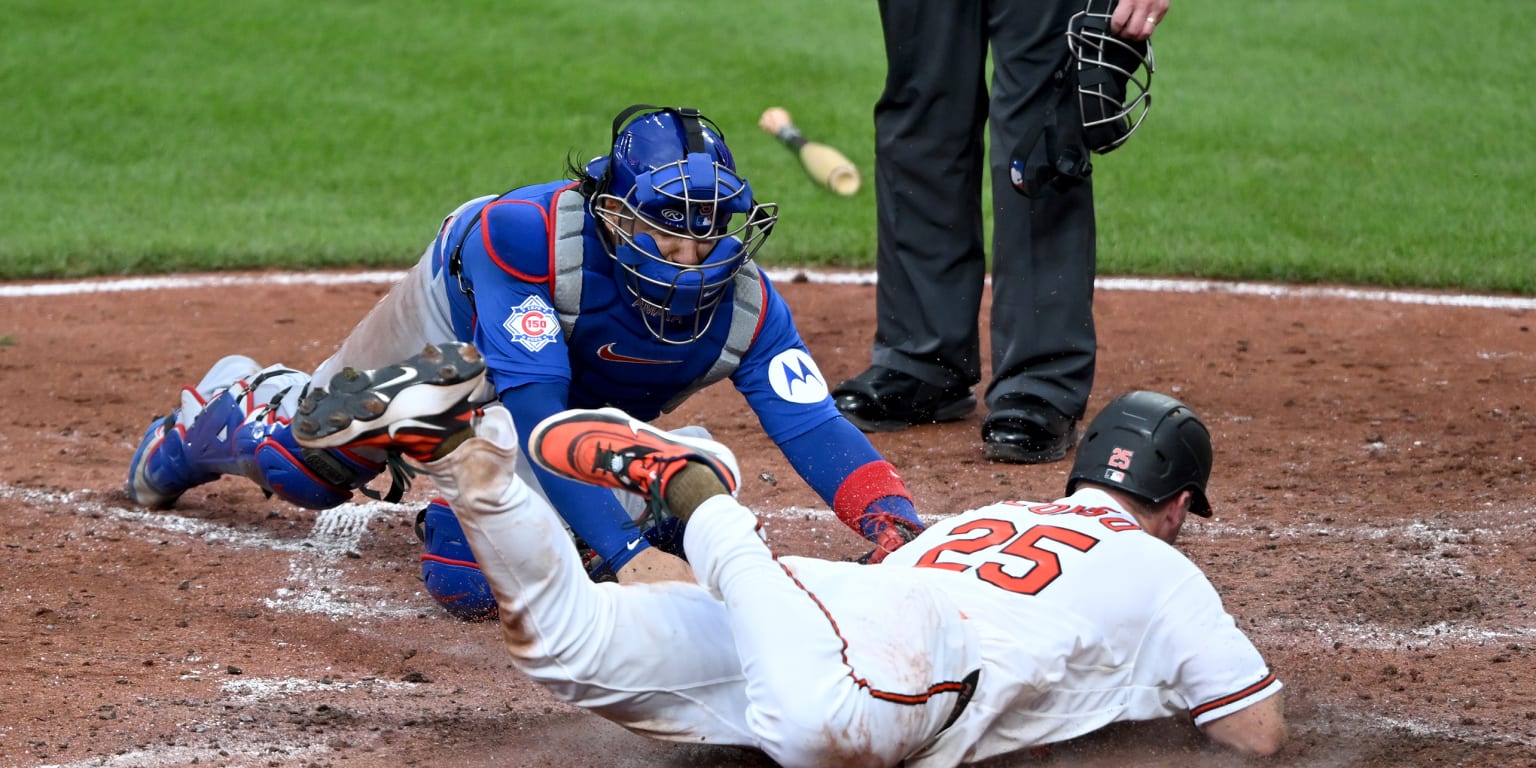
The Orioles scraped past the Cubs 3-2 Thursday night at Camden Yards with a maneuver that felt like a window into the decision-making that separates fringe playoff teams from contenders. Trailing by a run with runners on first and second and one out in the eighth, Craig Albernaz orchestrated a sequence that forced Craig Counsell into a reactive box: left-handed Dylan Beavers to face Cubs righty Tyler Ferguson, then Counsell's counter with lefty Ryan Rolison, then Albernaz's final move—right-handed Jeremiah Jackson as the second pinch-hitter in the same at-bat. Jackson delivered a double to right-center, both runners scored, and the Orioles held on. Baltimore survived a Cubs threat that could have deepened its hole; the team sat at 43-51, one win away from falling 10 games below .500 before the All-Star break.
The substance here is roster construction and usage pattern. Jackson, recalled five days after a June 28 demotion to Triple-A Norfolk, was optioned because he hadn't established himself as a regular at the majors level—yet his profile (26-year-old infielder/outfielder with switchable defensive utility) made him deployable in exactly this spot: a high-leverage, matchup-driven pinch-appearance where the Orioles were willing to burn a roster spot for one plate appearance. Counsell had no advance read on Jackson because he was facing an unfamiliar bench piece, not the projected starter. That's the math of thin benches and deep pitching-staff requirements in July. Teams carrying only three or four true position-player bench arms become predictable; teams with five or six—and the minor-league depth to sustain recalls—gain optionality in late-inning scenarios.
What matters for betting: the Orioles' willingness to deploy Jackson signals internal confidence in his ability to execute in pressure situations, even after demotion. He delivered. That's not predictive of his regular-season baseline—one double in a pinch-hit spot carries minimal data weight—but it does tell you that Baltimore is operating with some margin for experimentation. A team that's truly underwater, that needs to win every game, doesn't have the luxury of burning a pinch-hitter on an untested arm. The Orioles, despite their losing record, are still within striking distance of the playoff conversation (and the trade deadline), which means they're playing for incremental wins that preserve optionality for the stretch run.
For prop bettors, the angle is subtle but real: teams trailing in run-differential but still mathematically alive tend to shift toward higher-leverage bullpen usage and more aggressive bench deployment in tight spots. That tightens the game. Over/under bettors should expect the Orioles' late-inning sequences to lean toward lower-leverage pinch-hitters (who have higher strikeout rates and lower average relative to starters) and relief arms optimized for one inning rather than innings-eating versatility. If Jackson becomes a regular-deployment weapon in these spots, the Orioles' total runs per game in one-run situations will likely trend lower, even as their win rate in those same situations may tick up. The Cubs' loss here wasn't a command failure (Ferguson was wild) or an execution miss (Jackson just hit a good pitch); it was a tactical exploit of the pinch-hitter leverage game.