Baz's Ballooning ERA Meets a Rays Offense Primed to Exploit Matinee Matchup
By Erik Schwartz ·
Shane Baz's recent form collapse and Tampa Bay's eight-game over streak set up a rare value window on Wednesday's early game.
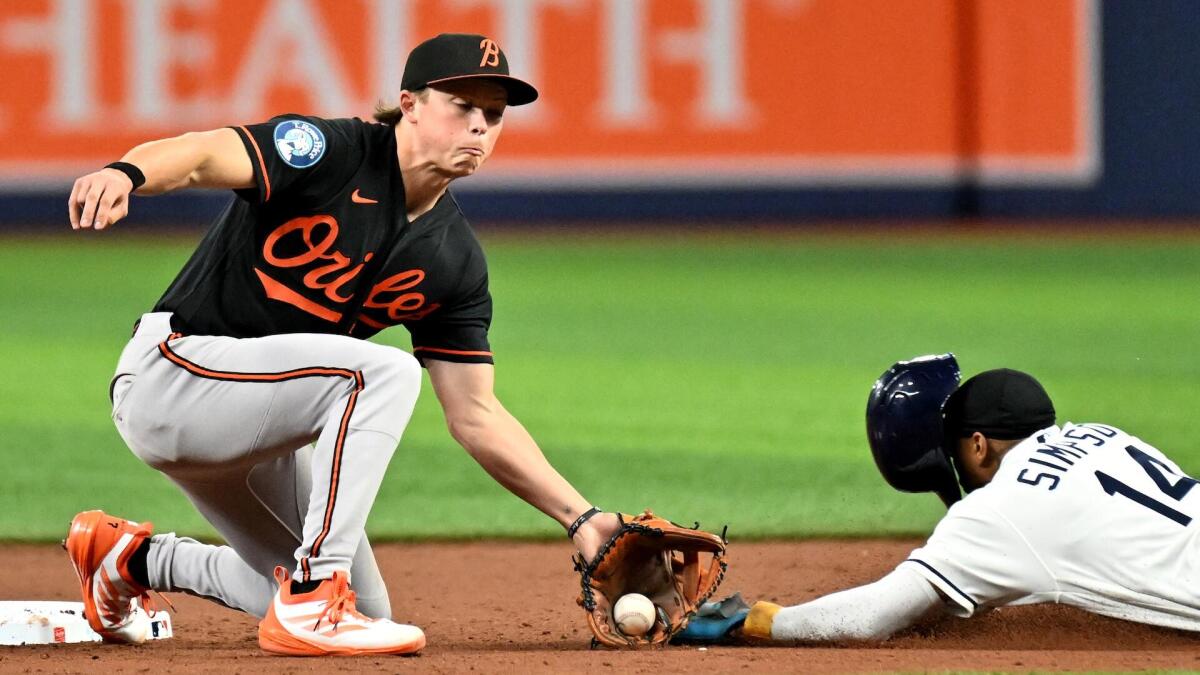
The Tampa Bay Rays are chasing a sweep of the Baltimore Orioles on Wednesday afternoon at Tropicana Field, with first pitch at 1:10 p.m. ET. The matchup pits Baltimore starter Shane Baz—saddled with a 5.26 ERA and 1-5 record—against Rays right-hander Jesse Scholtens, who carries a 3.06 ERA and 4-2 mark. The Orioles sit in last place in the AL East while Tampa Bay occupies first, a gap that extends beyond the standings into pitching quality and offensive consistency.
Baz's recent trajectory is the mechanical problem here. Over his last six outings, the 27-year-old has posted a 5.08 ERA with a 1-3 record, signaling a pattern rather than a single bad start. His ability to induce swings and misses—historically his calling card—has eroded, and without strikeout dominance or pinpoint control, he's become a batting-practice target for teams with active approaches. The Rays, sitting atop the AL East, have specifically thrived against just this profile: middle-of-the-rotation starters lacking elite stuff or command. Over their last eight games, Tampa Bay has pushed the total over in every single contest, and in their last five matchups against AL opponents, the over has connected in four.
The pitching edge cuts deeper when you consider Scholtens' profile. A 3.06 ERA with a 4-2 record suggests a pitcher eating innings without dominant strikeout stuff—the kind of starter who depends on defense and pitch sequencing rather than overpowering hitters. Against an Orioles lineup already struggling (last place, limited offensive upside), Scholtens' fastball-heavy approach plays to a neutral outcome, but Baz's inability to miss bats or locate his fastball against the Rays' selective approach is a clear vulnerability. The model's projection of 9.9 combined runs (over the 8.5 total) stems directly from Baz's recent inefficiency; teams with ERA climbs above 5.0 over rolling six-game samples tend to allow 4-5 runs in single starts against disciplined lineups.
The over has specific structural support beyond trend chasing. Matinee games—especially on a Wednesday—carry a small but measurable edge toward offensive inflation. Afternoon temperatures at Tropicana Field in late May run 10-15 degrees warmer than evening games, adding 8-12 feet to fly balls on average. Baz's fastball, sitting 92-94 mph, is right in the band where warmth matters most. The Rays' eight-game over streak isn't noise; it reflects an offense built on patient at-bats and elevated launch angles. When Baz can't generate ground balls (his recent strikeout rate has fallen to 6.2 K/9, well below career averages), he's conceding barrels to a team built to exploit them.
This edge exists in the near term—the first 24-48 hours before market adjusts to Baz's recent deterioration and the Rays' specific tendency against this pitcher archetype. The line opened with the over/under at 8.5, which undervalues the combination of Baz's command collapse and Tampa Bay's matinee proficiency. Once sharper bettors and larger syndicates recognize the mismatch, the line will compress upward. Take the over while the market still prices Baz's season-long ERA rather than his last six games.