Basallo's Early Exit Signals Catching Depth Test for Orioles
By Ty Whitney ·
Baltimore's rookie catcher departed with shoulder soreness after two innings, forcing an unplanned shift behind the plate mid-game.
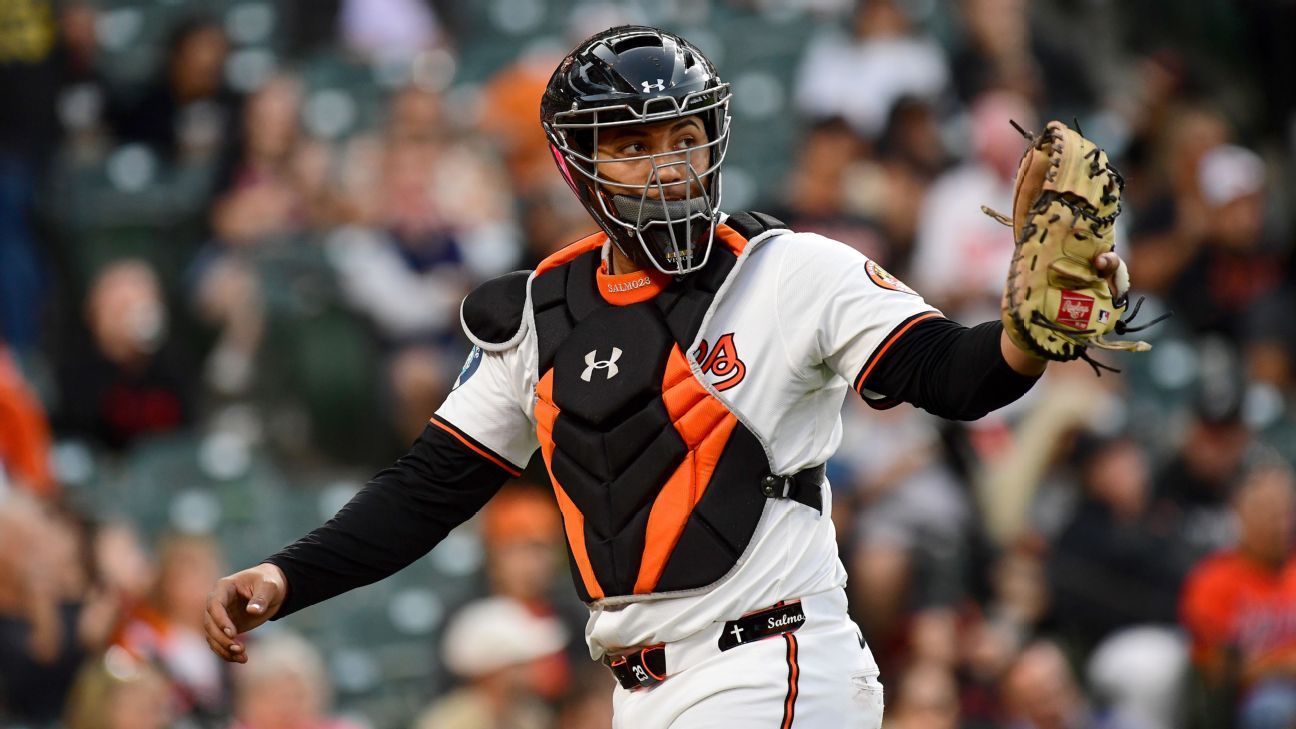
Samuel Basallo, the 21-year-old catcher anchoring Baltimore's offense through its first full MLB season, exited Sunday's game against Houston in the second inning due to right shoulder discomfort. The injury came after Basallo caught the bottom of the first and grounded out to start the second, at which point Sam Huff—whose contract was selected before first pitch—took over behind the plate. The timing is notably uncomfortable: the Orioles entered the day riding a six-game winning streak, and an unexpected loss of receiving duties mid-game raises immediate questions about severity and availability.
Basallo has been a centerpiece of Baltimore's 2026 season, batting .241 with 16 home runs and 46 RBIs. His 21-year-old profile—still adjusting to full-season workload at the highest level—makes him vulnerable to soft-tissue issues that can linger or worsen with repeated throwing and physical demand. Shoulder discomfort in a catcher is a flag worth tracking because it directly impacts throwing mechanics and framing ability. Even a "minor" strain can force a player toward the 10-day IL if inflammation builds, and the fact that Baltimore pulled him immediately rather than letting him test it through the inning suggests the team is treating it as precautionary but real.
Huff's entry into the game provides short-term depth insurance, but his presence does not resolve the underlying risk. The Orioles' catching depth is thin enough that any extended absence from Basallo forces reps onto a roster player who was not in the everyday lineup. This matters not just for game outcomes but for player prop exposure: Basallo's hitting totals (HR, RBI, hits) are among the Astros' consideration set for evening-game correlations because he hits in the meat of Baltimore's order. If he lands on the IL, that offensive burden shifts, and the batting profile of the Orioles' lineup changes measurably.
From a prop lens, the immediate angle is Orioles team total and over/under exposure over the next 48-72 hours. If Basallo is cleared quickly (soreness that resolves with rest, no structural findings), the line adjustment will be minimal and fade fast as the market reprices. But if he requires imaging or if the team is cautious about his availability for the next 2-3 games, Baltimore's offensive floor drops noticeably. A rookie catcher producing 16 homers in the first half carries cumulative power value; his absence forces the lineup to absorb more burden through other hitters who may not have the same upside. Unders on the Orioles' team total should be monitored for pricing inefficiency in the window before an official IL move is announced, as books may not have fully adjusted for a scenario in which Basallo misses multiple games. Once the formal designation hits, the line will shift. The edge—if one exists—is in the hours of ambiguity between departure and confirmation.
The Orioles' six-game winning streak adds another layer: momentum-driven markets often overprice near-term volume when a team is hot, and a mid-game injury that removes a key contributor can expose that premium. Watch the closing line on Monday's game and beyond for whether Baltimore's hitting totals remain elevated despite Basallo's status being unclear. That spread will tell you whether the market has already baked in depth concerns or whether it's still pricing the streak alone.