Olson's 10th-Inning Blast Ends Braves' Road Opener; July Surge Continues
By PropBetEdge Editorial Team ·
Matt Olson's three-run homer in extras breaks a 6-6 tie and extends Atlanta's second-half hot streak, raising questions about whether his mid-summer power is sustainable or a residual All-Star break bounce.
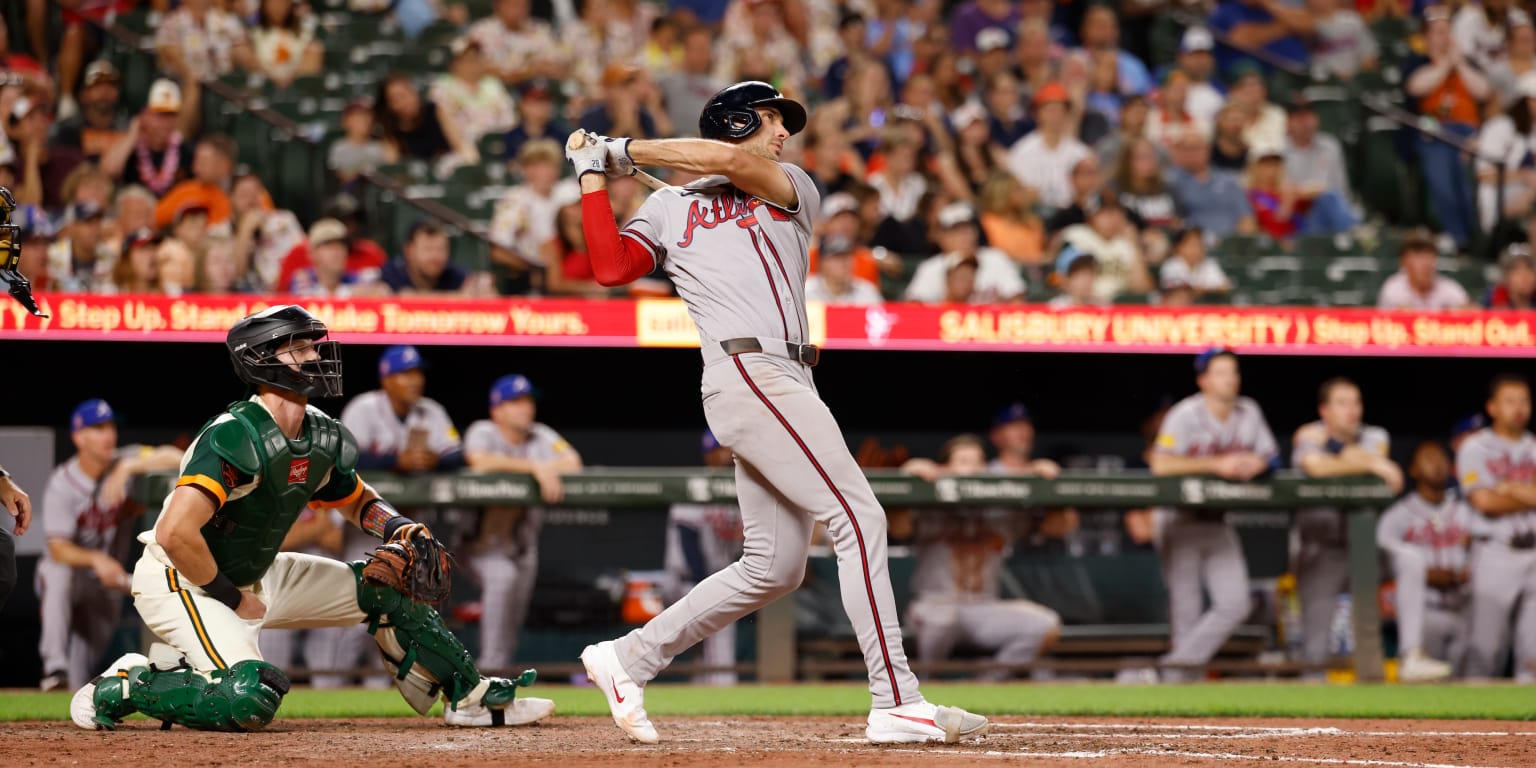
Matt Olson's 27th home run of the season—a 416-foot shot to right-center off Andrew Kittredge—broke a 6-6 tie in the 10th inning and lifted the Braves past the Orioles 7-6 on Friday night in Baltimore. The blast capped a two-from-behind rally for the NL East leader, marking Atlanta's sixth win in eight games since the All-Star break. It was Olson's seventh homer in July, a pace that demands scrutiny: the Braves first baseman is now two weeks into his return from his fourth All-Star appearance and has already homered at a rate (seven in 14 days) well above his seasonal 27-in-120-game baseline.
The mechanism behind Olson's July surge is worth isolating. Post-All-Star breaks often produce inflated home-run rates due to a clustering of favorable matchups, fresh-off-rest fatigue in opposing bullpens, and the natural variance of a 15-game sample. Olson's two homers since returning (including one in the 15-1 opening game against Texas) suggest he benefited from an easy first assignment. The Orioles, despite their strong second half, fielded a bullpen exhausted by recent extra-inning games and roster churn. Kittredge, the arm Olson touched up, had been pressed into service after the Orioles' primary options were depleted. This is the story of one game against one tapped-out pitcher, not a fundamental shift in Olson's offensive profile.
The Braves' defensive execution—Michael Harris II's warning-track robbery in the third, Mauricio Dubón's diving save in the sixth, Jorge Mateo's exceptional backhanded stop turned against his former team—kept them in a tight contest they had no business winning. Grant Holmes, Atlanta's starter, worked five innings of two-run ball on six hits and two walks, continuing a streak of 12 consecutive starts with three or fewer runs allowed. But he also remains stuck in a separate trend: seven of his last eight outings have failed to extend past five frames, a sign either of limited stamina or intentional pitch efficiency. That pattern matters for team-total and first-five-innings props going forward; Atlanta is leaning on a starter who won't go deep into games.
For prop bettors, Olson's elevated July home-run rate is noise, not signal. A 15-day sample against mixed competition (Texas's exploitable defense, Baltimore's depleted relief corps) cannot override a 120-game body of work. His 27th homer came in an extra-inning context where the Orioles deployed a third-string reliever facing a three-run deficit with runners in scoring position—the highest-leverage spot imaginable. Taking the over on Olson's home-run prop in his next game against a fresh, elite bullpen is a fade of market overweight, not a bet on a correction. The market may briefly spike his line after a go-ahead 10th-inning blast on national television. Wise to lay it.
Atlanta's second-half form remains genuine—six wins in eight games is 73-win pace—but this single victory against a bullpen-exhausted opponent is outsized proof of nothing. Holmes' inability to pitch past five innings, meanwhile, reshapes how Atlanta must construct its pitching strategy in close games. The Braves won Friday because of late defensive excellence and one favorable matchup. That pattern does not persist.