Olson's First Homer in Two Weeks Signals End to Braves' Offensive Drought
By PropBetEdge Editorial Team ·
A game-tying blast ends Matt Olson's longest power drought of the season and resurrects a lineup that managed just one run in 18 innings against Washington.
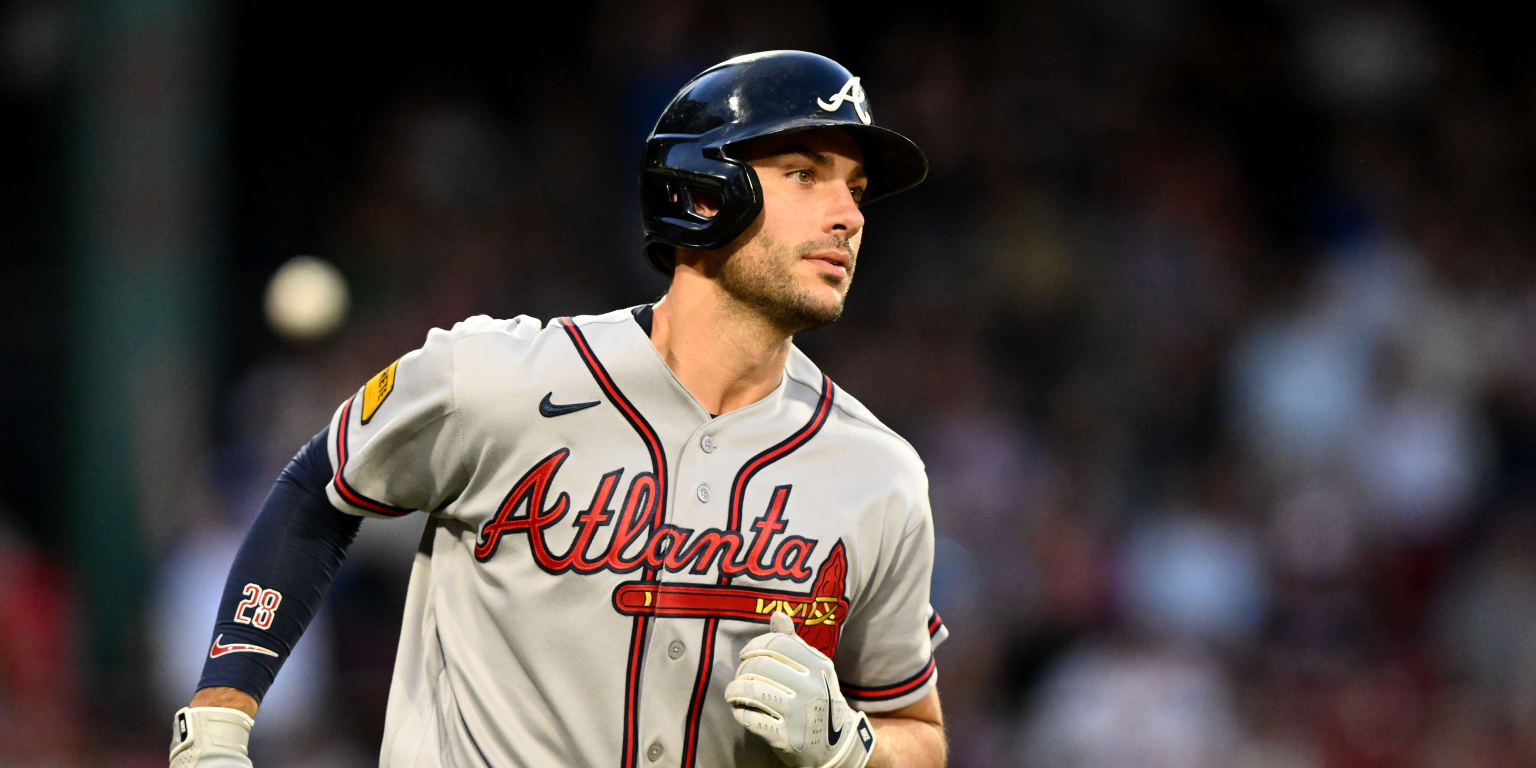
Matt Olson's solo shot off Ranger Suarez in the fifth inning Tuesday night at Fenway Park broke a two-week power drought and delivered the Braves a 7-6 win over Boston. The significance goes beyond the run. Olson entered the game hitting .160 with a .422 OPS over 13 contests dating to May 12—a stretch that coincided with visible discomfort in his right elbow after a whiff on May 15. That mechanical issue, real or perceived, had haunted his approach at the plate and fueled questions about his health.
The homer itself carries weight because context. Olson had managed only two extra-base hits in his previous 51 at-bats before connecting on a first-pitch sinker. He was the majors' fWAR leader earlier in May; the subsequent collapse looked less like typical midseason variance and more like something physical limiting his ability to drive the ball. A player with Olson's track record doesn't simply forget how to hit for two weeks—mechanical breakdown or injury usually explains it.
Michael Harris II did the heavier lifting offensively, finishing 4-for-4 with two homers, his second four-hit game of the season. Austin Riley and Ronald Acuña Jr. also recorded decisive hits in the sixth-inning rally. But the Braves' run prevention matters as much as run production here. Spencer Strider surrendered back-to-back homers to open the bottom of the first, then retired 15 of his next 18 batters—a control spike that kept Boston from capitalizing on early advantage.
For prop bettors, Olson's health trajectory is the immediate angle. His power line—currently sitting around 0.5 HRs per game across most books—likely underprices his upside if the elbow concern proves overstated. He's a 35+ homer-per-season player when healthy; two weeks of dysfunction doesn't erase that baseline. Look for his HR and total-base props to offer value as the market slowly reprices him toward his long-term true talent level rather than his short-term slump. Harris II's 4-for-4 night is a single-game spike—volatility, not a repeatable pattern—so any line adjustment in his favor should be faded within 48 hours as regression reasserts.
The broader team takeaway: the Braves' offense shifted from moribund (one run in 18 innings vs. Washington) to functional in one evening. That's a 24-hour variance event, not a sustainable correction. Team totals should stay roughly where they were; this wasn't a systems breakthrough, just a release of suppressed talent.