Ohtani's Tee Work Opens Return Window—But Dodgers Playoff Path Won't Wait
By Erik Schwartz ·
Seven days into a biceps injury, the Dodgers' MVP cleared soft toss; the real bet question isn't whether he plays, but when, and what his minutes look like if he does.
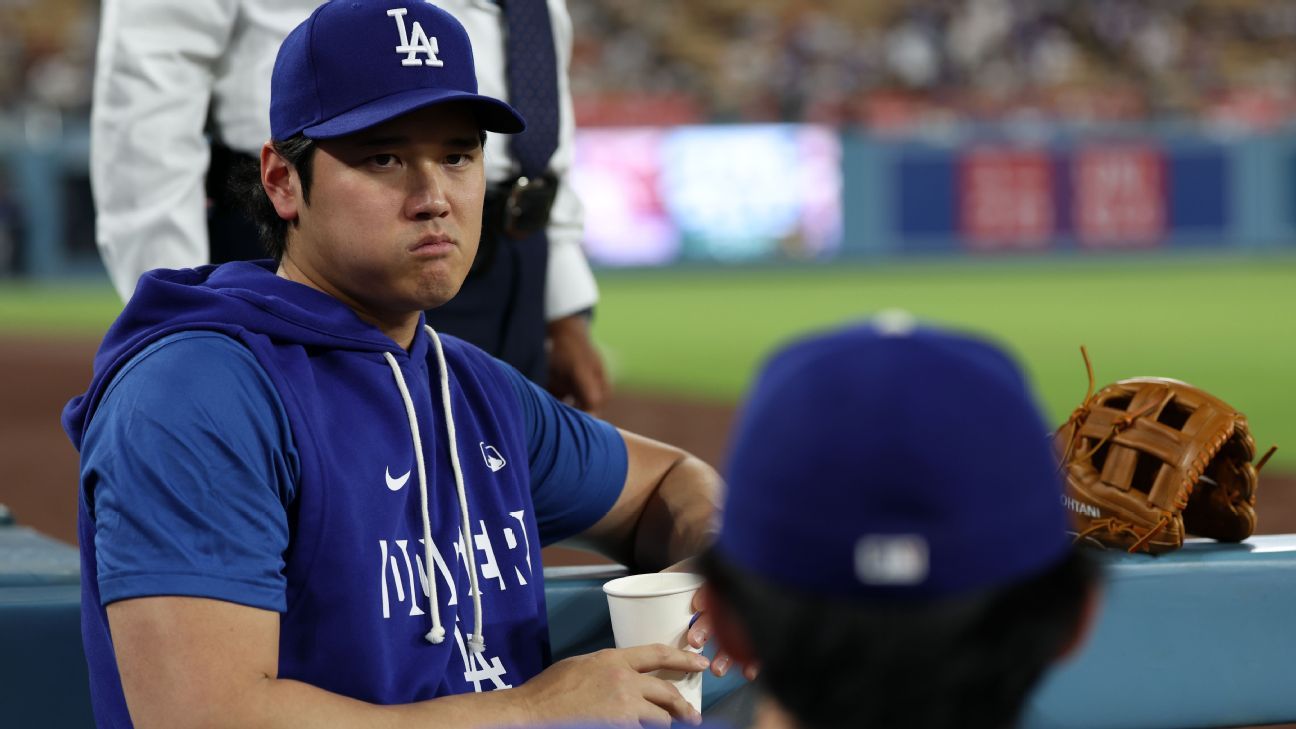
Shohei Ohtani took his first swings off a tee Tuesday in Los Angeles, marking a visible step forward in his recovery from right biceps inflammation that landed him on the 15-day IL on September 8. Manager Dave Roberts framed the session as encouraging—Ohtani felt good—and reiterated that the star remains on track to appear in at least some regular-season games before October begins. For a player of Ohtani's caliber, any forward momentum reads as material. But the Dodgers' calendar and postseason readiness already altered the stakes.
Ohtani has been sidelined for exactly one week. The regular season ends on September 28, giving him roughly two weeks to transition from tee work through live batting practice and pinch-hitting appearances into something resembling game rhythm. The Dodgers, already having clinched a playoff berth, have no pressure to rush him—and every reason not to. A biceps injury that required IL placement carries load-management hazard; inflammation can flare under stress. Roberts's vagueness on timing ("don't know how many games," "whether it happens or not is to be determined") is honest, not evasive. The front office is buying time to see if Ohtani can build tolerance without reaggravating the issue.
For betting purposes, this creates a two-tier scenario. If Ohtani returns before September 28, he arrives as a DHU or pinch-hit option—limited plate appearances, likely fewer than five per game if he appears at all. That's a structural constraint that flattens his individual prop ceilings. A player who normally carries a 4.5+ strikeout line doesn't hit that number in two at-bats. His power props, walks, and RBI lines all compress proportionally. The Dodgers' batting order will function without him in the lineup every night, meaning his absence has already been priced into team totals and spread calculations for the next 13 games.
Where the angle surfaces is in game-level granularity. If Ohtani is activated and appears as a pinch-hitter or DH late in September games, sportsbooks will assign him a full slate of props—but with volume-adjusted lines reflecting uncertainty about at-bats. A book might offer Ohtani strikeouts at 0.5 or 1.5 depending on insertion point. At that moment, the gap between a player projecting 4.5+ K's in a full game and a 0.5-1.5 floor for pinch-hit duty represents sharp value. The mechanism is simple: market models default to typical usage until confirmation, then lag slightly behind the actual constraint. Early bets on Ohtani unders in any individual metric—strikeouts, hits, total bases—carry an edge if he's activated with limited plate-appearance guarantees. Dodgers team totals for games in which Ohtani appears will also face downward revision once his role becomes clear; if you're tracking aggregate run-scoring, fade overs on those specific dates until lineup confirmation.
The playoff implications matter less than the calendar. Two weeks remains ample time for Ohtani to build from tee work to DH availability. The real bet isn't on his return—it's on recognizing that a returning Ohtani, even a healthy one, arrives constrained by September schedule logic, not injury severity.