Ohtani's Swing Work Ticking Forward, but Live Pitching Still Days Away
By Erik Schwartz ·
The Dodgers' star is progressing through cage work ahead of the playoffs, but Dave Roberts wants to see 10-12 competitive at-bats before clearing him for games.
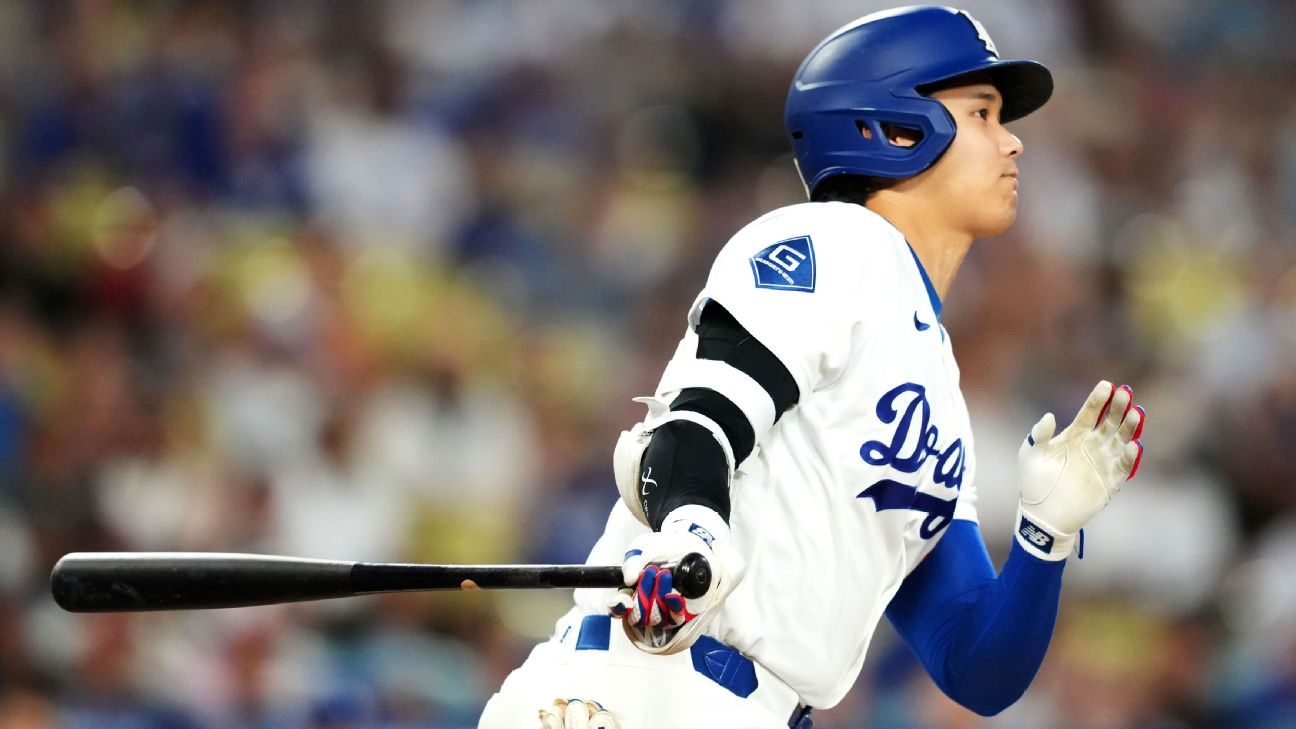
Shohei Ohtani hit off a tee for the first time Tuesday and has spent the last three to five days working on his swing mechanics while sidelined with right biceps, left leg, and neck soreness. The timing is tight: Los Angeles clinched the NL West on Thursday, and Ohtani is eligible to return Wednesday during the final regular-season series against San Diego. Manager Dave Roberts is taking a deliberate approach, signaling he wants 10 to 12 at-bats against live pitching before Ohtani steps into a game, even as October looms.
This is not a race-the-clock scenario disguised as precaution. The Dodgers have secured their division and know their playoff seeding; there's no competitive pressure forcing Ohtani into action before his swing feels right. Roberts' statement—that everything he's heard has been "really productive"—suggests the mechanical work is on track, but the absence of live pitching or Trajekt machine data means there's still a gap between drill performance and game readiness. Soft toss and cage reps don't replicate the visual processing demands of live heat, and Roberts knows it.
For bettors, Ohtani's absence ripples across the Dodgers' injury-adjusted baseline. His presence in the lineup lifts offensive efficiency—he's a 130+ wRC+ threat who handles breaking stuff and doesn't chase. His absence pushes the team toward deeper bench usage and creates marginal defensive alignments. With three regular-season games remaining (San Diego series, starting Wednesday), Ohtani may not see game action at all in the regular season. That means the Dodgers will enter the postseason with him either fully ramped on live pitching or partially ramped—a material variance for team total and run-scoring props.
The mechanical question is what happens when he does face live arms. A three-to-five day cage cycle is too small to predict whether his swing corrections hold under game intensity or regress when adrenaline and fatigue enter the equation. Roberts' demand for 10-12 at-bats is his hedge against that risk: it's the threshold where muscle memory solidifies and adjustments stop being fragile. Ohtani won't see those reps in the regular season if he returns Wednesday or later. He'll get them in meaningless September games or early playoff action—either way, his first week back carries variance that standard seasonal props don't price in. The market has already adjusted Dodgers team totals for his absence; when he returns, the book will chase upward. The real edge is whether his first-week performance justifies the adjustment or falls short of the reprice. That's a fade-the-return-pop angle for two to three games after he clears, assuming the market moves aggressively on his activation date.