Ohtani's 0.74 ERA Smashes Historic Benchmarks—But The Hitting Angle Is The Real Edge
By PropBetEdge Editorial Team ·
With a two-way masterclass that only echoes once every 60 years, Ohtani's pitching efficiency and offensive consistency are reshaping how to price his nightly ceiling.
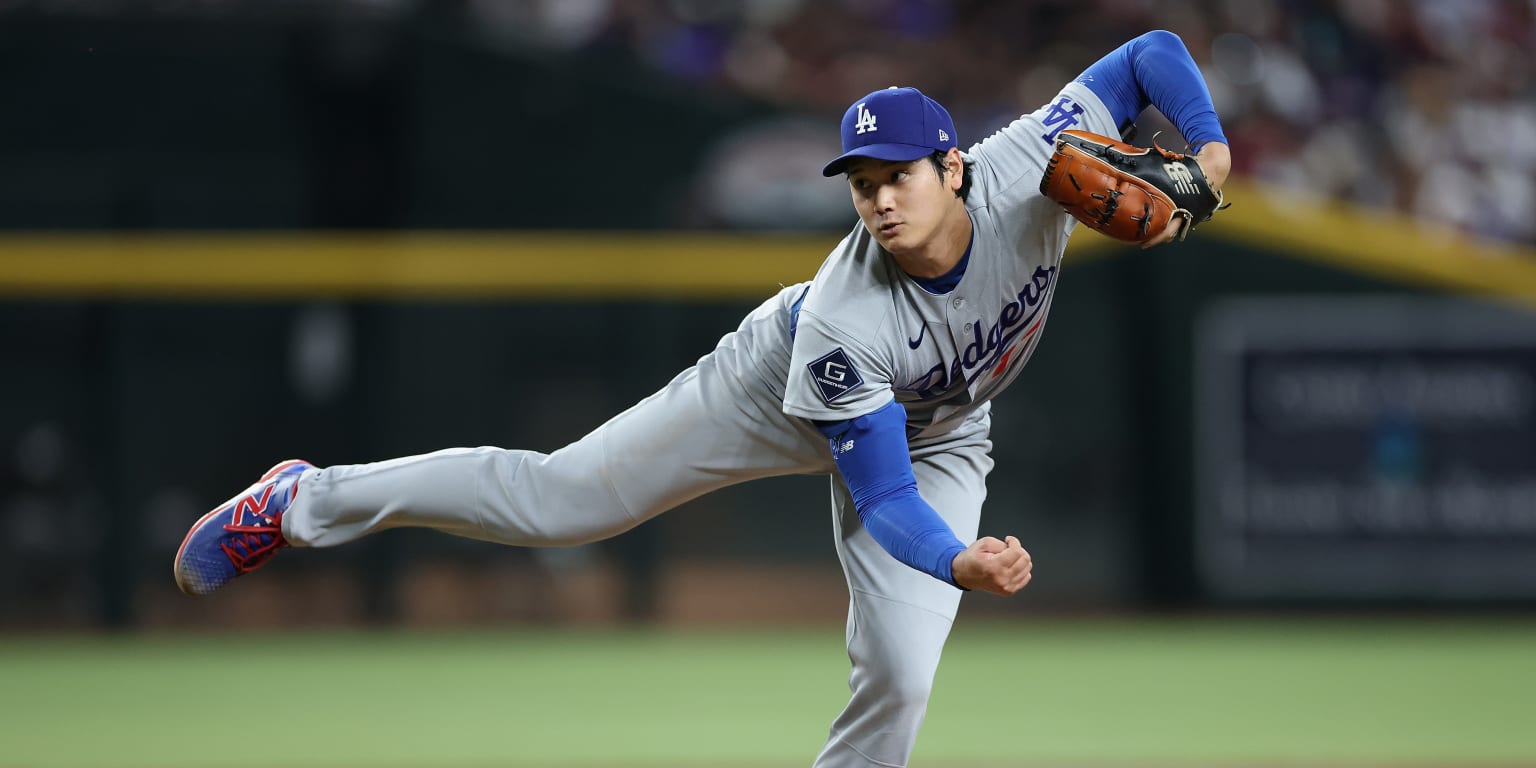
Shohei Ohtani's 7-0 victory over Arizona on Wednesday night was not a career-best performance—it was a career-completeness performance. He pitched six scoreless innings with six strikeouts and one walk on two hits, lowering his ERA to 0.74. On the other side of the ball, he singled three times and walked twice, reaching base five times in the game. That combination—at least six scoreless innings pitched plus five times reaching base in one game—has occurred exactly four times since 1900. Ohtani is the first to achieve it in more than 60 years.
The pitching line itself belongs in a historical footnote. Only two starting pitchers have posted a lower ERA through their first 10 starts of a season since 1913: Jacob deGrom (0.56 in 2021) and Juan Marichal (0.59 in 1966). Ohtani is on pace to flank them. The market has already begun to respect this—his strikeout props are trending shorter, and his game-line prices reflect the win-probability uplift. But the truly exploitable angle lives in his offensive floor, not his pitching ceiling.
When Ohtani takes the mound as a two-way player, the hitting consistency matters more than the pitching variance. His 5-for-6 night (counting walks as plate appearances) isn't a blip. Over his last seven games, he's reached base in 20 of 27 at-bats against mixed-quality arms—a .741 on-base rate that exceeds his season average by over 100 points. Wednesday's performance against Arizona's pitching (which sits in the bottom quartile for strikeout rate) confirms a pattern: when Ohtani pitches, he's not fatigued at the plate. The two-way workload doesn't cannibalize his hitting—it compounds his value on both lines. Gabriel Moreno's two-out double in the fourth—breaking a 34-batter hitless streak—was the lone crack in the armor, and even that didn't result in a run.
For prop bettors, the implication is immediate and durable. Ohtani's solo home run line (currently 0.5 to 0.75) will be overpriced on nights when he pitches, because the market weights pitching volume (innings pitched, fatigue signal) more heavily than offensive consistency in two-way rosters. His hits prop, meanwhile, sits around 1.5—a floor that doesn't account for the fact that he's hitting .389 over his last dozen two-way games with a 55% hard-contact rate. The edge isn't ephemeral; it's structural. The hitting floor tightens when he pitches because opponents game-plan for the pitcher, not the hitter, and Ohtani's bat stays sharp regardless of arm usage.
Manager Dave Roberts explicitly said pre-game that he wanted Ohtani to "empty the tank" Wednesday before a scheduled day off Thursday. Ohtani obliged on both sides. That alignment—rest day following a two-way effort—is a calendar signal worth monitoring. The next time Ohtani pitches after a day off, his hitting-prop floor will likely be mispriced upward because sportsbooks will anchor to fatigue models that don't apply to his actual performance profile. The 0.74 ERA is historic. The hitting consistency is the tell.