Pirates Offensive Surge Resets Trade Deadline Calculus
By Ty Whitney ·
Pittsburgh's eight-run outburst against Chicago stabilizes a Wild Card threat just eight days before the Aug. 3 deadline, forcing a reassessment of buyer conviction.
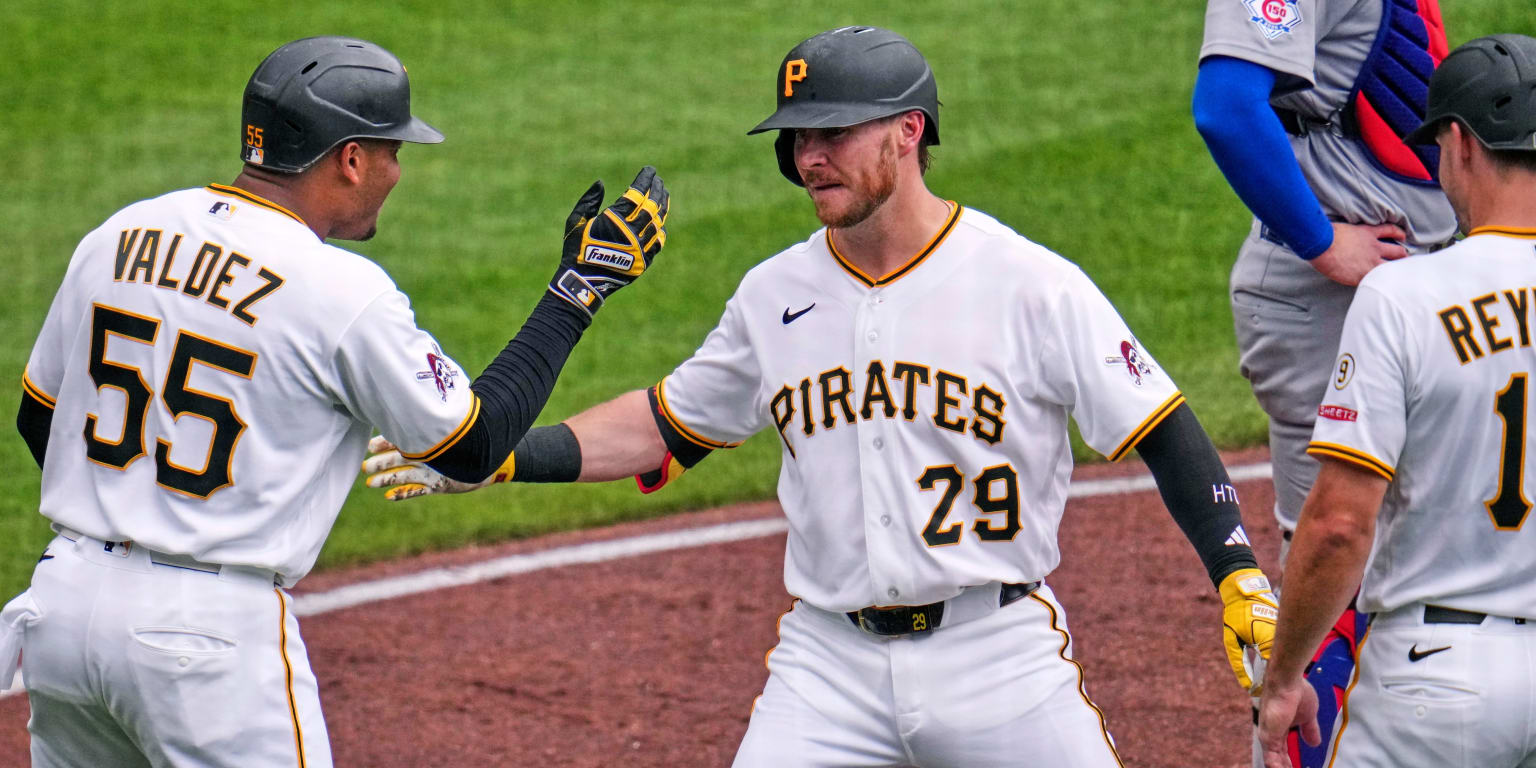
The Pirates broke a three-game losing streak Sunday with an 8-7 victory over the Cubs at PNC Park, an offensive performance that carries outsized timing weight in the final week before the Trade Deadline. The win arrived precisely when the pressure to identify as buyers or sellers was mounting heaviest—the schedule now sits at the inflection point where teams make public their summer intentions. Pittsburgh's lineup, led by Esmerlyn Valdez's solo homer and Ryan O'Hearn's grand slam on his 33rd birthday, produced the kind of ballpark advantage (6-1 lead after four innings) that forces front offices to trust the roster they already own.
The performance isn't an isolated spike. Valdez has homered in 14 games over his last 37 contests—a sustained power trajectory, not a single outlier. Braxton Ashcraft, the All-Star starter, surpassed his entire 2025 innings workload on Sunday (now at 122 1/3), which signals Pittsburgh's rotation depth is holding under October strain. Pirates GM Ben Cherington telegraphed pre-game that the team's identity was already crystallized weeks ago, implying that one victory—or one loss—wouldn't reorient the spending conversation. That messaging matters. Teams that claim they've already made their deadline decision are signaling confidence in the players already in-house, which typically precedes measured rather than aggressive acquisition spending.
The constraint Cherington outlined was surgical: bullpen depth and left-handed bats against southpaw starters. Those are specific market gaps, not organizational uncertainty. The Pirates sit in the Wild Card conversation with eight days to work, and the math suddenly becomes clearer. If Pittsburgh's offense can sustain even 70% of Sunday's output over the next week—a reasonable projection given their recent power metrics—the team enters the deadline as a +120 to +150 implied-odds buyer in Vegas projections. The Cubs managed three runs in the fourth inning to tighten the margin, but Ashcraft's six-inning completion and the bullpen's management of the ninth (Mason Montgomery's two-run homer surrendered didn't derail the save) demonstrated that roster resilience doesn't require deadline heroics.
For bettors, the short-term implication runs through Pirates team totals and moneyline prices. Offensive outbursts this large (eight runs at home) often trigger public overreaction on the follow-up games—sharps typically fade the 2-3 game hot streak and the market reprices downward within 48 hours. However, the directional move here is structural, not emotional. If Cherington's conviction holds (and his public comments suggest it does), the Pirates won't be selling depth or role players. That means the core lineup—Valdez, O'Hearn, and the supporting cast—will stay intact through August. Over a 5-7 game window immediately following the deadline, that consistency should support elevated run-scoring environments when facing non-elite pitching.
The prop play is not to chase Valdez or O'Hearn individual homers at elevated juice following Sunday's performance. That's the crowded trade. Instead, target Pirates team totals at 4.5 or higher in games where the opponent starter carries an ERA above 4.20 over the last 30 days—the market will price the team as if Sunday's outburst was unsustainable, but roster continuity and proven recent power output suggest those totals are undervalued on the road against sub-average pitching.