O'Hearn's Historic Night Masks a Pirates Rotation Problem
By Ty Whitney ·
Ryan O'Hearn's 10-RBI eruption sets a franchise record, but the Pirates' real vulnerability lies in depth behind Skenes.
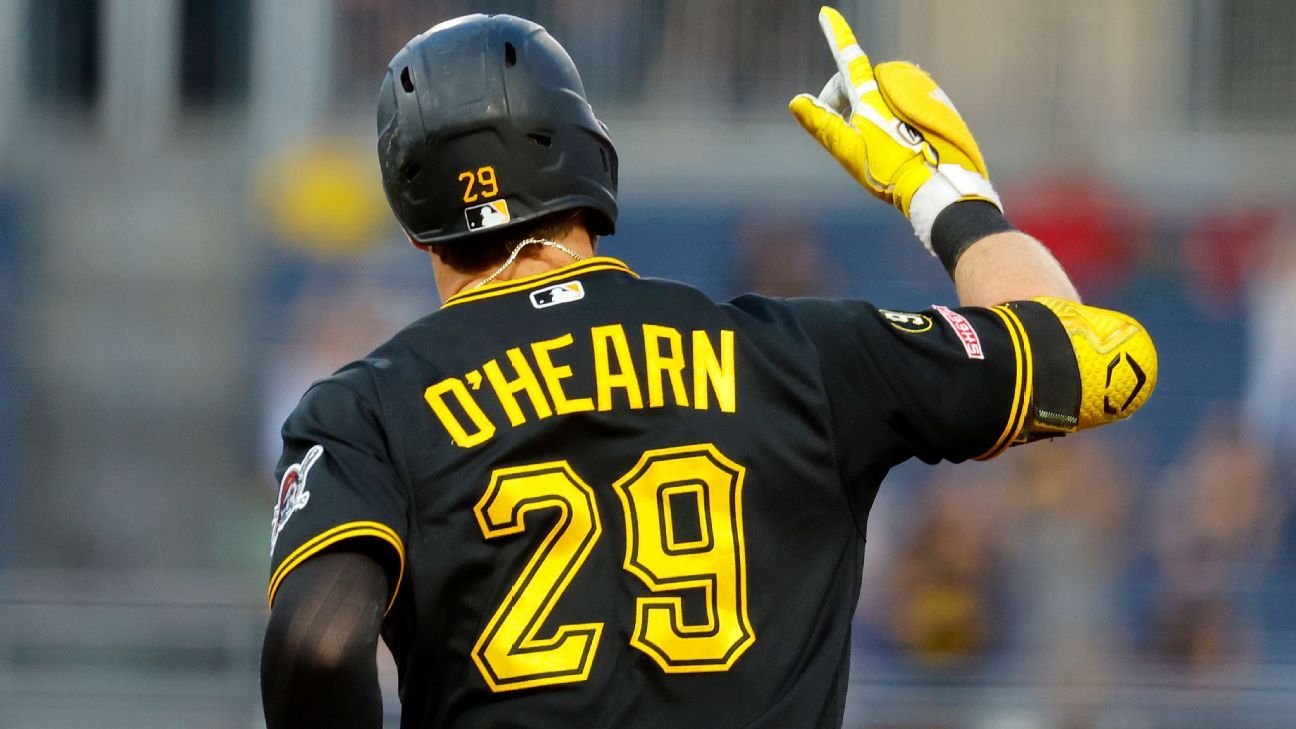
Ryan O'Hearn drove in 10 runs on three home runs Tuesday night, breaking the Pirates' single-game RBI record and becoming only the 11th player since 1920 to thread that particular needle. The performance—a grand slam off Hurston Waldrep in the first, a three-run shot in the third, and another three-run blast off Connor Thomas in the sixth—carried Pittsburgh to a 12-4 victory over Atlanta and extended the Pirates' winning streak to three games. But the narrative around this record-setter carries a darker undertone.
O'Hearn's signing as a free agent represented an unusual bet by Pittsburgh: a multiyear deal for a player who'd spent the prior season splitting time between Baltimore and San Diego as an All-Star. His presence in the middle of the order was supposed to stabilize an offense that had limped through stretches of the season. One night does not validate that gamble, but nights like this—where a single player accounts for the entire offensive margin in a 12-4 win—illustrate how top-heavy the Pirates have become dependent on individual heroics rather than sustainable run production. The Braves scored only four runs against a Pirates rotation that now leans heavily on Paul Skenes, the reigning NL Cy Young winner, who allowed two runs over six innings to notch his first win in nearly two months.
Waldrep's implosion (seven runs in 3⅓ innings, five walks) and the Braves' three-game slide are secondary to the real cost of O'Hearn's night: the same day, the Pirates lost star rookie Konnor Griffin to a left-hand injury projected to sideline him 8-10 weeks. For a team positioned atop the NL East, that's a significant blow to depth. Griffin represents the kind of prospect-driven upside that was supposed to insulate Pittsburgh against relying on one 35-year-old's outburst to win games.
From a betting standpoint, O'Hearn's explosion is a single-game spike that will create an immediate pricing problem. Books will adjust Pittsburgh's run-production props upward in the next 24-48 hours—O'Hearn's HR line, Pirates team totals, and first-inning run props will all shift—but this was a three-homer outlier performance in a career of 15-homer seasons. The real edge lies in fading the market's overreaction. Pittsburgh's offense has scored 4.2 runs per game over the past 15 games; one 12-run game doesn't change that underlying rate. More importantly, with Griffin out for two months and Skenes not guaranteed to dominate every start (his 3.58 ERA suggests variance), betting unders on Pirates team totals in the 4.0–4.5 range becomes attractive as the market prices in false confidence from a single heroic night.
The Braves remain NL East leaders despite the loss, and their pitching depth (replacing Waldrep's disaster with competent arms) will stabilize. O'Hearn will revert to his mean: a solid first baseman, not a five-home-run-per-game variance machine. The Pirates' real test is whether they can win without a historic individual performance, not whether O'Hearn can replicate Tuesday.