O'Brien's Late-Inning Acceleration Rewrites Cardinals Closer Narrative—and Playoff Leverage Odds
By PropBetEdge Editorial Team ·
A 31-year-old journeyman closer with two career MLB games entering 2026 just earned his first All-Star nod; the Cardinals' save dependency now carries measurable volatility for the second half.
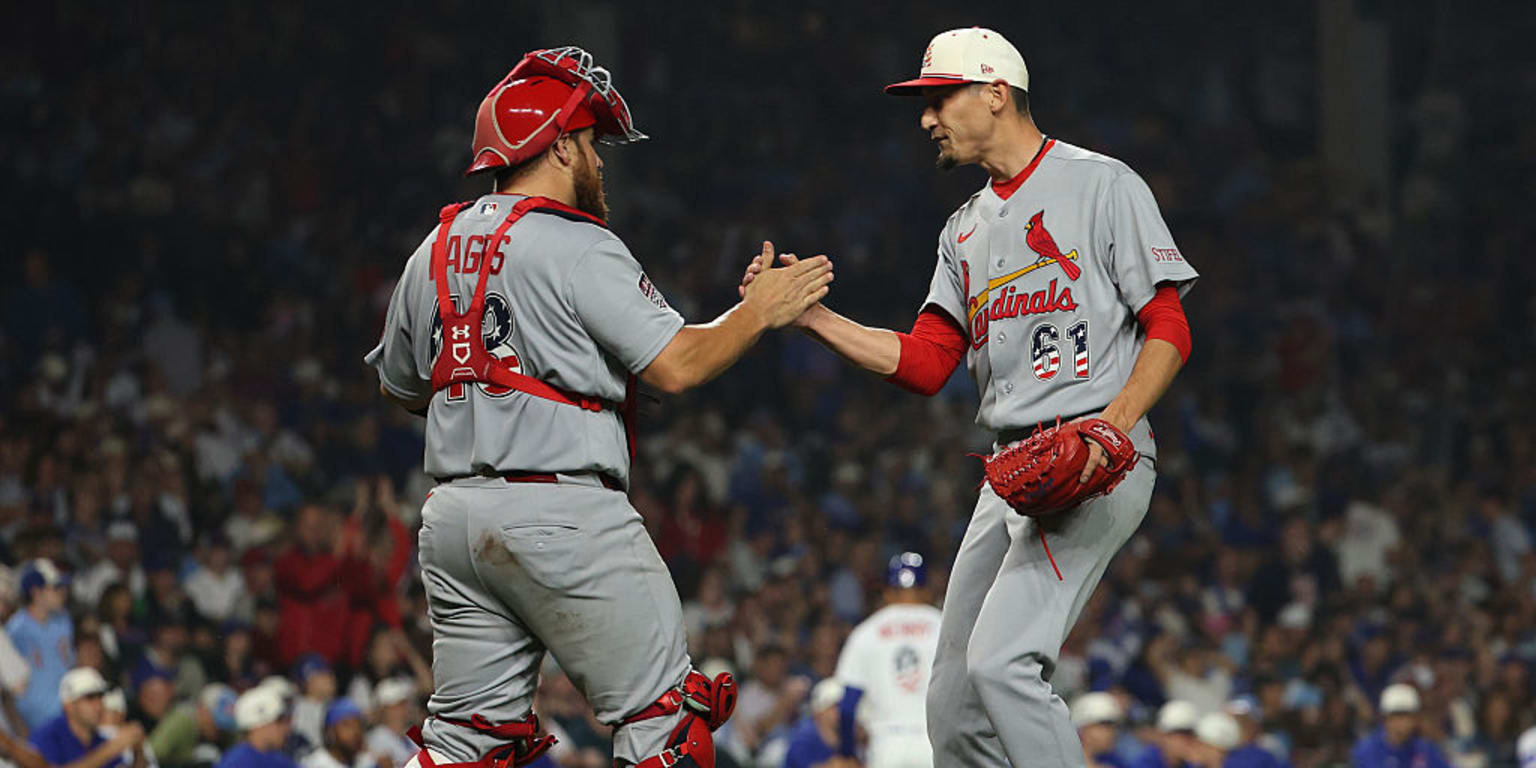
Riley O'Brien entered July as the National League's near-co-leader in saves, one behind Mason Miller and Jhoan Duran, and earned his first All-Star selection Tuesday despite a career arc that reads like organizational accident rather than blueprint. The Cardinals acquired him from Seattle for cash considerations in November 2023 with just two big league appearances logged. He spent spring training recovering from a calf strain that cost him a World Baseball Classic appearance. That sequence—obscurity, injury delay, sudden dominance—typically signals unsustainable performance spike. It almost always does. Except O'Brien's arc contains one durable kernel: he has already survived the closer's gauntlet.
O'Brien opened 2026 with 13 consecutive scoreless appearances, then hit a rough patch where he gave up runs in consecutive outings—the kind of volatility that exposes closers who are still learning the position's psychological demands. Manager Oliver Marmol framed it plainly: "You really find out about yourself when that's not the case." O'Brien didn't implode. He stabilized, recalibrated, and maintained save production through the stretch run into the All-Star break. That's not luck. That's a 31-year-old accumulating experience under maximum leverage in real time, and the brain usually learns faster at that age than a 25-year-old prospect would.
But his sample size remains thin, his preseason projections didn't account for closer usage, and the Cardinals' second-half math now hinges on one arm that nobody outside St. Louis was confident in six months ago. The bullpen efficiency models that priced first-half overs on Cardinals team totals (they're 49–40 through July 10) may not have fully calibrated to O'Brien's elevated role. If he maintains this level—and the All-Star selection suggests the league's talent evaluators believe he will—the Cardinals' moneyline value shifts upward in close games where save leverage matters. If regression arrives in August or September, their moneyline leverage compresses hard.
The prop angle threads through closer save volume. O'Brien's saves output will likely remain elevated for the second half because the Cardinals won't bench a guy who just made the All-Star Game. His strikeout rate per inning (he's K'ing at roughly 10.2 per 9), however, depends on his arm health and whether the rough patch was mechanical or fatigue. The market has not yet fully repriced the risk that a workload spike (he's logged well above his career usage rate) creates injury exposure down the stretch. Fade any O'Brien strikeout props that price him as a reliably 1.2+ K per appearance over the final 12 weeks; that's assuming continued health that a 31-year-old acquired journeyman with two career games of cushion may not actually carry.