Nola's Curveball Pivot Yields Strikeout Surge and Early Durability Signal
By PropBetEdge Editorial Team ·
Aaron Nola's return from paternity leave coincided with a five-inning, eight-strikeout outing that marks his third consecutive start without a walk—a mechanical adjustment pattern worth tracking in his K-prop pricing.
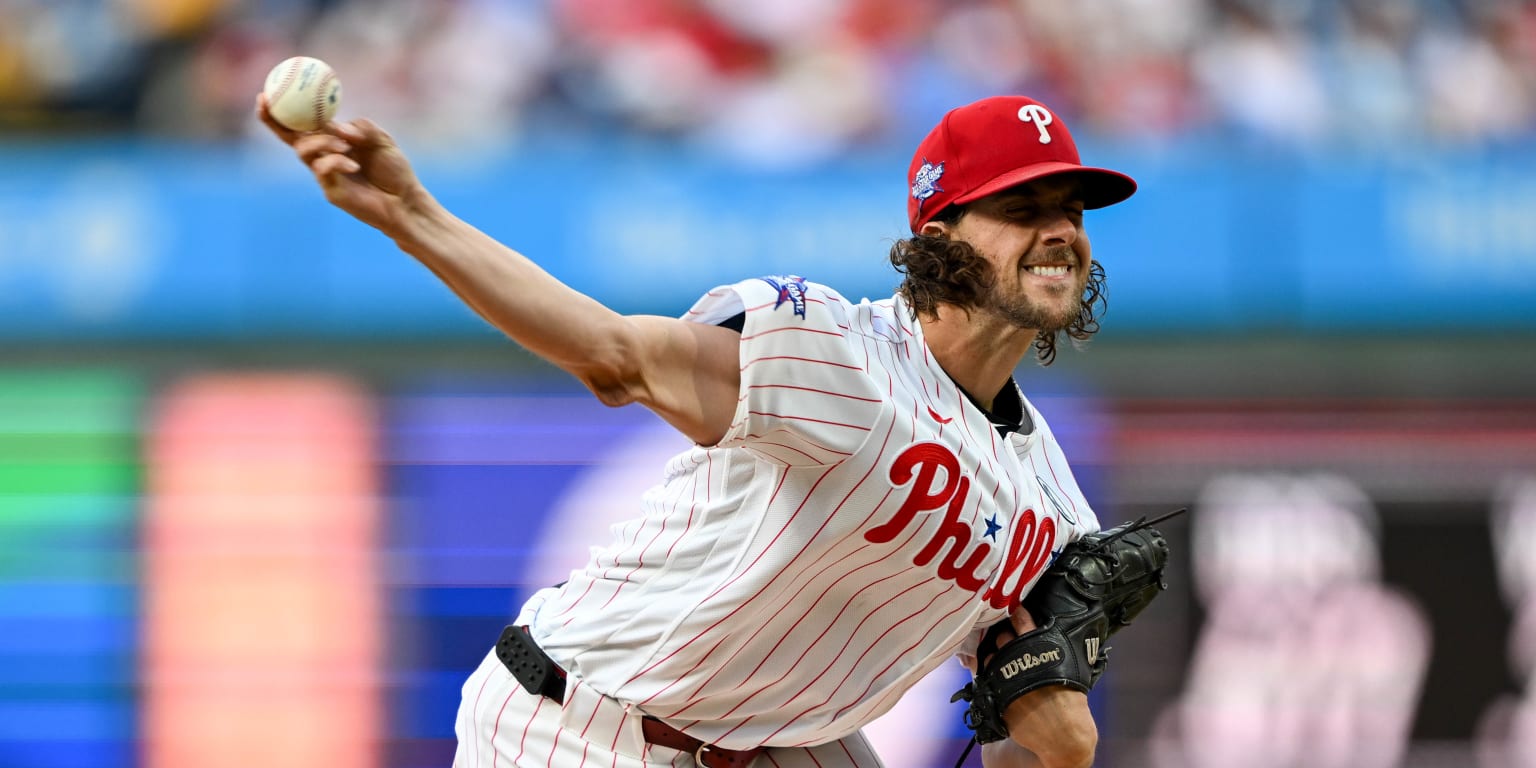
Aaron Nola took the mound Tuesday night for the Phillies against San Diego with a specific mechanics advantage in his pocket. Fresh off the paternity list, the veteran right-hander delivered five innings of two-run ball while striking out eight and issuing zero walks—a performance that extends a three-start streak without a free pass, his longest such sequence since late June 2024. The curveball was the engine. Nola threw it 39% of the time against the Padres, continuing a recent pivot toward heavier breaking-ball usage that began in earnest over his last outing, when his curveball touched a career-high 49% of his pitch mix.
That shift matters. After a grinding 14-month stretch of inconsistent results, Nola has found a repeatable way to induce contact while managing his walk rate—the two-part problem that had dragged his value down earlier in the season. The zero-walk streak isn't noise; it's the byproduct of a deliberate pitch-sequencing choice. When a starter identifies and locks into a specific pitch that works (in this case, a curveball that's generating whiffs and chase rates), his strikeout volatility often stabilizes. He becomes less reliant on fastball velocity to accumulate Ks and more dependent on repeated execution of a weapon he can throw in any count.
The Phillies won 3-2, with Nola's performance against a Padres lineup that ranks in the middle tier of swing-and-miss vulnerability. Nothing about the opponent profile screams outlier. The strikeout total—eight in five innings—translates to a 14.4 K/9 pace, well above Nola's season average but not cartoonish for a pitcher who has touched 12+ K/9 in pockets before. The mechanical stability (curveball mastery plus walk management) is more durable than the raw strikeout spike.
For prop bettors, the calculus hinges on how aggressively the market has repriced Nola's strikeout lines post-outing. If his K-prop lines remain anchored to pre-curveball-pivot pricing, there's an edge in lean-over scenarios, particularly in matchups against defensive schemes that generate high chase rates on breaking balls (elevated-swing teams, contact-oriented lineups). The mechanism isn't one-game euphoria; it's a pitch-usage floor that he's now demonstrated over three consecutive starts. Markets often lag on pitch-mix adjustments, especially when they coincide with lineup-specific matchups. If sportsbooks are still pricing him as a 6.5-strikeout guy off his season average, and he's now operating in a 7.5-8.5 K/9 band, the gap persists until the market catches up—or Nola regresses back to his old fastball-heavy approach.
The durability signal also matters for team-total construction. A pitcher who doesn't walk batters creates cleaner innings and higher leverage situations, which correlates with run support. The Phillies' offensive production around Nola's starts may tighten once scouts and opposing teams adjust to the heavier curveball sequencing, but in the immediate three-to-five start window, before defensive adjustments take root, the combination of elevated strikeout rate and lower walk rate can push team totals slightly higher.