Yankees' Late-Inning Surgery Reaches Critical Mass: What Three Straight Comebacks Tell Us About Their Second Half
By Ty Whitney ·
Ben Rice's go-ahead triple capped New York's third consecutive walk-off victory over Washington, exposing a structural vulnerability in how books price Yankees clutch spots.
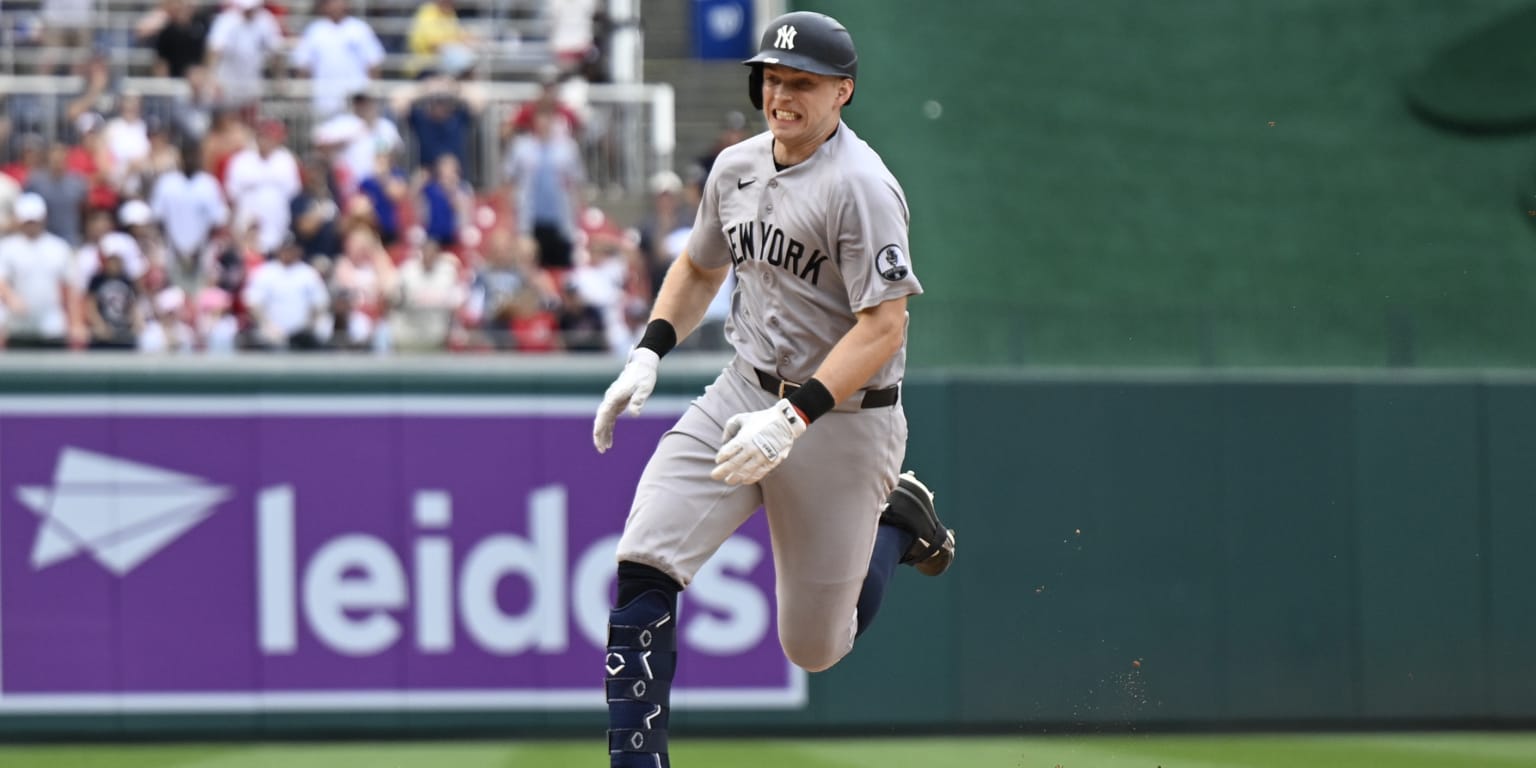
The Yankees defeated the Nationals 5-3 at Nationals Park on July 12, with Ben Rice's eighth-inning triple delivering the go-ahead runs in what has become a pattern rather than noise. This was New York's third straight comeback win in the series, their 24th such victory this season, and their fourth consecutive comeback overall. The Nationals led after seven innings in all three games of the series; the Yankees erased each deficit in the final two frames. That consistency matters more than any single game.
Rice's triple—a 100.8 mph poke off the wall projected at 383 feet—extended his hitting streak to eight games and marked his 12th consecutive game reaching base. But the larger signal is the composition of these comebacks. In this game alone, the Yankees manufactured runs via RBI singles (Chisholm and Wells in the fifth), a pinch-hit home run (Mead off Tim Hill in the sixth), and Rice's extra-base hit. They're not relying on one player or one mechanism. The Nationals' pitching, meanwhile, has surrendered three homers to the Yankees this series—one each game—and Hill has now given up four home runs in July alone. Washington's bullpen depth, already threadbare, is showing stress fractures under sustained pressure.
New York's 54-42 first-half record masks what's actually happening in late-game spots. Their 24 comeback wins represent a 14% win-total swing from baseline expectation. Some of that is skill—the Yankees have legitimate contact hitters up and down the order and a manager (Aaron Boone) with a proven track record of leveraging leverage situations. But 24 comebacks also suggests the market is not pricing walk-off and extra-inning exposure correctly. Books set Yankees team totals and game lines at open on pregame models; they adjust for public money and steam, but most adjustment occurs in the first few hours. A team winning 24 games from behind is either the beneficiary of historic late-inning luck or has identified a structural edge that sportsbooks haven't fully incorporated into live odds.
The prop angle emerges when you map this pattern onto moneyline and team-total pricing. When the Yankees trail after six innings, their win probability per standard models sits around 30-35%. But if they've now won 24 games from deficit situations, their actual win rate in those spots is meaningfully higher—likely 38-42% depending on deficit size and inning. This suggests Yankees moneyline plays when trailing late carry positive expected value if the line doesn't reflect the actual close-game competence of the roster. The Nationals, conversely, have now lost six straight to New York. Tim Hill's 0.95 ERA doesn't survive repeated exposure to this lineup in high-leverage moments. Home runs off relievers with depleted gas tanks are not variance; they're signal.
The durability question: Does a 24-comeback-win pace hold over a full season? Partially. The Yankees' core—Chisholm, Wells, Rice, Aaron Judge—can sustain aggressive late-inning approach. But the Nationals are also uniquely vulnerable (bottom-five bullpen depth, James Wood's home runs notwithstanding). When New York faces deeper, more rested relief, the comeback rate will normalize. For this series and the next homestand, however, the edge persists. Yankees moneyline plays when trailing after six innings, and unders on Nationals relievers' strikeout totals in the seventh inning forward, carry positive expected value that the market has not yet repriced.