Eli Willits' Early Dominance Signals Future Value—But Minor League Hitting Streaks Don't Translate to Betting Edges Today
By Erik Schwartz ·
Washington's 18-year-old first overall pick is putting up elite contact numbers in Single-A, but prospect performance has no direct path to MLB prop markets.
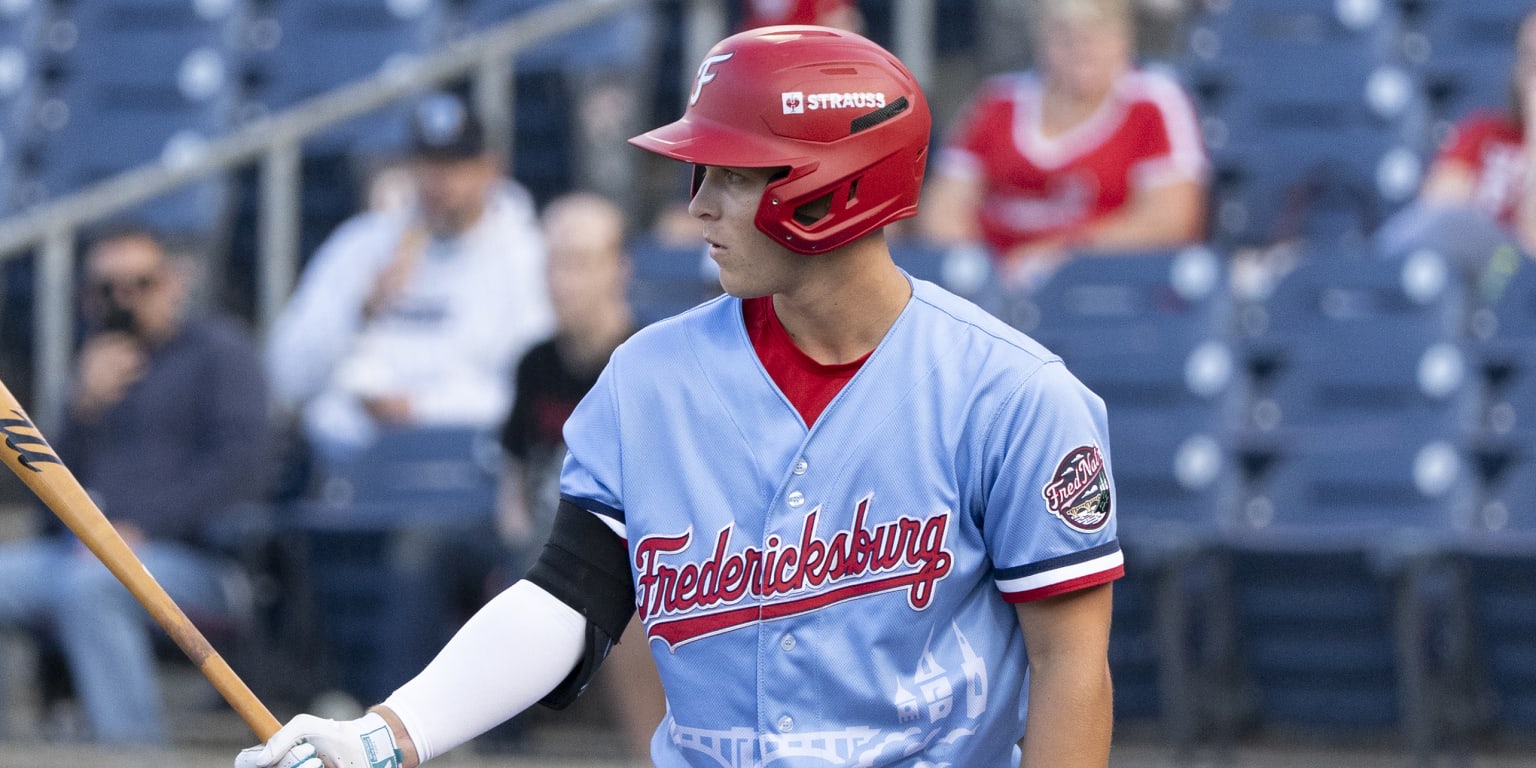
Eli Willits is 18 years old and already performing like a polished professional hitter. After a brief absence due to lower back tightness that cost him eight days in late May, the Nationals' top prospect has assembled an eight-game hitting streak (.406 BA, 1.081 OPS, 12 RBIs) and recorded five extra-base hits in four games, including a three-hit performance Thursday at Fredericksburg that featured a double, a single plating two runs, and a stolen base. The performance is eye-catching—especially for a player drafted at 17 years and 216 days old, the third-youngest top overall pick ever and the youngest since Ken Griffey Jr. in 1987.
The underlying skill set is real. Willits is slashing .288/.411/.456 across 40 Single-A games with balanced contributions: 25 stolen bases (second in the Carolina League among qualified hitters), 35 walks, and a 1.15 OPS. His walk rate and stolen base frequency suggest a patient, aggressive approach that doesn't rely on one dimensional strength. The organization signed him for $8.2 million as a five-tool prospect, and the recent hitting surge follows a reasonable mechanical break mid-season—back tightness at 18 is a developmental footnote, not an injury flag.
But here's where the investment narrative parts ways with betting reality. Minor league performance, even when statistically elite, has zero direct correlation to MLB prop markets because it occurs in an entirely different ecosystem. Willits is facing Single-A pitching (many of whom are failed prospects, injury rehabs, or international signings without MLB-capable stuff) while playing in front of near-empty stadiums with no major-league scouting present during routine regular-season games. His three-hit nights and 1.081 OPS streaks are developmental proof points, not predictive anchors for his major-league tab line when he eventually debuts—which, given his age and current level, is likely 3-4 years away.
The prop-betting angle here is contrarian and decidedly bearish on overcorrection: when Willits reaches affiliated ball or signs a big-league contract, do not treat his minor league numbers as precedent for his opening-day lines. The market will already price in his pedigree (first overall pick, $8.2M signing bonus, elite tools). That baseline expectation will be front-loaded into his debut-season projections. A .288 BA and 1.115 OPS in Single-A will not justify inflated hit props or stolen base overs when he moves to Double-A or Triple-A; instead, expect the market to correctly deflate those numbers as competition improves, pitcher arsenal quality increases, and scouting data accumulates. The edge exists not in betting on Willits early, but in fading the recreational rush to bet on him once he reaches prospect-level notoriety. That's a years-out tactical note, not a play today.
For current Nationals betting, Willits has zero impact. He's not on the 40-man roster, hasn't thrown a pitch in organized professional baseball, and won't see a big-league ballpark in 2025 or likely 2026. The story is organizational optionality and long-term roster construction, not weekly prop-market signal.