Nationals Explode for Six in Seventh, Exposing San Diego's Bullpen Vulnerability
By Ty Whitney ·
Washington's sudden offensive eruption against relief arms reveals a critical weakness in the Padres' late-inning construction that oddsmakers may have overlooked.
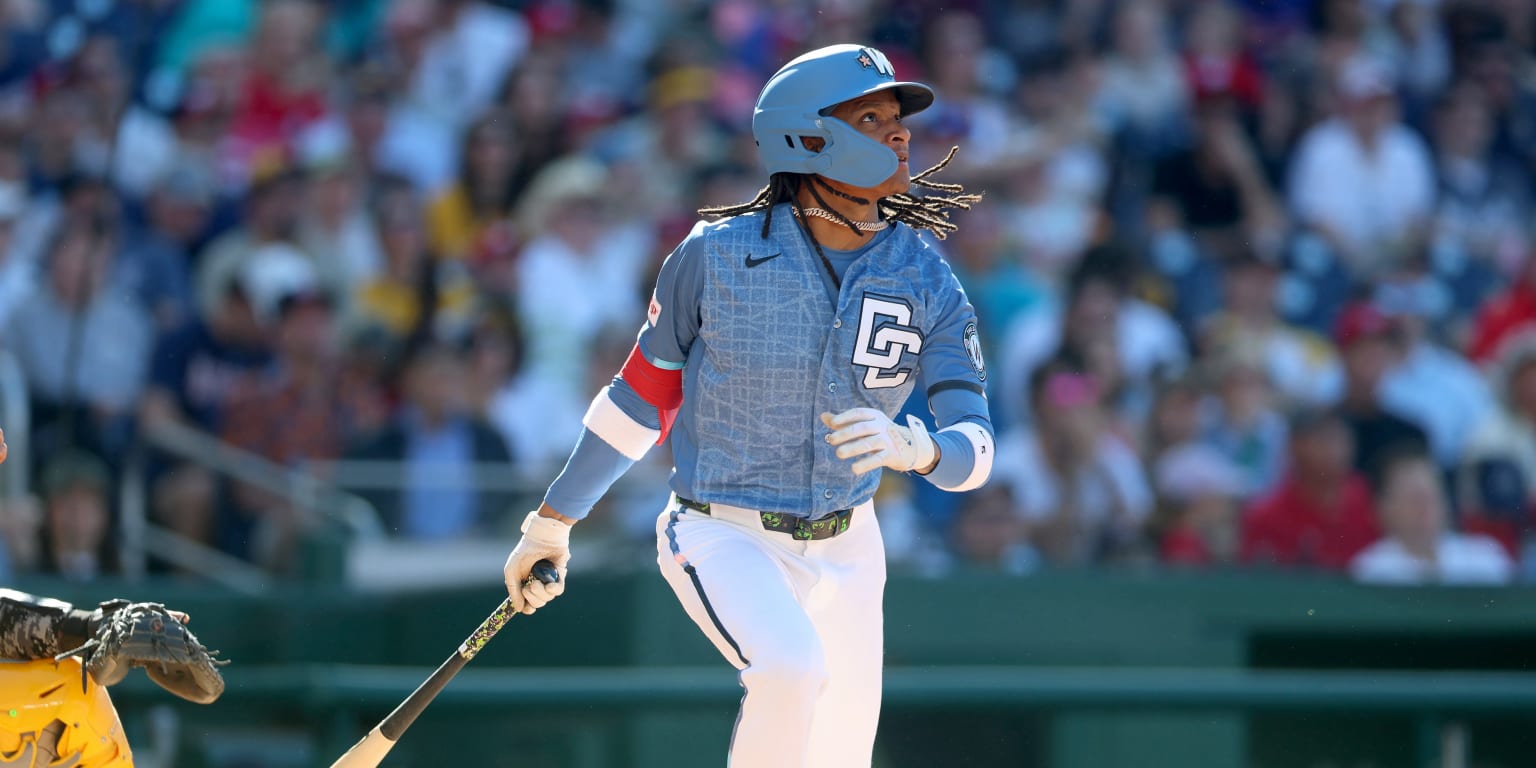
The Nationals dismantled a dominant Michael King performance with a six-run seventh-inning outburst to beat San Diego 9-4 at Nationals Park on Saturday. King had cruised through six innings on a light pitch count, allowing just one run, before a mislocated first-pitch sinker to Dylan Crews triggered the cascade. That single mistake handed the ball to Bradgley Rodriguez, who inherited a bases-loaded, no-outs situation and proceeded to allow three straight scoring plays—a throwing error on a routine double play attempt, a bases-loaded walk, and a two-run single—before recording his second out of the frame.
The sequence exposed a structural problem in San Diego's bullpen construction. King's dominance masked a setup that leans heavily on a single elite starter in high-leverage spots. Rodriguez, the handoff option, surrendered a walk and a hit in a pressure moment with no margin for error. When a team's game plan centers on one pitcher performing at an unsustainable level, the moment his understudy takes the mound, volatility spikes. The Nationals' approach was straightforward: patient early counts, then hunt mistakes once the primary weapon left the game. Pinch-hitter Curtis Mead's bases-loaded walk was not an outlier—it was the inevitable result of putting a secondary arm in a spot designed for the ace.
This dynamic carries direct implications for how San Diego manages future games against teams with similar offensive patience. The Padres' reliance on King or ace-caliber performance from their bullpen creates a cliff-edge scenario: either the elite arm stays on the mound longer than workload allows, or the team accepts substantially higher run-expectancy risk once the changeover occurs. For bettors, this shapes exposure to San Diego's run-line and team-total pricing. When King is not on the hill, the Padres' pitching depth becomes a liability rather than a neutral variable.
Looking forward, any Nationals matchup against the Padres where San Diego's bullpen carries the seventh inning or beyond warrants scrutiny of Rodriguez's recent outing and the broader pattern of late-inning inconsistency. Washington's offense is not particularly explosive by season standard, yet they manufactured six runs in one frame against relievers who were supposed to preserve a lead. The market had priced King's dominance as a full-game anchor; it had not fully accounted for the probability that he would exit before the critical innings. If Rodriguez sees extended run in the next series, the over on Padres team total and the over on the game total should be viewed as plays that survived opening because oddsmakers weighted King's usage too heavily and undervalued San Diego's bullpen depth cost.
This is not a narrative bet on "momentum" or a single-game spike. The underlying mechanism—a team forced to deploy secondary-tier relievers in high-leverage spots after an elite starter departs—is persistent across multiple games and carries structural weight. The line will not immediately collapse, because casual bettors will anchor on King's individual performance in isolation. Sharp bettors who identified Rodriguez as the actual bottleneck have a durable edge.