Irvin's Early Exit Avoids Worst-Case Scenario, But Nationals' Rotation Faces Immediate Depth Test
By PropBetEdge Editorial Team ·
Jake Irvin's shoulder strain caught early enough to avoid structural damage, but Washington's pitching depth is about to face real pressure.
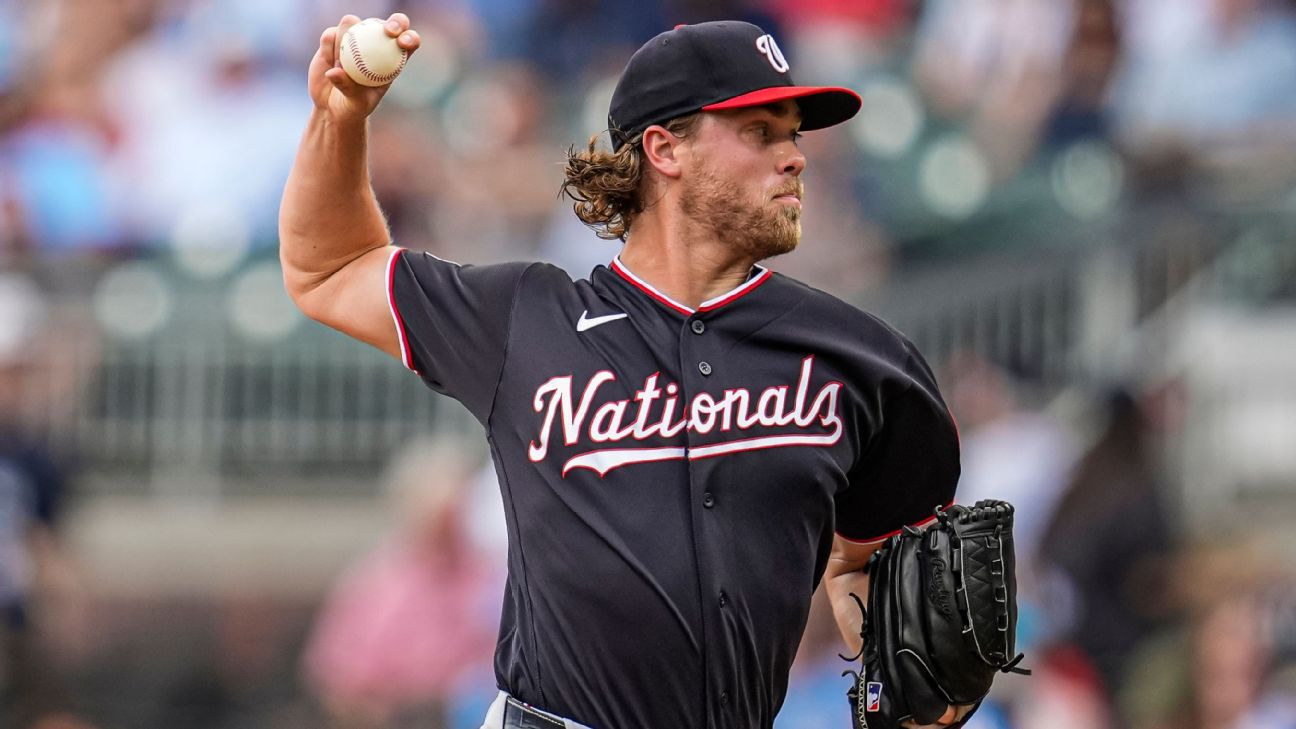
Jake Irvin was pulled from Saturday's start against Atlanta after five hitless innings with shoulder discomfort, and the subsequent MRI confirmed a right shoulder strain—news the Nationals right-hander and manager Drew Butera both characterized as fortunate rather than catastrophic. Irvin didn't try to work through the pain; he flagged the tightness in the fifth inning and felt additional soreness after a warmup pitch before the sixth. That early exit likely prevented escalation. Butera acknowledged the value of Irvin's willingness to speak up despite having a no-hitter intact: "The fact that he brought it up and didn't try to pitch through it may have saved him and saved us a little bit."
The 15-day IL placement means Irvin won't pitch again until early June at the earliest, though Butera indicated he expects Irvin to throw Tuesday and feels confident about his recovery timeline. Irvin himself expressed optimism. The strain diagnosis sidesteps the rotator cuff and labral concerns that can derail a pitcher's entire season. For a Nationals rotation that had finally found some stability—Irvin was in his first win in nearly two months before Saturday—this is a temporary setback, not organizational crisis. Still, the timing matters. Washington hasn't announced who fills Irvin's spot in the rotation, and the team recalled left-hander PJ Poulin from Triple-A Rochester to cover relief innings. Poulin carries a 3.32 ERA across 23 appearances but has limited starting experience (five starts on the year).
The Nationals' offense delivered a 2-0 victory despite Irvin's early departure, combining his five scoreless frames with two relievers for a one-hitter. That level of pitching depth—quality relief depth enough to hold a 2-0 lead—exists. What doesn't exist is a deep bench of ready-made rotation arms. If Irvin's recovery stretches beyond two weeks, or if another starter goes down, the Nationals will be forced into less-appetizing options. Right now, the market hasn't fully repriced the risk to Washington's pitching stability. Sportsbooks may hold their rotation strikeout projections steady if they assume Irvin returns on schedule, but that assumption carries real downside if he needs more time or if the organization decides to stretch his recovery to avoid re-injury.
For bettors, the play is forward-looking and conditional. If Irvin's absence stretches beyond 15 days—a material risk given shoulder strains are notoriously difficult to forecast—Washington's team totals become vulnerable. Games Irvin would have started suddenly feature a less dominant arm, which typically reduces run prevention and widens the variance on offensive output. The Nationals' next rotation starter after Irvin's return is the likeliest candidate to get burned by depth fatigue. Strikeout rates on that pitcher should decline measurably if the team has to lean on spot starters or pulled-forward bullpen usage to cover innings. Watch for that pitcher's K prop to compress 10-15% if Irvin doesn't throw his next scheduled turn.
Right now the narrative is containment—early catch, optimistic timeline, no structural damage. Market pricing reflects that rosier scenario. The edge exists if Irvin needs additional recovery time, or if Washington's secondary starters rack up higher usage before he returns. A cautious stance on Nationals starters' strikeout props for the next two weeks, particularly whichever arm covers Irvin's turn, carries value. The market is pricing a clean 15-day return; reality often demands more patience with shoulder soreness.