Nationals' Griffin Hold Pattern Unsettles the Deadline Market
By PropBetEdge Editorial Team ·
Washington's refusal to commit to trading Foster Griffin creates pricing uncertainty that punishes early-window bettors on his pitching props.
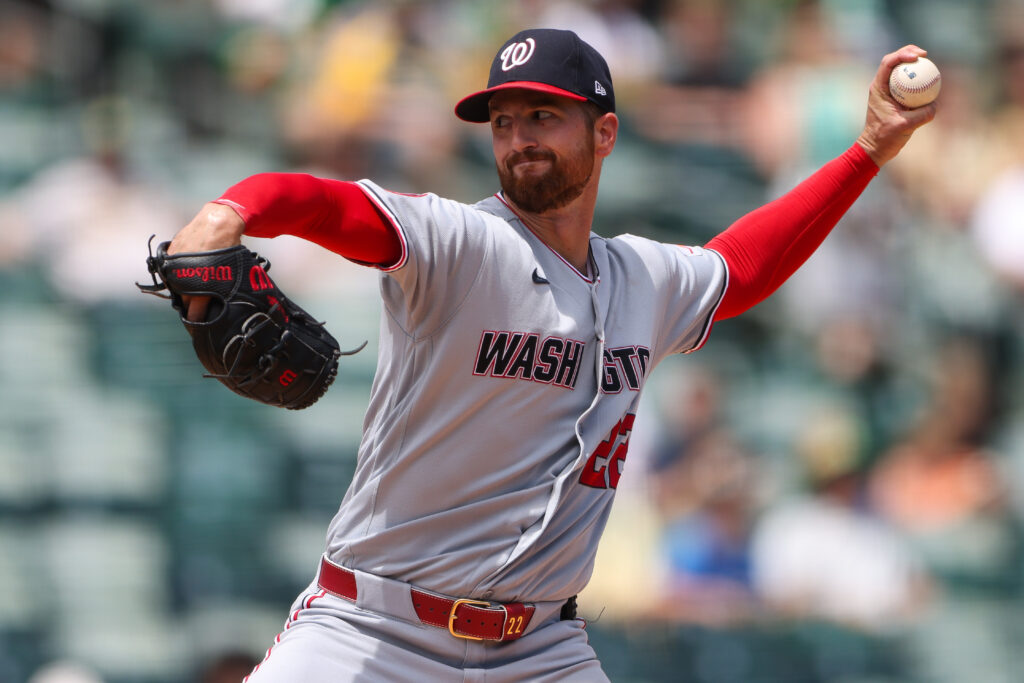
The Nationals are not shopping Foster Griffin as aggressively as a contending team might expect from a left-hander on an expiring deal two weeks before the trade deadline. Per Ken Rosenthal and Will Sammon, Washington is still assessing whether to move the 26-year-old or retain him through season's end—a posture that deviates from the typical seller's urgency and muddies the betting landscape around Griffin's usage and volume props.
The calculus here hinges on Washington's organizational position. The Nationals are 11 games under .500 as of late July, a positioning that normally triggers a firesale of movable assets. Yet Griffin's contract situation—he's arbitration-eligible after 2026, not a free agent—gives the front office optionality that a pending FA wouldn't. If the Nationals fail to land a "Gore-sized haul" (the kind of multi-prospect package that moves the needle on a rebuild), keeping Griffin and cycling him through the rotation for the remainder of the year costs them nothing in long-term flexibility. They hold him, control his innings and usage for the next 10 weeks, and reassess in the offseason with his value intact.
For bettors, this ambiguity creates real friction. If Griffin is traded before the deadline—likely within the next 10-14 days—he moves from a fourth or fifth starter role in Washington's rotation to a potential mid-rotation or relief-adjacent role with a contender, depending on fit. That shift directly compresses his strikeout volume, innings pitched, and start frequency. Conversely, if he stays in Washington, his workload remains stable but possibly depressed by a losing team's managed innings load down the stretch. The market has not yet fully priced the binary: his K prop, innings props, and start-related bets currently assume baseline Washington usage, but that baseline is no longer the only outcome.
Griffin's strikeout rate (7.8 K/9 over his last 12 starts) and his role stability make him a useful prop vehicle, but only if you know which team he'll pitch for in August. The ambiguity means early-window bets on his next start or next three-start performance carry execution risk that isn't yet reflected in the odds. Books priced him as a Nationals starter; if he's traded, that line moves sharply without any change to Griffin's actual talent. Conversely, if he stays, the market will likely reprice him lower as a borderline fifth starter on a non-contender, eroding volume props that looked reasonable at the announcement.
The smart move is to wait for clarity. In the next 48-72 hours, one of two things happens: the Nationals either announce a deal, or they publicly commit to keeping him. Either outcome will trigger a repricing that reflects the actual operational environment—and that repricing is where the real edge lives, not in pre-announcement speculation on ambiguous usage.