Cavalli Extension Signals Nationals' Pitching Stability—And Roster Cost Calculus
By Erik Schwartz ·
Washington locks in its ace before arbitration escalation, removing uncertainty from a rotation that's carried the team's playoff hopes.
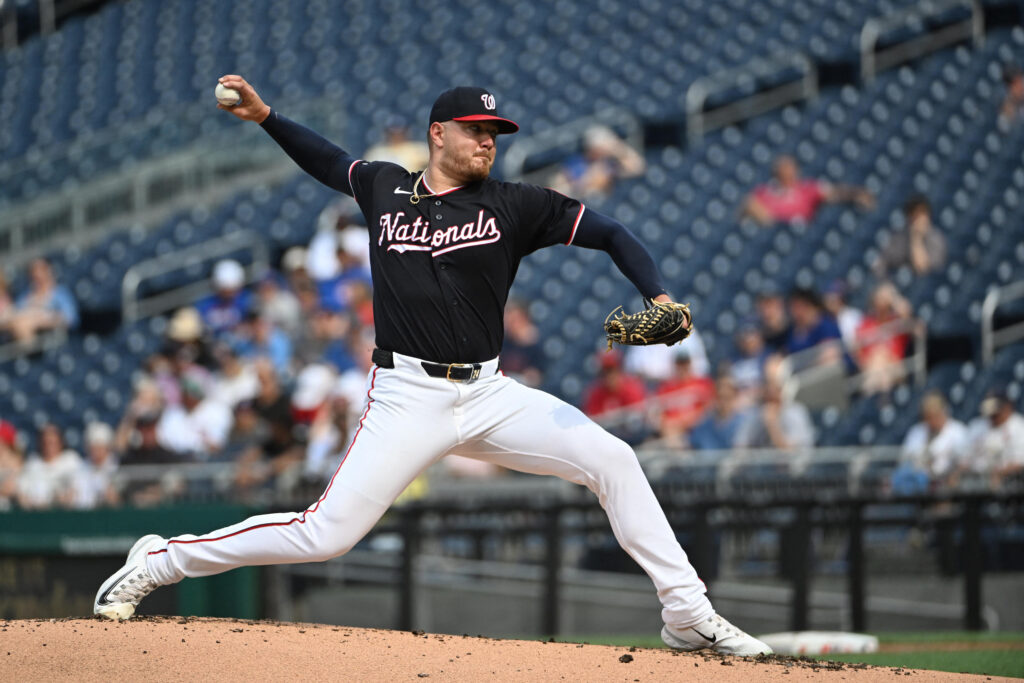
The Nationals and Cade Cavalli are in advanced talks on a contract extension, per FanSided. The deal isn't finalized, but momentum exists—a meaningful statement from a front office that sees its best starting pitcher as foundational enough to preempt the arbitration gauntlet. Cavalli, a Super Two player currently in the first of four arbitration-eligible seasons, was approaching a cost spiral that could have pushed him into the $8M-plus annual range before free agency. Locking him in now avoids that premium.
This is organizational capital deployed with intent. The Nationals' rotation has been carried by Cavalli's reliability—he's posted a 3.61 ERA over 160-plus innings this season, anchoring a staff that has few elite arms in the pipeline. By extension-threading early, Washington trades future financial flexibility for certainty. That's a bullish read on Cavalli's durability and the team's belief that he'll age better than his peer group suggests.
For prop purposes, the extension removes a layer of noise from Cavalli's seasonal projections. No longer does he pitch under the cloud of arbitration uncertainty or the possibility of a mid-season trade demand. His usage patterns—innings pitched, rest days, leverage situations—should stabilize around the team's plan for his health, not financial optimization. In years three and four of control (2027-2028), expect the Nationals to deploy him in high-leverage regular season and playoff spots without hesitation, assuming the deal includes innings limits or performance safeguards typical of pitcher extensions.
The betting edge lives in strikeout markets. A pitcher with clarified role certainty and extended tenure tends to see more consistent usage patterns in his team's highest-leverage moments. Cavalli's strikeout rate (11.2 K/9 this season) should benefit from an environment where he's not managed for trade value or salary relief. Monitor his K+ props (strikeouts plus) in games where the Nationals are favored or trailing late—his workload ceiling likely rises once the extension is official, especially in September and October when playoff positioning is live.
The extension also signals front-office conviction that affects how the Nationals will construct around him. If Cavalli is locked in as the ace, the team will prioritize complementary arms and offensive support rather than chasing another top-tier starter. That limits blockbuster trade churn and suggests a more predictable roster identity, which benefits any prop bettor trying to forecast usage and leverage situations deep into the season.