Garcia Jr. Draws Trade Interest as Nationals Weigh Deadline Decisions
By Ty Whitney ·
The Nationals first baseman is emerging as a premium trade asset with 16 days until the deadline, creating uncertainty around his offensive production lines heading into the stretch run.
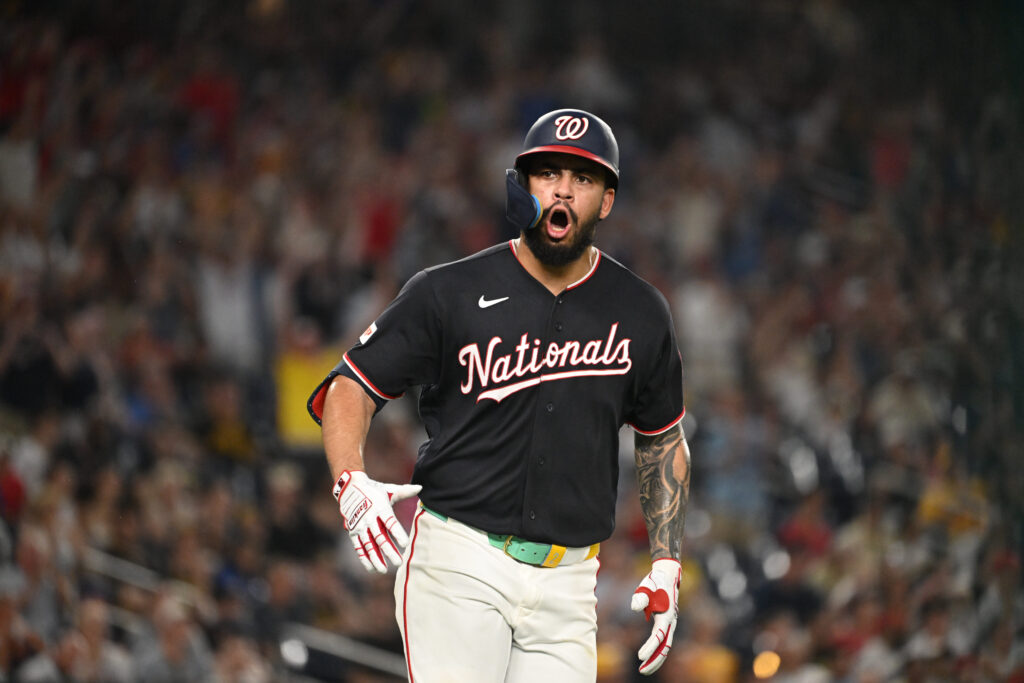
Luis Garcia Jr. is attracting trade calls from multiple teams as the Nationals navigate their July evaluation window, per The Athletic. The hot-hitting first baseman remains in a preliminary inquiry phase with no talks advancing to material negotiations yet—a typical prelude to what usually becomes serious deadline movement once a team commits to a direction.
The Nationals face a binary choice by August 3: continue as a buyer or pivot to seller mode. Garcia Jr.'s offensive profile makes him a natural centerpiece if Washington opts to move veterans. Through mid-July, he's delivered consistent run production at first base, a position where impact bats command premium trade capital. The 16-day window before the deadline provides minimal time for market testing; teams ordinarily accelerate inquiries and raise offer tiers in the final 10 days of July, which means any team serious about Garcia Jr. needs to signal intent soon or lose positioning.
The uncertainty around Garcia Jr.'s availability creates a pricing problem for sportsbooks managing his individual prop markets. If the Nationals receive a compelling offer, Garcia Jr. moves to a contender midseason—a scenario that historically elevates run-production rates for traded hitters joining playoff rosters. His counting stats (RBI, runs scored, home runs) are typically inflated upon mid-season trades because traded players often slot into more favorable lineups and benefit from increased leverage situations. Conversely, if the Nationals hold him as part of a buyer's push, his offensive volume remains anchored to Washington's current pace.
For bettors tracking Garcia Jr. totals, the current lines reflect Washington's baseline offensive environment. Any trade before August 3 reshuffles that calculus dramatically. Teams inquiring about Garcia Jr. are signaling they view him as a difference-maker down the stretch; that belief usually translates to protective lineups and lead-off or cleanup placements. If he lands with a contender, expect his RBI and runs-scored floors to rise 10-15% relative to the lines quoted before the move. The inverse risk—that Washington refuses to sell and Garcia Jr. remains in a deteriorating lineup—is the flip side of the same uncertainty. The market has 16 days to price this binary outcome. Early movers who lock in current totals before clarity emerges capture value in whichever direction the Nationals ultimately choose, provided they've identified which scenario aligns with the quoted line at entry.
The preliminary-stage framing matters. Talks that haven't moved beyond feelers often indicate broad interest without urgency—a market-testing phase rather than a seller committing to a price. That shallow engagement level usually persists through late July before compressed timelines force decision-making in the final week. For prop bettors, this is the ideal window to act: the market hasn't fully repriced the likelihood of a Garcia Jr. trade, meaning current totals still reflect his Nationals baseline. By late July, if serious talks emerge, the repricing will be swift and severe.