Ginn's Changeup Breakthrough Signals Durability Shift for Oakland Rotation
By PropBetEdge Editorial Team ·
After flirting with his second no-hitter of the season, J.T. Ginn's newfound secondary weapon is turning deep starts into a reliable expectation rather than a novelty.
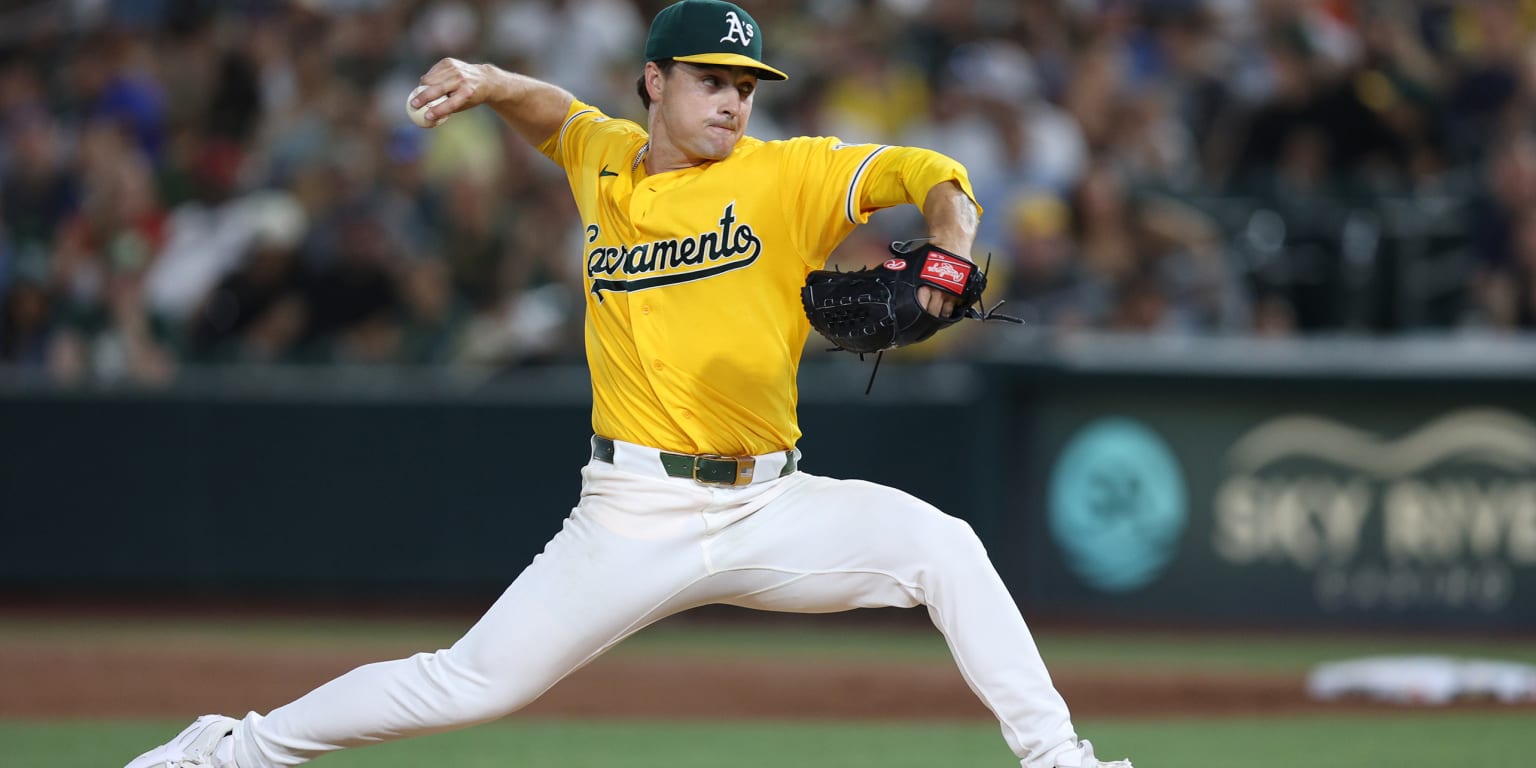
The Athletics snapped a 10-game losing streak Saturday with a 15-1 dismantling of Washington, but the more durable narrative lives in J.T. Ginn's mound performance. Ginn carried a no-hitter into the seventh inning before allowing a single with one out, finishing with 6⅓ scoreless innings on a dominant sinker-changeup diet. It was the second time in 2026 that Ginn has pushed a no-hit bid past six innings—the first came May 18 against the Angels, when he held the bid until the ninth before a walk-off loss. That dual accomplishment places him in rarefied company: only three other Oakland starters in the past 50 years (Mark Mulder, Ron Darling, Mike Norris) have authored multiple six-plus inning no-hit bids in a single season.
The real story, though, isn't the no-hitter texture—it's the weapon that sustained it. Ginn's changeup has evolved from a developmental pitch into a legitimate strikeout-and-soft-contact tool. Entering Saturday, opponents were hitting just .195 against the changeup across the season. Against Washington, he generated 11 swings-and-misses, six on the changeup alone, which functioned as his putaway pitch on four of his seven strikeouts. Manager Mark Kotsay noted the sinker "looked like it was really taking off arm-side," but the changeup is the secondary that unlocks consistency. Ginn has completed at least six innings in nine of his last 14 starts—a 64% depth rate that's genuinely uncommon for a young starter still refining his toolkit.
What matters for projection: Ginn's changeup isn't a one-game spike. He's worked on the grip throughout the offseason and has deployed it as a weapon-level pitch all year, not just in this outlier performance. The mechanism is clean—a light-contact, swing-and-miss offering that forces opposing hitters into uncomfortable decisions, especially against left-handed batters, which was the original development target. This is the kind of secondary-pitch refinement that sticks because it's foundational, not circumstantial.
For prop bettors, the takeaway cuts two directions. First, Ginn's strikeout prop moves into favorable territory in upcoming starts, particularly against lineups with high left-handed counts or known changeup vulnerability. His 7 strikeouts Saturday with elevated changeup usage (37% of his pitch mix) isn't a ceiling—it's a floor statement. Second, and more broadly, Oakland's pitching depth picture just clarified. A rotation starter capable of 6+ innings with sub-3.00 ERA trajectory improves the team's total expectancy. The A's were 10 games underwater before this win; one performance doesn't erase that deficit, but a starter you can reliably bank six innings from removes variance from the backend bullpen load. Watch the next three Ginn starts: if he maintains 35%+ changeup deployment and stays north of 6 innings pitched in two of three, the edge on his strikeout props widens, and Oakland's team totals inch upward as a secondary effect.