Kurtz's 48-Game On-Base Streak Reframes A's Run Production Calculus
By Ty Whitney ·
The 23-year-old first baseman has matched Mark McGwire's single-season franchise record, and his walk rate tells you why pitchers are terrified.
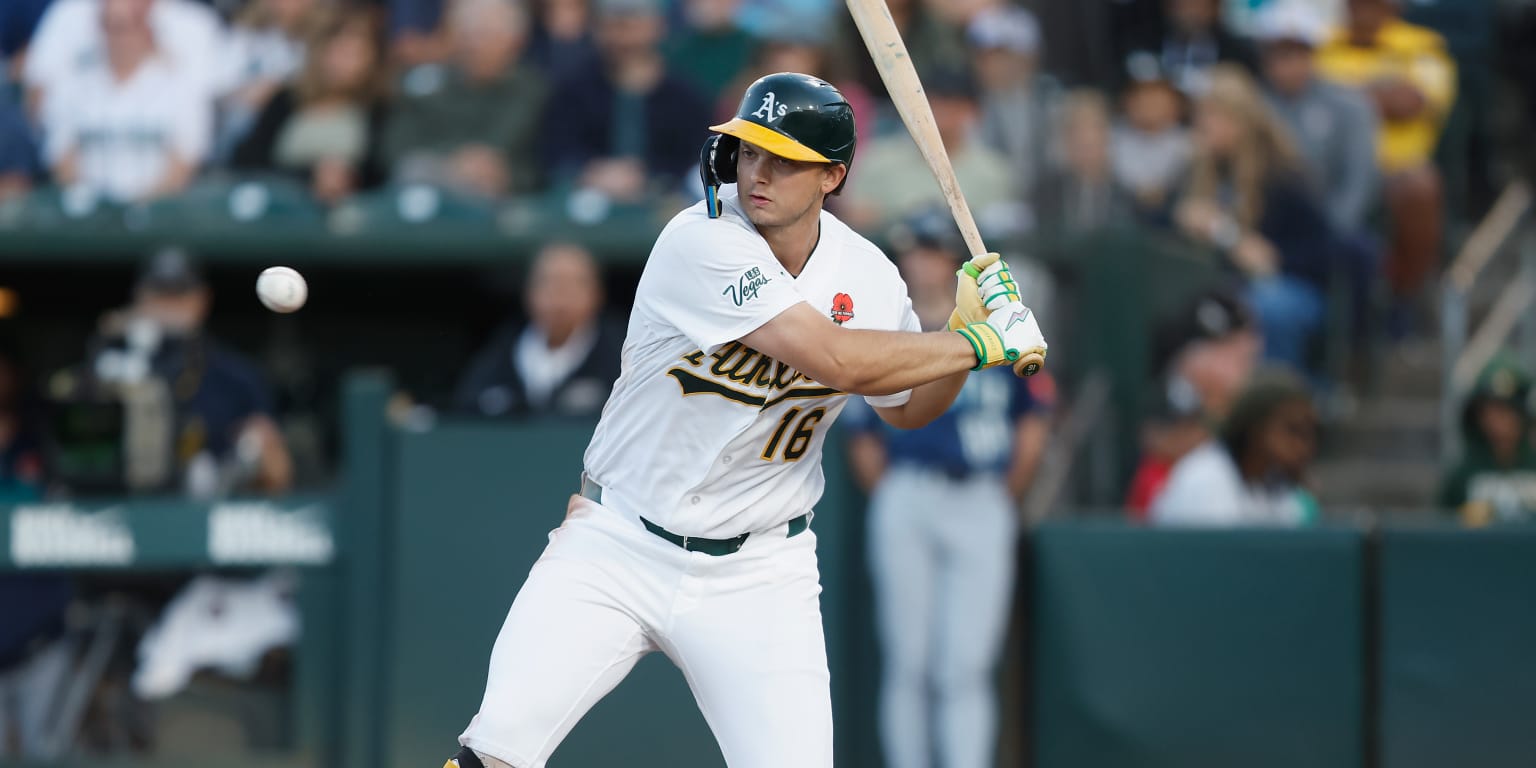
Nick Kurtz extended his on-base streak to 48 consecutive games Monday with a walk against Seattle, tying Mark McGwire's 1996 Athletics franchise record. The walk was Kurtz's 52nd of the season in 53 games played—a pace that would yield 157 walks over a full season, the most since Barry Bonds drew 232 in 2004. At 23 years old and in just his second major-league season, Kurtz owns a .925 OPS (10th in baseball) and leads the majors in on-base percentage at .444, a full 29 points clear of Houston's Yordan Alvarez.
What separates Kurtz from other high-OBP threats is the mechanism driving the streak: discipline, not luck. In 48 consecutive games, he has walked at least once in 36 of them, with multiple free passes in nine contests. Manager Mark Kotsay framed it precisely—Kurtz doesn't chase; he's selective at the pitch level, game to game. His walk rate (52 in 53 games) suggests pitchers are actively avoiding him in the zone. When you pair that walk frequency with his .308 batting average and eight homers during the streak, you're looking at a hitter who generates run-scoring opportunities through multiple pathways: he scores on his own power, reaches base to be driven in, and forces pitchers to work around him, which stresses opposing defenses.
The historical context matters for context, but not for projection. Williams' 69-game on-base streak at age 23 happened in 1941. DiMaggio's 52-game streak (age 23) landed in 1937. Neither pace nor competition adjusted for era, and Kurtz's walk rate—roughly one per game—is genuinely elite. He's on pace to reach McGwire's 62-game all-time A's streak (achieved across 1995-96) within two weeks if the current form holds. The streak is persistent because it's rooted in a repeatable skill (pitch recognition and selectivity), not a variance spike.
For bettors, Kurtz's run-creation profile reshapes how to model Athletics team totals. The A's scored just nine runs in Monday's loss, so franchise context alone doesn't drive the edge. But Kurtz's presence in the lineup—and the walk volume that comes with it—inflates the expected number of baserunners each game. When opposing pitchers are managing around him (nibbling, working counts), they're also accumulating pitches, which tires starters earlier and forces bullpen usage earlier. Over a multi-game series, that compounds: more runners, shorter starter leashes, higher leverage bullpen exposure. Oakland team totals have trended lower than their BaseRuns expectation would suggest, partly because of inconsistent lineup support around Kurtz. But the walk volume itself—52 in 53 games—is a steady-state input. If the A's add even one consistent bat around him who can drive in his baserunning efforts, team totals move upward structurally.
The immediate prop angle: Kurtz's walk prop (currently unavailable on most books for this specific streak, but available season-long) should be pricing his 52-in-53 pace as persistent, not as a hot streak due to fade. His on-base streak ties him to disciplined hitters historically—Williams, Bonds, Henderson—whose walk rates were repeatable season-over-season. If books release an individual-game walk line for Kurtz (over/under 1.5 walks), the market will likely lean under, assuming the 48-game streak normalizes. That's a fade opportunity. His walk rate will sustain because it's driven by pitcher avoidance and legitimate selectivity, not recency bias.