Morabito's Pinch-Hit Arrival Signals Mets' Offensive Depth Shift
By Ty Whitney ·
The 23-year-old prospect's bases-loaded double and the return of Juan Soto reshape New York's late-inning leverage at the deadline.
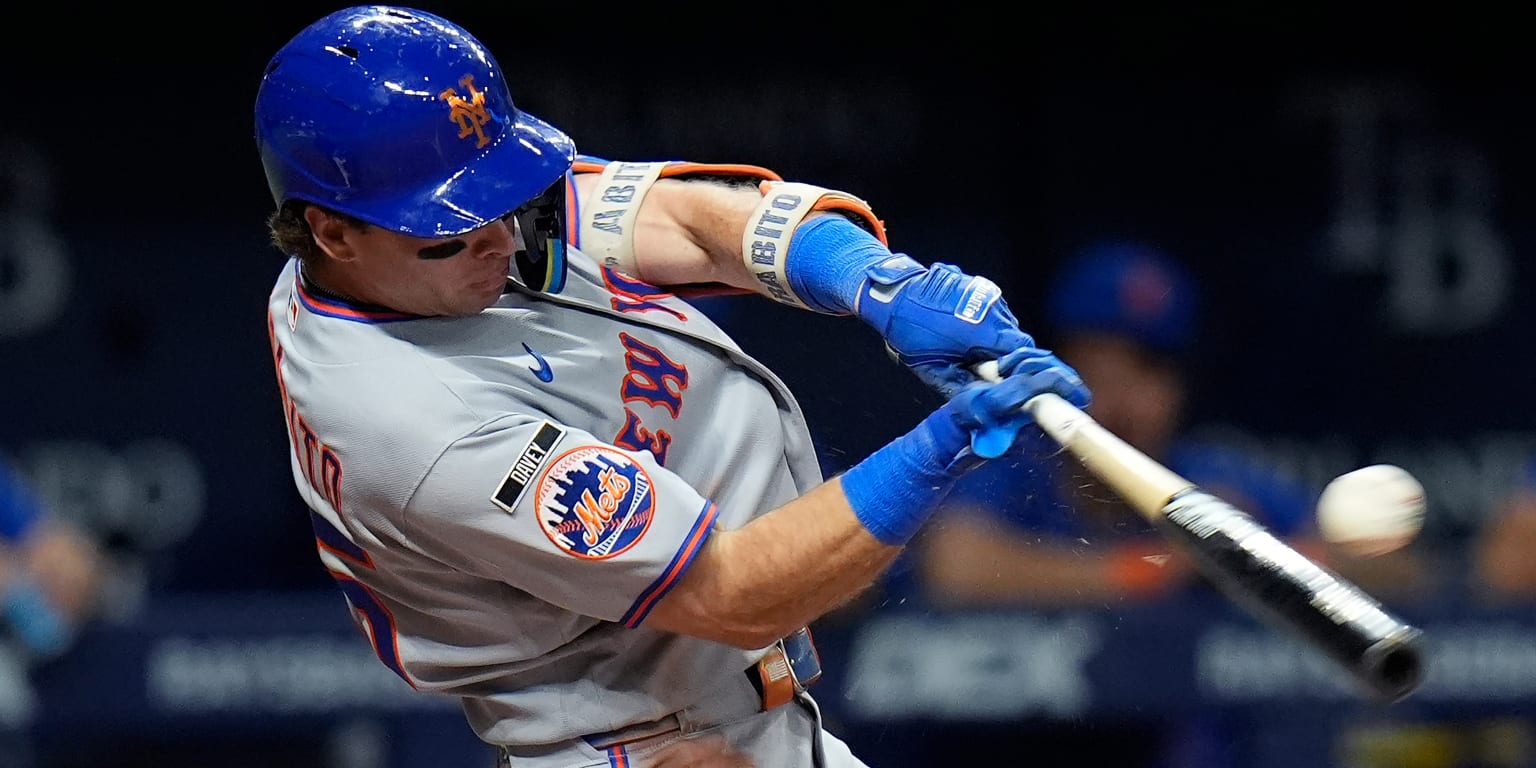
Nick Morabito went 0-for-11 in his five-day MLB audition back in May. Wednesday night at Tropicana Field, he walked into a seventh-inning situation with the bases loaded and turned a 96 mph Manuel Rodríguez sinker into a three-run double down the left-field line—his first big-league hit and the dagger that iced a 10-4 Mets victory over Tampa Bay. The moment mattered less for what it said about Morabito's viability as a regular and more for what it revealed about the Mets' roster construction heading into September: depth, particularly against right-handed relievers, is now operational.
Morabito's pinch-runner role evolved into a plate appearance precisely because the Mets had already built a 6-4 lead and still needed insurance. Brett Baty had doubled home three runs earlier in the third. The Rays clawed back to 6-4, but by the time Morabito stepped in against Rodríguez, the Mets were using a roster slot that suggested confidence in their bullpen's hold and in their bench's ability to finish close games. That calculus changes when Juan Soto, who returned four days ago from a five-week calf injury layoff, hits his second home run since his Aug. 29 comeback—a 111.8 mph line drive to right that marked his 23rd of the season.
The Mets' first-inning assault—three runs to start Wednesday—was their second-largest opening frame in their last 48 games, behind only their five-run first against Atlanta on Aug. 10. That consistency in early run generation has become a through-line for this offense. When a lineup is scoring in the opening inning and banking runs before the opposing bullpen enters, the path to cover run totals shifts. The Mets are now 1-8 at Tropicana Field across multiple seasons; snapping that drought required beating the Rays twice in three games, which they did.
For prop bettors, the timing matters. Soto's return window—he's now four days past his Aug. 29 re-entry date—typically sees ballplayers climb toward their seasonal baselines by mid-September. Soto's 23 home runs over the season's first five-plus months suggests a 30+ pace if healthy. The Mets' offensive construction now includes both Soto's proven power and secondary contributors like Morabito, Baty, and Pete Alonso positioned to accumulate extra-base opportunities against middle-relief arms. This isn't a single-outlier boost; the Mets' ability to string together first-inning production and back it with insurance hits in high-leverage spots has established a pattern over the past 30 days.
Team totals on the Mets in September games where Soto bats and the starting pitcher exits by the sixth inning will carry edge, particularly against bullpen-heavy opponents like Tampa Bay. The lineup's propensity to score early and often in the opening frame—three runs Wednesday, five against Atlanta on Aug. 10—suggests that overs on 4.5 Mets runs are underpriced in spots where Soto is healthy and the defense permits multiple hits per inning. Watch for early-inning run lines and team total overs as the Mets enter the final month with a reinforced bench and a calf-recovered star.