Misiorowski's Slider Evolution Reshapes Brewers Ace Ceiling; Tigers Offense Demands Fire Sales
By PropBetEdge Editorial Team ·
One third of the season in, the Brewers have baseball's most dangerous starting pitcher getting demonstrably better, while Detroit's anemic lineup is exposing why mid-market clubs need execution at every position.
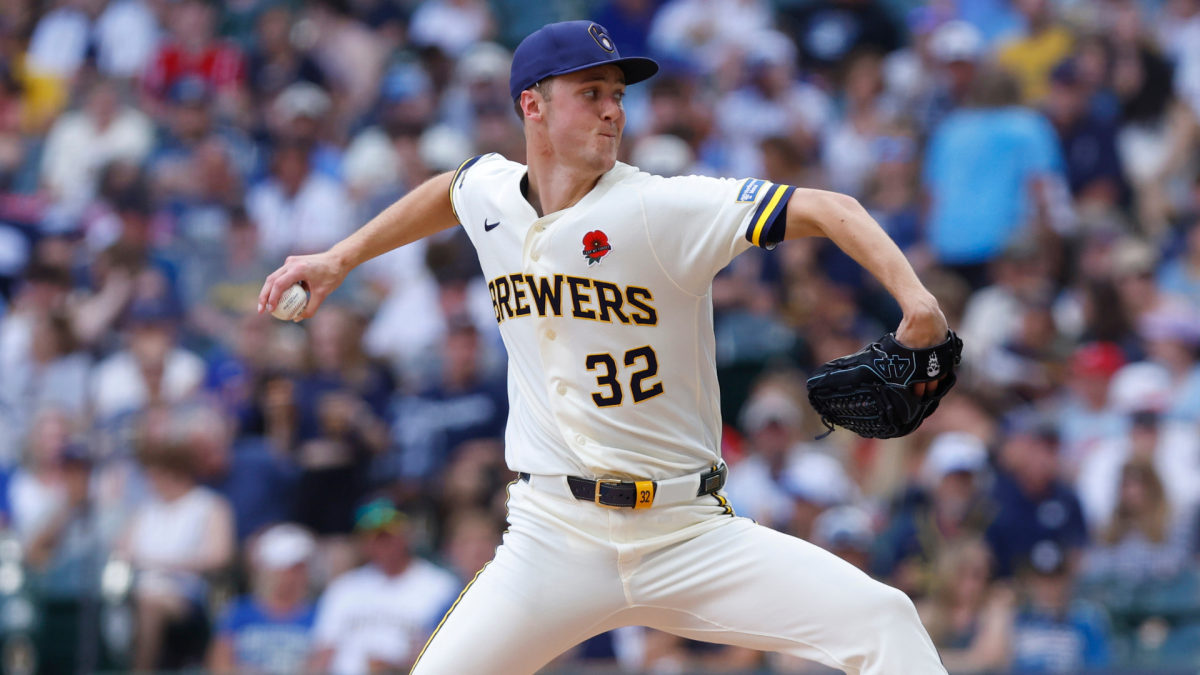
The Brewers have a problem that every baseball organization would trade for. Jacob Misiorowski, already throwing harder and releasing from closer to the plate than anyone in the majors, just added a legitimate slider to his arsenal. On Memorial Day, he broke out a true slider with genuine drop and horizontal movement—a step above the cutter/slider hybrid he'd been working with for months. He struck out 12 against St. Louis, tied his career high, and did it on 74% strikes. At 6-foot-7 with 7.5 feet of extension, Misiorowski doesn't just overpower hitters; he changes the geometry of plate coverage. His fastball sat 101.1 mph average with a 103.4 peak. The new slider came in the mid-90s, which is obscene for a breaking ball. Brewers pitching coordinator Jim Henderson remarked on the arc of the development: velocity crept up from 99 in early May, but the movement profile is what matters. Misiorowski now has a legitimate three-pitch mix—fastball, curveball with snap, and slider with glove-side action—where before he had two plus pitches and a viable third. That's the difference between "elite" and "historically dominant."
The Tigers, meanwhile, are entering the trade deadline period in freefall. They sit 21-33, fourth-worst in AL run differential, and their May performance has been genuinely terrible: 2.95 runs per game across the month. Their roster has injuries stacked on injuries—Tarik Skubal, Kerry Carpenter, Gleyber Torres, Justin Verlander—but the underlying issue is structural, not circumstantial. Dillon Dingler, Riley Greene, and rookie Kevin McGonigle have combined for a .276/.370/.440 slash line with 17 homers and 5.5 WAR through 54 games. Everyone else is hitting .213/.288/.336 with a negative WAR contribution. That's not bad luck. That's a supporting cast that can't produce outs.
Detroit's run scoring drought (3.83 per game, fourth fewest in baseball) creates a compounding problem for the pitching staff. Even with Skubal healthy, keeping games close requires the other eight hitters to manufacture something resembling consistent at-bats. When your second-through-ninth hitters combine for a sub-.290 on-base percentage and negative value, you're not running down a division. You're managing expectations for a fire sale. The Tigers built this team betting on youth (Greene, Dingler, McGonigle) and injury recovery (Torres, Verlander). Half that thesis is still viable; the other half requires October moves or internal development that won't manifest by late August.
For bettors, this creates a clean directional split. Misiorowski's velocity metrics and new breaking-ball profile translate directly to elevated strikeout equity. His 12-K game Monday sits at the high end, but 10-plus is now a viable outcome in any start given the slider's added depth. Milwaukee games should be treated as under-friendly when Misiorowski takes the ball—his stuff limits offensive rhythm, and the Brewers' run environment doesn't require explosive offenses. Conversely, Tigers offensive props should be faded over the next four to six weeks. Dingler and Greene will continue to generate value, but the rest of the lineup will drag on team totals. Detroit's moneyline at home or on the road is higher-variance than books are pricing because their offense is one Skubal health report away from respectability—and one trade-deadline sale away from intentional mediocrity.
We're at the one-third mark where contenders separate from sellers. Misiorowski's development is a blue-print for how elite talent compounds. Detroit's supporting cast is a cautionary tale about roster construction when you can't hit.