Carroll's Triples Trajectory and Weaver's Redemption Reshape Mid-Tier Value Props
By Ty Whitney ·
With five days until the trade deadline, three ballpark trends are reshaping how to price run-generation props and bullpen leverage plays.
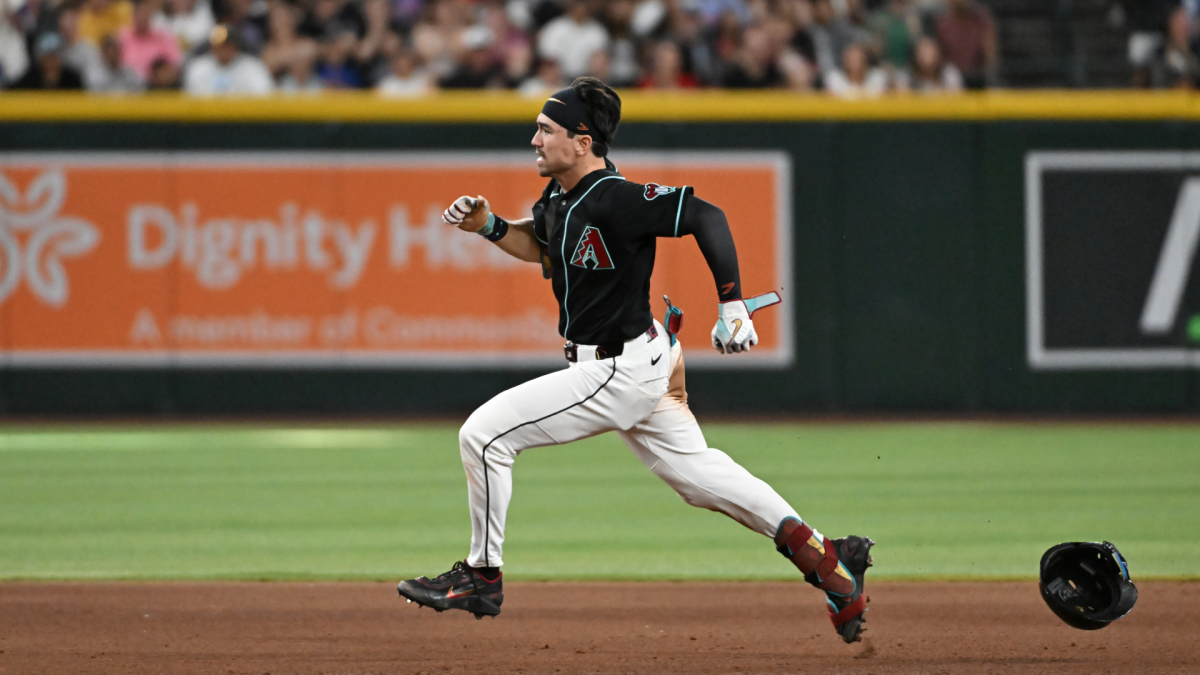
The MLB trade deadline arrives in five days—Aug. 3 at 6 p.m. ET—and the market remains quiet on blockbuster moves. Until the expected flurry at the wire, a closer look at three emerging trends suggests where smart money should be repositioning on run props and bullpen usage. The first: Corbin Carroll has become baseball's most efficient triples threat, and that efficiency has direct implications for run-scoring lines.
Carroll tied Mike Trout and Starling Marte at 55 career triples last Thursday after a makeup game in St. Louis—the one the Diamondbacks and Cardinals were forced to squeeze into a travel day between Arizona and Washington. The headline stat masks the real efficiency story: Carroll reached 55 triples in 587 career games. Trout needed 1,542 games. Marte needed 1,421. Carroll got there in roughly 1,000 fewer games, which is the ballpark difference between a prospect and a veteran. He leads all of baseball in road triples since 2023 (meaning home-park advantage at Chase Field, with its deep corners and forgiving gaps, is only part of the story) and has stolen at least 15 bases in each of his four full seasons. He's on pace to enter the all-time top five for steals through a player's first five seasons, currently sitting at 55 with two months left to play. In an era where MLB averages only 0.13 triples per game—down from 0.20 in 2009—Carroll is commodifying the most rare type of base hit.
What this means for prop pricing: runners at second base, gap situations, and plays involving Carroll's ability to move into scoring position with fewer outs create a floor beneath Diamondbacks team-run totals that the market often reprices downward. When Arizona plays parks with shallower gaps (think Dodger Stadium, Great American Ball Park), Carroll's value on runs-scored and runs-batted-in support ticks up because stolen-base frequency and triples chances compress. Conversely, against teams that defend gaps efficiently and keep the ball in front of him, his raw hit total may decline but his per-opportunity scoring efficiency persists—he doesn't need a hit to score; he needs a teammate's at-bat while he's on third. This creates a structural edge on Diamondbacks unders against elite gap defenders and overs against weak outfield alignments.
The second trend carries equal leverage: Luke Weaver has transformed from a spring-training disappointment into one of baseball's most dominant relievers. On April 30, Weaver carried a 6.00 ERA with a 4.95 FIP and 16% strikeout rate after surrendering a two-run homer to CJ Abrams in the eighth. Since that date—roughly three months ago—he has pitched to a 0.30 ERA (one earned run in 30 innings) across 28 appearances, a period in which he's radically improved his strikeout rate. The Mets, who signed him as a setup option in a winter of failed relief acquisitions, have essentially found a free ace in the bullpen. His usage pattern has shifted to match his performance tier: the Mets are now deploying him in high-leverage eighth innings and occasional ninth-inning save situations, which means games involving Mets bullpen totals have become Weaver-centric. When he's unavailable or facing a reload day, Mets bullpen ERA props spike because there's no secondary relief option of similar magnitude waiting in the slots behind him.
For prop bettors, Weaver's sustained dominance (three-month stretch, not one outlier game) means his earned-run environment is durable and worth leaning into during the next two weeks of the season. Mets bullpen-total unders at 3.5 or lower carry elevated risk whenever Weaver is available; conversely, take the under on Mets bullpen ERA lines at anything above 3.25 when he's slated to pitch. His strikeout rate bump also makes him a reasonable lean for K props if his line dips below his recent 11.2 K/9 run rate, a threshold that reflects his April-to-July transformation. The catch: September call-ups and late-season rest cycles will dilute his leverage, so the window for betting on Mets reliever-aggregate props as Weaver-proxies closes after Labor Day.