The Hader Tax: How Injury, No-Trade Clause, and Salary Cap a Deadline Ace's Value
By PropBetEdge Editorial Team ·
Josh Hader remains elite when healthy, but his $45M obligation, full no-trade veto, and ongoing shoulder recovery narrow his buyer pool to a handful of big-market contenders—and that constraint ripples through closer markets.
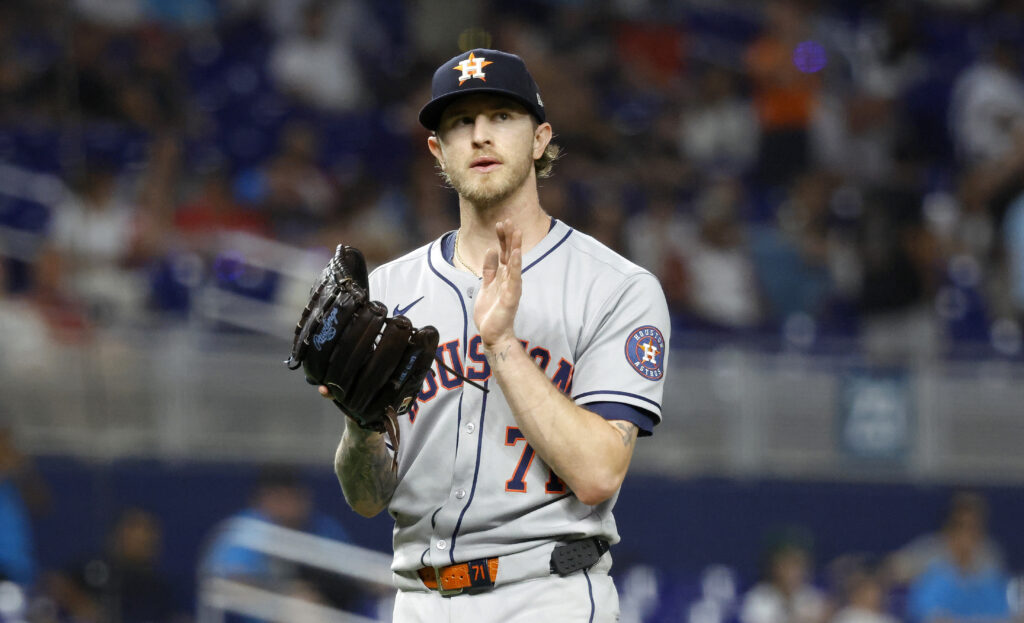
Josh Hader's trade value at the deadline hinges on three collision points: his health, his salary, and his leverage. The Astros' elite lefty reliever is eligible to return from the 60-day injured list on May 24th after biceps inflammation sidelined him in spring training, following a shoulder capsule strain that ended his 2025 season in August. In his three scoreless appearances so far, he's touched 94-95 mph on his sinker—negligibly below the 95.5 he averaged last year. On the surface, that's encouraging. But the market will move on far more than velocity.
Hader is owed just under $45 million through 2028, a $19 million annual hit that's manageable for contenders but becomes friction when paired with his full no-trade clause. He doesn't have to go anywhere unless he agrees. The Astros, now sellers after losing Jose Correa to a season-ending injury, have time—the August 3rd deadline gives Hader nearly three months to build a health case. Yet that window also means contenders can afford to wait and see whether his shoulder holds before committing premium assets. The problem for Houston is that Hader's market is functionally capped. A team like the Royals or Reds would salivate over his stuff, but their payroll flexibility won't absorb a $19M reliever even if Hader approved the deal. The Yankees, Cubs, Braves, Phillies, and Dodgers emerge as the only realistic suitors—teams with both playoff odds north of 40% and the salary space to absorb him. That's five teams instead of fifteen.
What does a compressed buyer pool mean for pricing? It means Hader's trade package—already discounted by injury uncertainty and salary—will likely yield less than an injury-free, pre-arb reliever of equivalent talent. Contenders know Houston has limited options and can lowball accordingly. Chapman's strong early-season performance in Boston may paradoxically inflate his value by comparison: Chapman is on a shorter contract, has no veto rights, and plays for a team with limited save opportunities. That makes him the cleaner trade target. If Chapman moves early, the market's perception of what elite relievers fetch this summer will reset downward—and Hader's ceiling will fall with it.
For bettors, the betting angle is oblique but real. Teams that acquire mid-season closers often see shifts in bullpen leverage distribution and late-inning workload. Hader's eventual landing spot—if he even clears waivers to a contender—will alter that team's bullpen composition overnight. A Yankees acquisition would compress relievers like Clay Holmes and Giancarlo Stanton's late-game touches; a Cubs deal would restructure how they deploy their bullpen depth. This isn't a single-game prop play. It's a season-arc constraint: monitor Hader's health updates and the Yankees-to-Dodgers playoff chase closely. Whichever team lands him likely moves one tier closer to postseason contention, which shifts moneyline and spread values for their remaining regular-season slate. The injury risk is real enough that early-line movers on Hader-adjacent trades—watch for sudden Astros bullpen restructuring—may carry +EV if the market hasn't yet priced in how narrow his viable destination list truly is.