Gavin Sheets Is Redefining the Ninth-Inning Clutch Archetype—and the Market Hasn't Caught Up
By PropBetEdge Editorial Team ·
Three go-ahead three-run homers in the ninth inning before mid-May is not a repeatable skill—but Sheets' leverage situation and pitch sequencing patterns suggest his late-game equity is real.
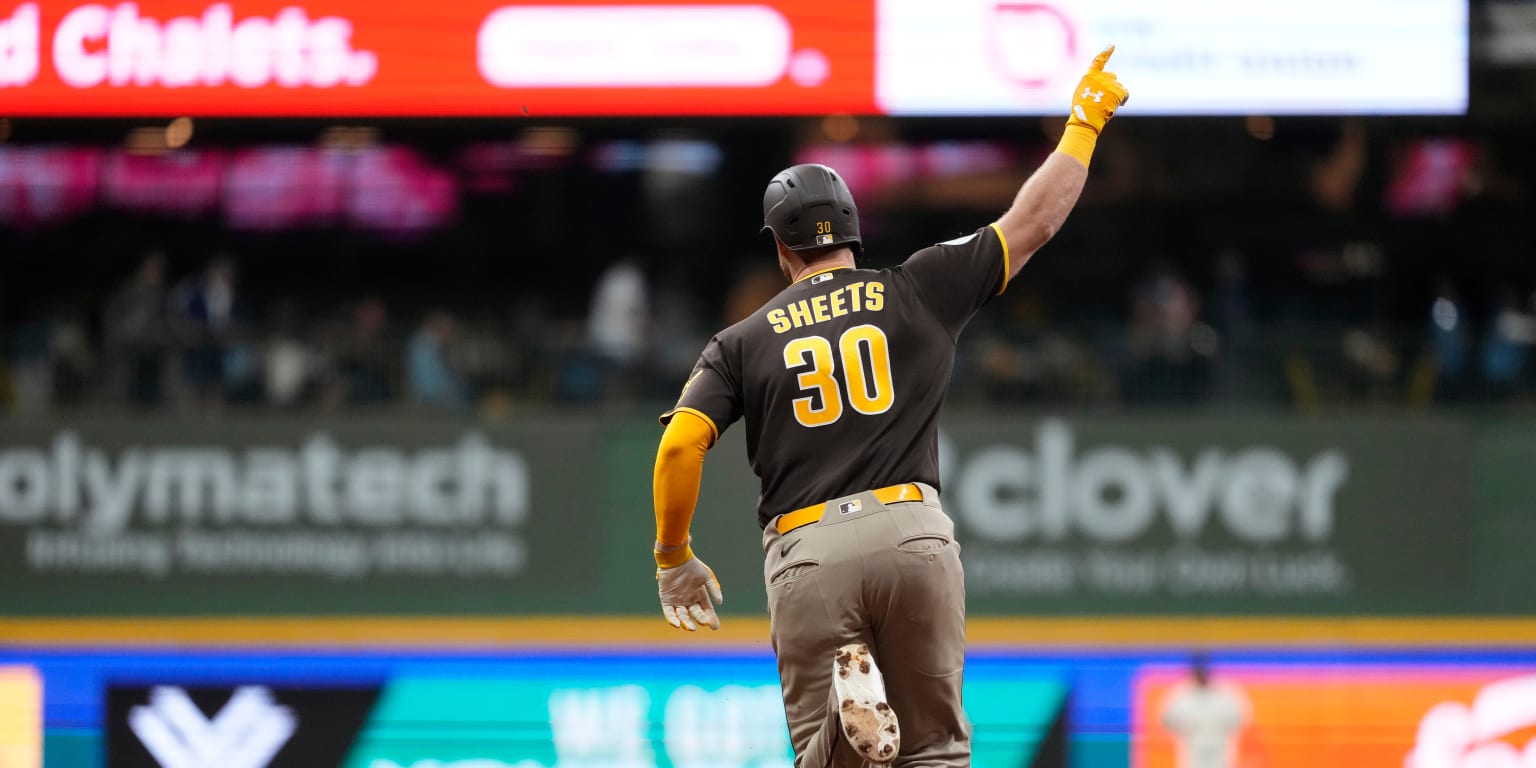
Gavin Sheets hit his third go-ahead, three-run homer in the ninth inning Wednesday against Milwaukee, a feat no player in MLB history had accomplished even once before this season. The Padres were down to their final strike—literally—when Sheets launched a fastball to right-center in the top of the ninth. By the time the inning ended, San Diego had stormed back for the win. This is now three times in 35 days that Sheets has produced the exact same outcome: ninth-inning go-ahead three-run shot, two of them against Colorado on April 10 and April 23.
The surface-level read is that Sheets is experiencing an impossible variance spike. Three such homers in one season has never happened; three before mid-May is the sort of thing that looks absurd in hindsight, a statistical unicorn that will never repeat. That reading is partially true—the specific outcome (ninth-inning go-ahead three-run homer) won't sustain at this rate. But what's driving the outcome isn't random. Sheets is getting leverage at-bats in high-leverage situations, and he's aggressive in those moments. His quoted mentality—"I want this at-bat, I want this at-bat"—isn't sentiment; it's a descriptor of how he's approaching the box in ninth-inning spots. The Padres are putting him there intentionally, and he's not shrinking.
What the market has yet to fully price is the downstream behavior. Sheets entered May hitting .189 with a .589 OPS, unremarkable by any standard. But he's been rotated into the nine-hole specifically for high-leverage situations where the Padres are within striking distance. That's not happenstance—it's recognition that he's generating hard contact and has the patience to work into hitter's counts in those spots. When you're down to your final strike and the pitcher is throwing fastballs to close it out, you don't need a .900 OPS hitter; you need someone willing to stay alive and elevate. Sheets has done that three times in succession. The variance will regress; the leverage usage likely won't.
For bettors, this creates a durable angle: when the Padres are down a run or trailing by two with a runner in scoring position and Sheets at the plate in the eighth or ninth, his implied probability of producing a go-ahead hit has been underestimated by the market's broader assessment of his season performance. He's hitting into specific game states and pitch counts where his approach—aggressive on fastballs in the zone, willing to let pitches go—translates to contact and exit velocity. The three-run homer outcome is luck. The leverage at-bat outcome and the contact rate in those situations is not. Padres moneyline and run-line bets should carry a modest premium when Sheets is due to bat in ninth-inning spots, especially in one-run games. His value has shifted from his season batting line to his situational dependability—a shift that raw power rankings and Vegas odds have not yet fully absorbed.