Mize's Surgical Return Rewrites Detroit's Rotation Outlook
By Ty Whitney ·
Casey Mize pitched six scoreless innings on his first appearance back from a right adductor strain, flashing the stuff that made him a projected ace before injury derailed his season.
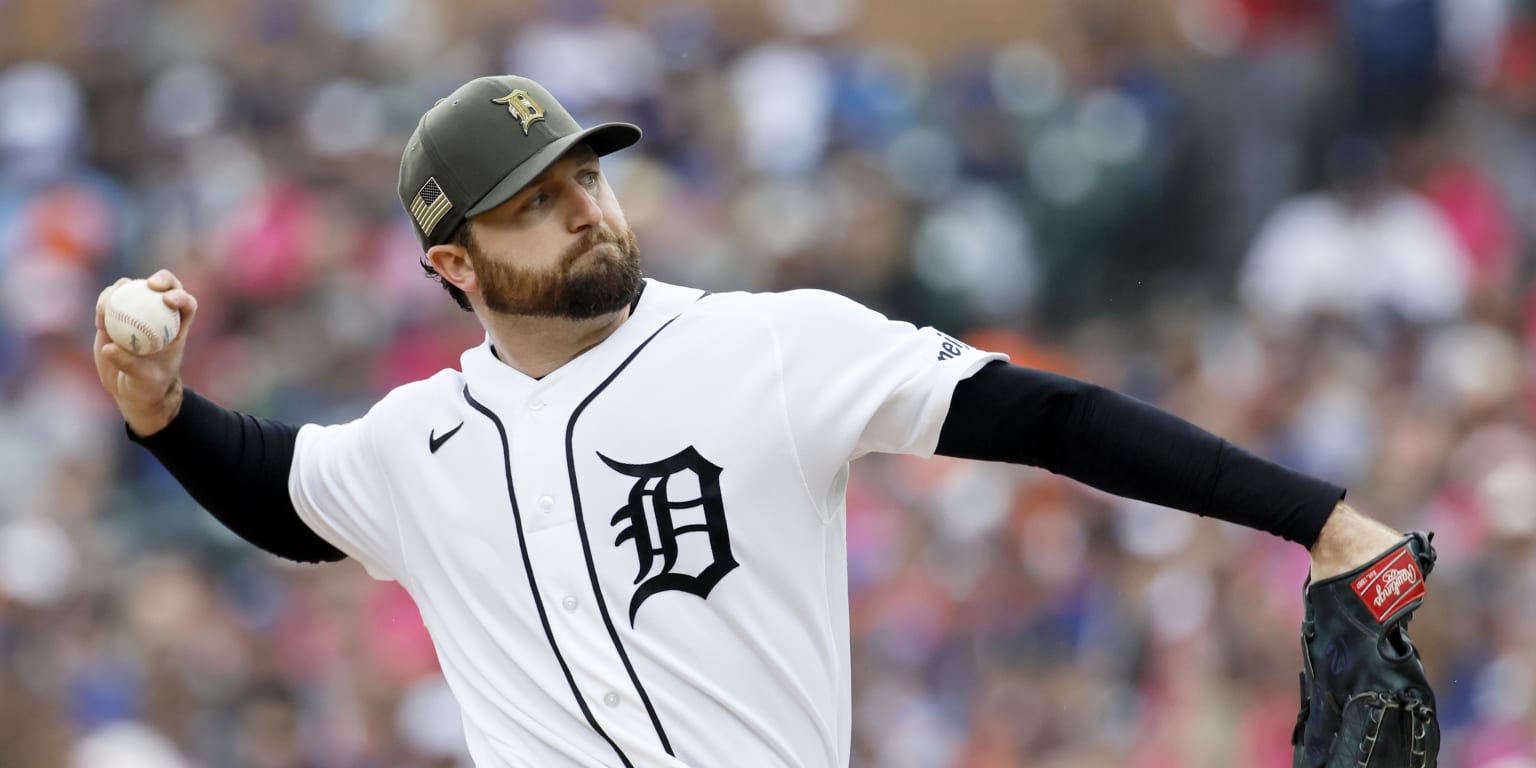
Casey Mize walked onto the mound at Comerica Park without a rehab assignment and delivered exactly what the injury-ravaged Tigers needed: six innings of clean baseball against Toronto. The right-hander allowed two hits, struck out four, and required just 71 pitches to keep the Blue Jays scoreless. It was a statement return that carries real implications for how Detroit manages its rotation depth over the next six weeks.
Mize's arsenal looked intact and deliberate. He cycled through fastballs, sliders, and splitters with enough precision to generate 10 whiffs, half of them on the slider. His velocity sat near season norms—a 93.9 mph average fastball, a slider that ticked above 88 mph—suggesting his adductor responded well to the conditioning regimen that convinced the Tigers to skip the traditional minor-league rehab ladder. The one earned run came after he exited; Toronto tagged Kyle Finnegan immediately, and the Tigers lost 2-1 in 10 innings. But the outing itself was clean enough that Mize's ERA dropped to 2.43 and his WHIP to 1.05 over seven starts. That's the performance trajectory of a pitcher who was quietly effective before injury, not one fighting for his job.
What matters for the Tigers' betting profile is this: Mize's return materially reduces the probability that Detroit leans on exhausted bullpen arms or starts a marginal replacement-level pitcher in critical September spots. His presence in a rotation that includes Tarik Skubal—and now a healthy Mize alongside him—gives Detroit's pitching a legitimate two-headed spine. For bettors tracking team total movement and bullpen fatigue indexes, Mize's availability is a load-management asset that wasn't priced into earlier-season models.
The slider's performance is worth flagging for strikeout prop angles. Mize generated half his whiff total on that offering, and it averaged 88.4 mph—a tick above his season baseline. Against a Toronto lineup that includes left-handed hitters who struggle with off-speed depth, the conditions are favorable for elevated K rates in his next start. If sportsbooks price his strikeout total at 5.5 or 6 on the strength of one good appearance, that's a line built on surface-level recovery narrative rather than mechanism: a pitcher with an elite secondary pitch facing a lineup weak to that exact offering.
The injury risk itself has been downshifted. Mize took a line drive off a ground ball to the adductor—a non-contact injury that tends to be low-recurrence once cleared. His velocity was only marginally low (95.2 mph top vs. his norm), which suggests he was pitching within his comfort zone and didn't compensate through the arm. For fade purposes on his K prop or team total, there's no longer a structural reason to fear sudden re-injury coloring the outcome.