Brewers Stretch Misiorowski's Leash: Innings Management Bets a Pitcher's Durability in October
By PropBetEdge Editorial Team ·
Milwaukee is skipping Jacob Misiorowski's next scheduled start to preserve innings and health—a calculated bet that deferred work now pays dividends in a compressed playoff window.
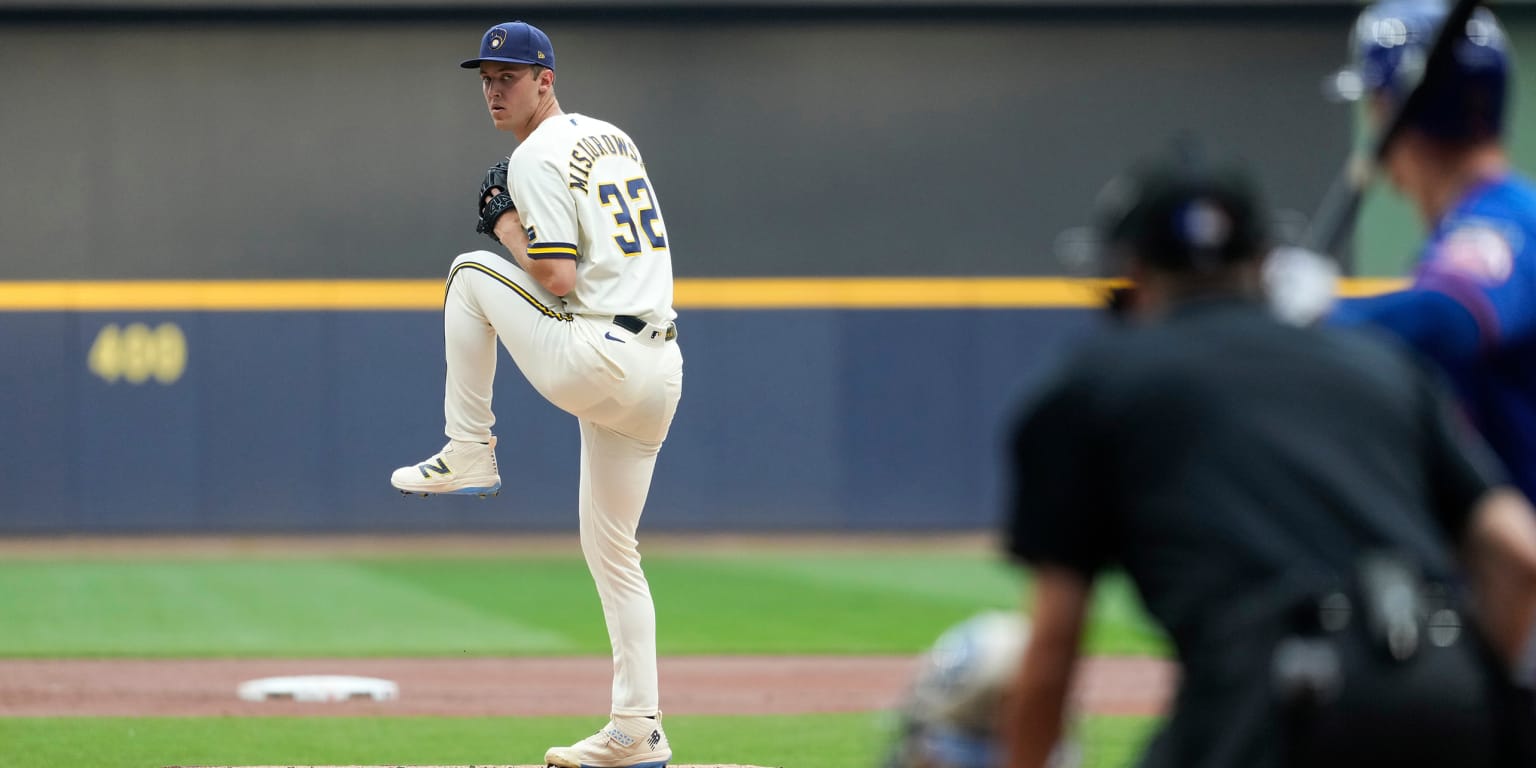
Jacob Misiorowski returned from the All-Star break Monday against the Mets on 12 days' rest, but the Brewers have already decided his next turn won't come when the rotation calendar suggests it should. With Sunday's start against Colorado originally slated for Misiorowski, Milwaukee announced Brandon Sproat will take that assignment instead. The move buys Misiorowski at least six additional days off—a conspicuous gap that reveals the organization's threshold-management calculus: 115 innings pitched, 26⅓ remaining before he hits the career-high 141⅓ he threw across all levels in 2025.
Monday's outing was deliberately compressed. Four innings, 65 pitches, a dominant performance in an 8-3 victory. Misiorowski was scratched from his final pre-break start due to arm fatigue and didn't appear in the All-Star Game—dual signals that the Brewers view workload not as a hard limit but as a throttle to adjust. The ace's current trajectory has him positioned to navigate the final 70-ish days without exceeding 2025's ceiling, which means Milwaukee is treating this stretch as a precision distribution problem rather than a ramp-up sprint.
For prop bettors, this creates a dual-layer edge: First, Misiorowski's strikeout rates will be artificially stable over the next month because the Brewers are preventing fatigue-induced velocity decline. A pitcher operating at 98–99 mph with three full rest days between starts stays closer to peak stuff than one grinding on five days' rest and accumulated arm stress. Second, Sproat's acceleration into Sunday creates short-term volatility in that matchup. Sproat pitches on four days' rest (following his Tuesday start against the Mets), and Thursday's off-day is what enables it—but four-day rest windows historically correlate with elevated walk rates and slightly depressed strikeout efficiency for non-elite pitchers. Over the next week, Misiorowski's K+ props should remain durable; Sproat's should be faded or approached with caution until market repricing happens.
The broader infrastructure play is hidden in Milwaukee's broader rotation construction. After the Rockies series, the Brewers head to San Francisco for three games starting July 28. The club hasn't announced those starters yet, which means there's optionality built into the schedule. If Misiorowski gets pushed to the first or second game in that series, he lands on 8–9 days' rest, further compressing his seasonal innings without sacrificing performance. This is organizational long-term betting: trading near-term start volume for October reliability. It's the kind of move that casual bettors and sharp books often price differently—one group sees a pitcher being rested; the other sees a pitcher being positioned.