Misiorowski's Velocity Floor Is Everyone Else's Ceiling—And It's Reshaping Strikeout Markets
By Ty Whitney ·
The Brewers' 24-year-old starter sat 99-101 mph against Chicago while fanning eight in six scoreless innings, proving his edge isn't peak heat but sustained dominance that defies historical benchmarks.
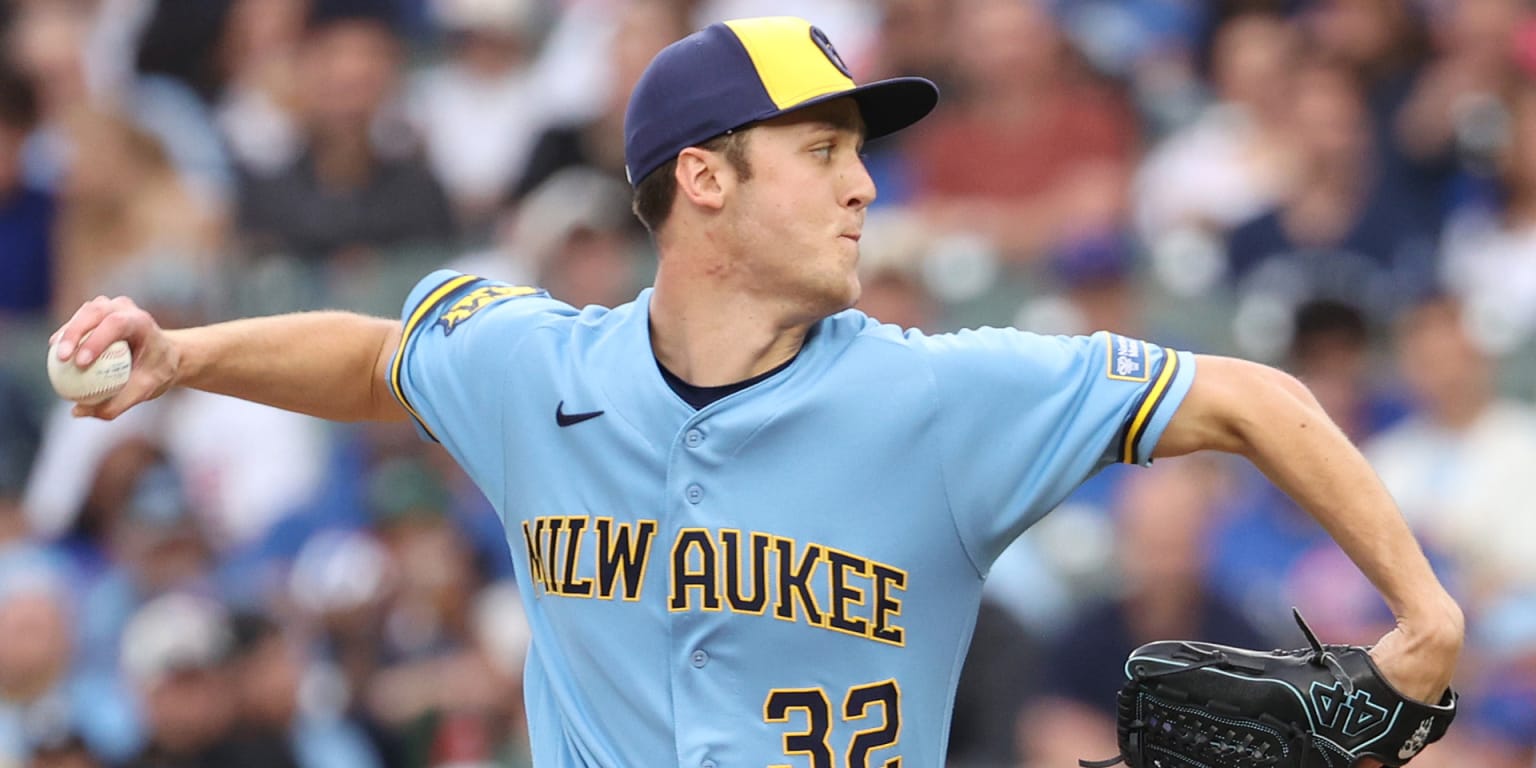
Jacob Misiorowski carved through the Cubs' lineup at Wrigley Field on a night when he deliberately left his triple-digit fastballs in the bag. The 24-year-old right-hander struck out eight batters across six scoreless innings, allowing only three singles while throwing just 74 pitches—efficient enough that Milwaukee's bullpen barely saw action in a 5-2 win that lifted the Brewers a half-game ahead of Chicago in the NL Central. The headline velocity was modest for Misiorowski's standards: 101.5 mph topped out the evening. For context, that's a number most Cy Young contenders would celebrate as a peak velocity night. He treated it like a floor.
The mechanics of Misiorowski's dominance reveal something the velocity-obsessed sports world often misses. His average four-seam fastball velocity actually increased to 99.9 mph against the Cubs from his 99.6 mph season average going in—a marginal gain that matters only because he maintained it across all six innings without the degradation that typically creeps into the fourth and fifth frames. Fourteen of his 18 strikeouts at velocities of 101 mph or higher came on pitches that looked ordinary in the zone. Cubs hitters weren't chasing fastballs; they were missing them at altitudes they couldn't locate. In his last 114 batters faced across six starts, Misiorowski has surrendered zero extra-base hits. That's not a hot streak. That's a pitching profile reshuffling itself in real time.
The strikeout prop market had already begun repricing Misiorowski before this outing. His 88 strikeouts lead all of Major League Baseball at a rate that projects to 200+ for a full season—a threshold no starting pitcher has cleared since Randy Johnson in 1995. But the Cubs start revealed a flaw in how books are handling his K-rate lines: they're extrapolating from his best velocity nights (103.6 mph against the Yankees set the modern record for a starter) rather than pricing his baseline performance when he's merely throwing 99-100 mph. The market assumed peak velocity was prerequisite. Wrigley proved otherwise. Misiorowski's eight strikeouts on an evening when his heater topped at 101.5 mph should reset expectation downward for what constitutes an underperformance. A starter who strikes out eight batters while sitting in the 99-101 range will carry strikeout overs even against lineups with better plate discipline than Chicago's. The Cubs struck out 11 times total; Misiorowski was responsible for eight of those whiffs. His 10.7 K/9 rate across the season is sustainable because it's not tethered to an unsustainable velocity spike—it's built on command, sequencing, and the gap between what hitters can identify and what their hands can catch up to.
For prop players, the angle is straightforward but timing-dependent. Misiorowski's strikeout lines will likely settle 8.5-9.5 across his next 3-4 starts as the market digests that triple-digit fastballs are variance, not requirement. Books will be slow to acknowledge that a 99-100 mph Misiorowski night still cashes K overs at rates 40% better than league average for starters. He'll face easier lineups before September pressure arrives; lean overs on his strikeout props in June and July when market pricing hasn't yet absorbed the Wrigley lesson. The edge is durable—it's built on a multi-start pattern of performance at sub-peak velocities, not a single outlier—but it will compress as the summer wears on and sharper books adjust their models to his new baseline.