Misiorowski's Workload Gamble: How the Brewers' Ace Velocity Load Reshapes His Playoff Value
By Erik Schwartz ·
Milwaukee is managing Jacob Misiorowski's return from arm fatigue with caution—but his historic 100-mph pitch volume may force harder decisions than the team wants to admit.
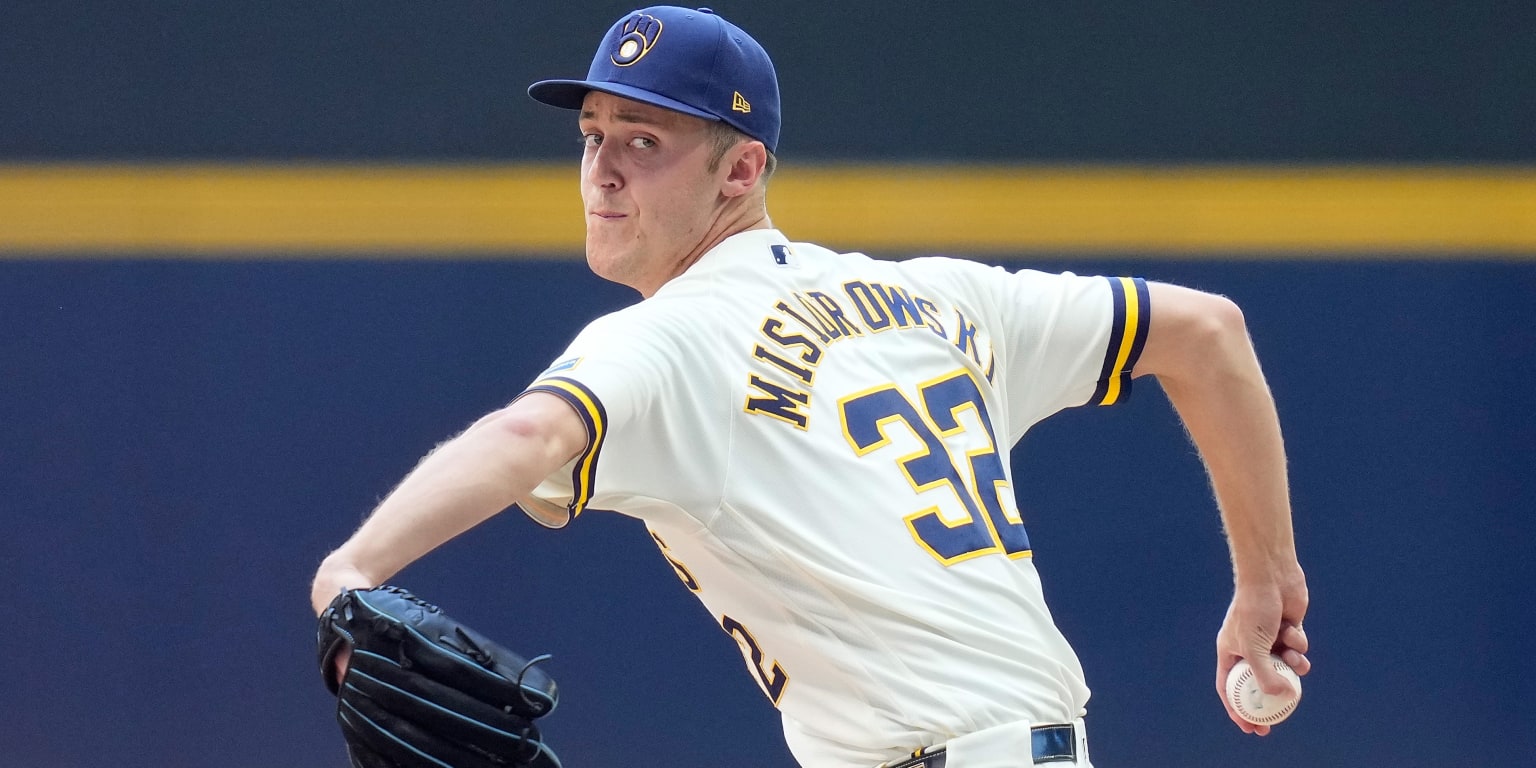
Jacob Misiorowski won't take the mound during Milwaukee's first series after the All-Star break, which begins on July 18 against Miami. The Brewers scratched their elite right-hander from a start scheduled for July 6 due to arm fatigue and, per the Milwaukee Journal Sentinel, plan to resume his throwing work on July 15—but he'll miss at least the Marlins series. The decision reflects Milwaukee's calculated approach to protecting a 24-year-old who leads MLB in ERA (1.62) and strikeouts (167) while operating at historically extreme velocity.
Misiorowski's injury risk isn't abstract. He's thrown 670 four-seam fastballs at 100 mph or faster in 2026, the highest total by any starting pitcher since pitch tracking began in 2008. That volume, compressed into 111 innings, represents elite-tier stress on the throwing arm. His 2025 calendar—across both Major Leagues and minor-league rehab—capped at 141.1 innings, and he's already 30.1 innings away from matching that total. The Brewers are explicitly considering whether to skip his final pre-break start AND delay his first post-break appearance, a dual containment strategy that signals genuine concern about cumulative fatigue rather than a minor precaution.
Context sharpens the risk calculus. Brandon Woodruff (anterior capsule injury) and Kyle Harrison (left forearm tightness) are both on the injured list, leaving Milwaukee's rotation thinner than it was in June. Misiorowski's workload matters more—and his unavailability creates a vacuum the Brewers can't fully patch. He's a two-time All-Star earning that selection on the back of historically elite stuff and control. Missing a series in mid-July to protect his arm through October is a reasonable trade if it keeps him healthy for the playoffs. But the timing—squeezed between the break and a compressed second half—suggests Milwaukee is managing not just the pitcher's arm, but the ceiling of what they can ask from him across the remaining regular season.
For bettors, this reshapes Misiorowski's prop value in a counterintuitive way. His strikeout rate (167 K in 111 IP) sits at an unsustainable 13.5 per nine innings. When he does return, the market will price his K props based on that recent output—but his next appearance will come after a longer rest window than normal, potentially boosting velocity. The gap between market expectation (built on his raw 2026 performance) and the actual workload profile (managed ramp-up with extended breaks) creates a brief window where strikeout props could offer edge if priced as though he's operating at full capacity immediately upon return. Once the Brewers confirm his next start date, that edge compresses. Early lines posted before they announce his return game carry the most value.
For team totals and spread pricing on Brewers games, the impact flows the opposite direction. Milwaukee's pitching depth and win probability both tighten without Misiorowski available. The Marlins series (July 18-20) will feature either a shadow starter or a promoted arm—not an ace. Brewers team totals should tighten during the Marlins set and any subsequent series where Misiorowski remains unavailable. The moment he's activated and scheduled, team-total overs shift back into play.