Misiorowski's 103.7 mph Fastball Rewrites Starter Velocity Ceiling—And Changes How to Price His Strikeout Props
By Ty Whitney ·
Milwaukee's 24-year-old right-hander just threw the hardest pitch ever recorded by a starter, and the velocity profile now carries direct betting implications for strikeout and innings totals.
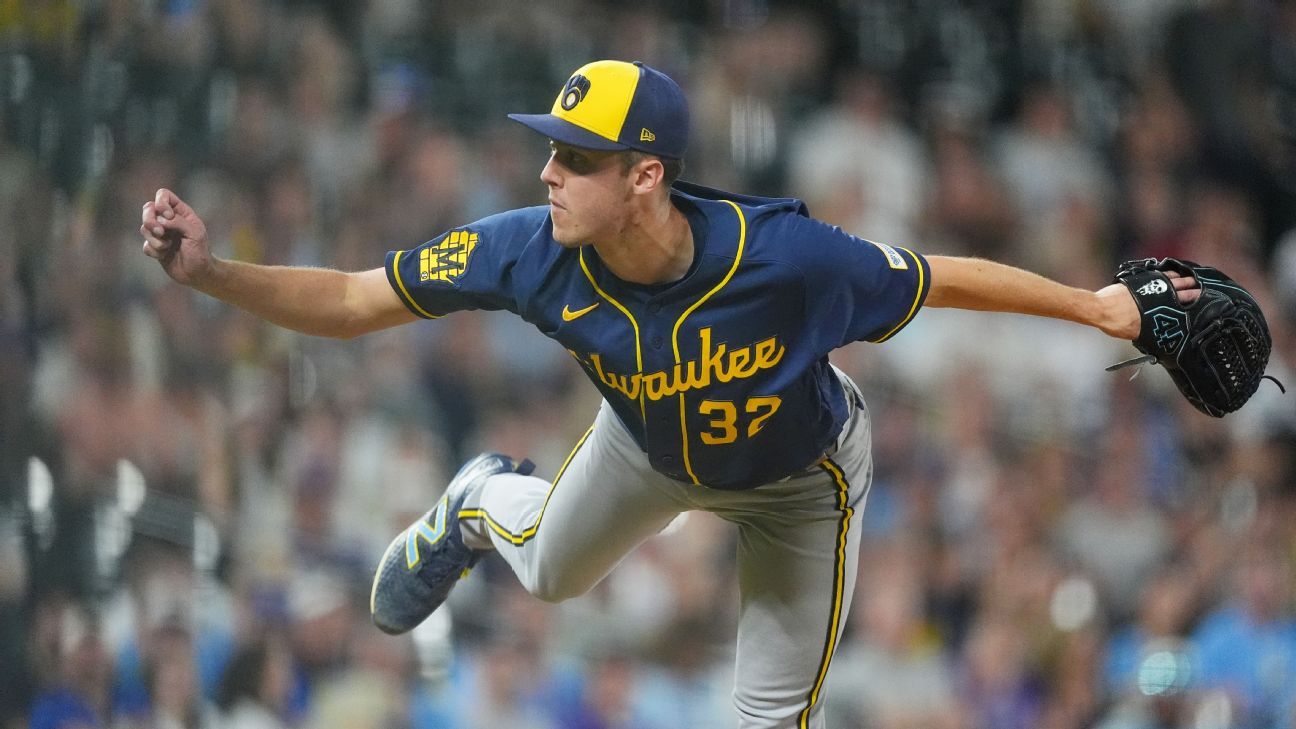
Jacob Misiorowski threw a 103.7 mph fastball against Colorado on Saturday night, the fastest pitch on record by a starting pitcher since Statcast began tracking in 2008. The Brewers' 24-year-old right-hander hit the mark low and outside to Kyle Karros in the third inning, then proceeded to strike out eight batters across seven innings while allowing just an unearned run. It was the second time in two weeks—he topped 103 mph on May 25 against St. Louis—that Misiorowski reset the starter velocity benchmark.
What matters for bettors is not the headline but the volume. Misiorowski threw 52 pitches at or above 100 mph Saturday, including a record 45 at 101 mph or faster. Two weeks earlier, he'd unleashed 57 triple-digit pitches, with 40 crossing the 101 threshold. These aren't outlier fastballs mixed into a normal arsenal; they're the dominant feature of his pitch distribution. He's now logged the 12 fastest pitches thrown by any starter this season. His strikeout rate—203 K in 28 appearances—ties him with Paul Skenes and Noah Syndergaard for the seventh-fastest climb to 200 strikeouts in MLB history, despite being in his first year of pitched consequence.
The market has begun to recognize Misiorowski's elite tier, but it hasn't fully priced the volume of plus-velocity carries into his strikeout props. Books have adjusted his K lines upward as the season has progressed, but they're doing so incrementally, chasing his production rather than front-running his toolset. A pitcher who throws 45+ fastballs at 101+ mph per start operates in a different probability space than the baseline starter model. Each additional 1 mph of velocity compounds whiff rate—research across the sport shows fastballs at 100+ mph generate roughly 15-20% higher whiff rates than those at 97-99 mph. Misiorowski is staying healthy, throwing heat with consistency across outings, and facing rosters built for previous-generation velocity.
The durable edge here is on Misiorowski strikeout props in games where his line hasn't yet reflected his emerging velocity tier. His 1.50 ERA and 9.1 K/9 through late May would normally command premium pricing; instead, some early-week books still shade his K totals as if he's a mid-rotation starter. Once his velocity profile becomes consensus knowledge—likely within the next 7-10 days as national outlets amplify the record and comparisons to Aroldis Chapman's all-time 105.8 mph standard—the edge shrinks. Lean overs on Misiorowski strikeout props at anything 7.5 or lower in the near term, but recognize that this angle has a shelf life measured in days, not weeks.
The innings total angle is secondary but worth monitoring. Misiorowski's fastball-centric approach and high-velocity volume create injury risk over a 162-game season, even if he's shown no signs of fatigue through 28 outings. Books may overshoot his durability assumptions when pricing future starts; fading unders on his innings props carries some edge if linemakers assume he'll sustain this pace without rest. That's a multi-month play, less liquid than the K props, but it's where his velocity ceiling has the most latent value for patient bettors.