Misiorowski's Heat-Map Strikeout Surge Masks a Troubling Homer Pattern
By Erik Schwartz ·
Milwaukee's Cy Young favorite hit 11 K's against St. Louis while touching triple-digits 57 times, but back-to-back multi-homer games signal a velocity-command disconnect worth fading in the near term.
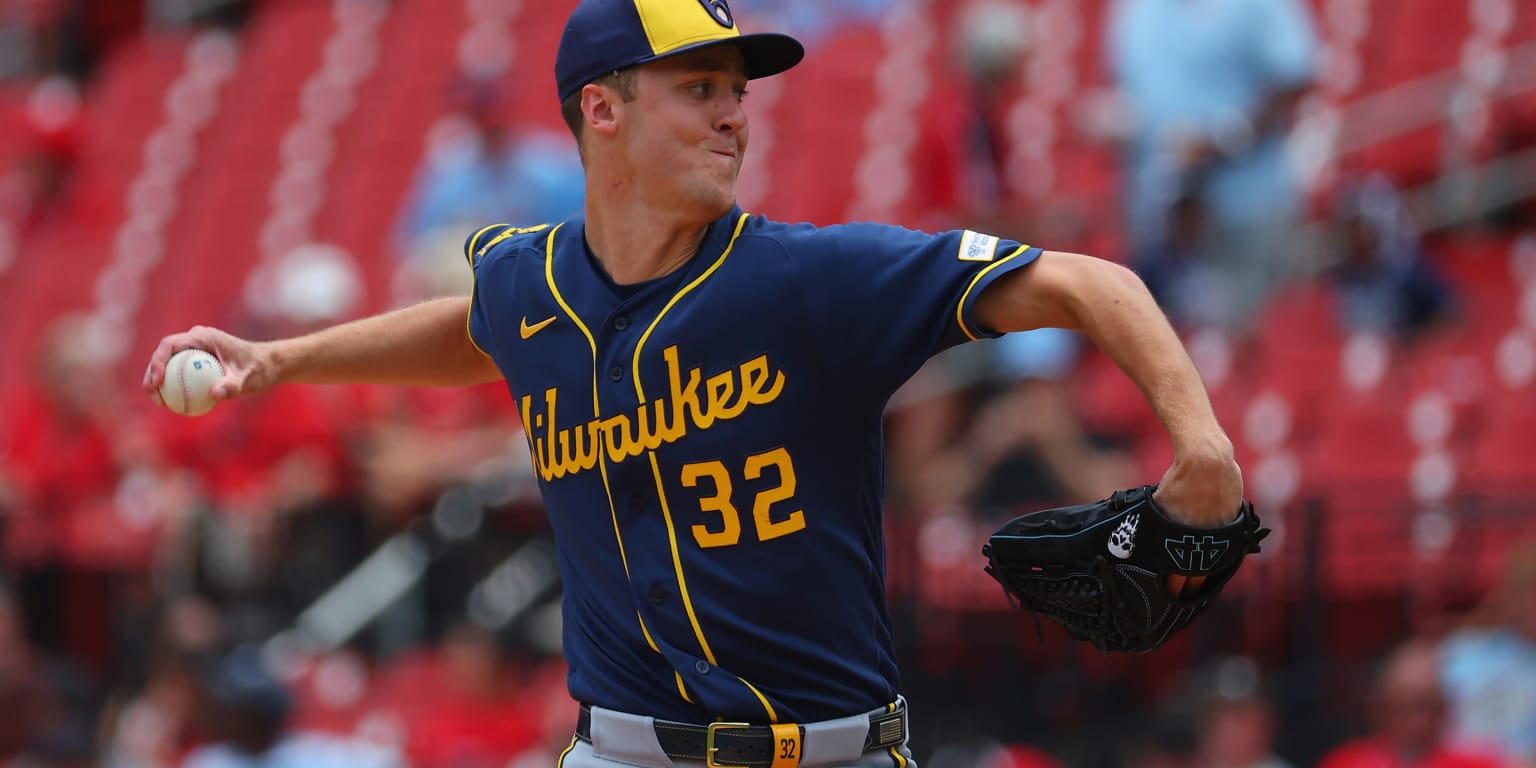
Jacob Misiorowski struck out 11 batters over seven innings in Milwaukee's 4-3 win at Busch Stadium on Tuesday, extending his major-league lead to 167 strikeouts while his ERA (1.62) and WHIP (0.76) remain elite. The All-Star right-hander's fastball was alive—57 four-seam deliveries hit triple-digits, second-most in pitch-tracking history behind only his own 58-pitch barrage against Philadelphia on June 12. Yet beneath the 1-2-3 frames and whiff totals lies a complication: Misiorowski allowed two homers before recording his eighth out, marking the first time in his career he's yielded multiple long balls in consecutive starts.
The mechanics are instructive. Jordan Walker's two-run cutter in the first and Iván Herrera's 102.4 mph fastball in the third represent a departure from Misiorowski's recent profile. Over his previous 11 starts—a span of roughly five weeks—he permitted zero home runs and just three extra-base hits combined. But in his last three outings against the Cubs, Reds, and Cardinals, he's surrendered four and five homers respectively. That's not noise; it's a velocity-command desynchronization. When a pitcher throws harder but also leaves more pitches in the middle-to-upper part of the zone, strikeout volume can mask exposure to power hitters.
Misiorowski's 11 strikeouts and 103-pitch, seven-inning effort suggest dominance on the surface. His 14 consecutive retirements to close the outing reinforce that narrative. But a closer look at sequencing reveals the Cardinals' two early swings caught fastballs elevated in the zone—the exact scenario that generates home runs despite high spin rates and velocity. The Brewers' offense bailing him out (Christian Yelich's go-ahead double in the seventh) means the line sheet shows a quality start and a win, but the underlying mechanics don't guarantee that outcome holds against every opponent.
For prop betting, this split carries immediate consequence. Misiorowski's strikeout line will be robust—likely 9.5 or higher—because his K/9 sits in the 99th percentile and Tuesday's 11-K output recency-weights upward. But backing the over requires confidence that his elevated fastball usage doesn't recur. Against lineups with above-average fastball discipline and pull-side power (like the Cubs and Reds), the multi-homer exposure isn't a one-off. His next three starts include matchups where that pattern could repeat; fading his K props for the short term isn't about questioning his strikeout talent, but about acknowledging that hard contact in early counts eats into the strikeout opportunities available in later innings when the deficit forces batters to chase.
The larger framing: Misiorowski remains the pitcher most likely to lead MLB in strikeouts by season's end. But the recent stretch—four and five homers in two consecutive starts, now two in one night—suggests bookmakers haven't yet repriced the volatility in his next short-term deployment. Early projections for his strikeout totals may overweight Tuesday's 11-K outing while underweighting the elevated hard-contact risk that preceded it.