Ohtani's Dual Role Freezes the NL MVP Race—And Masks a Real Challenger
By Ty Whitney ·
Pete Crow-Armstrong's June surge has repositioned him as the legitimate alternative to Shohei Ohtani in the National League MVP race, but the dual-threat pitcher's presence keeps everyone else in a holding pattern.
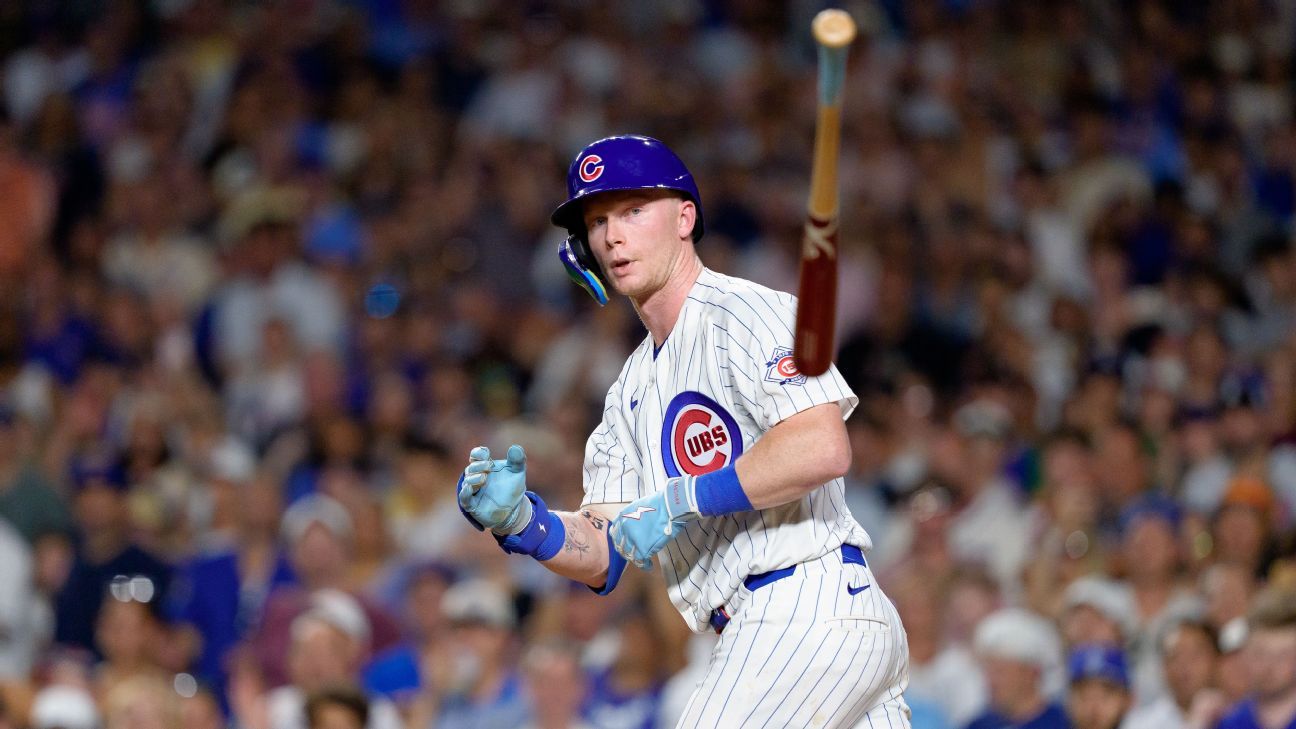
The 2026 NL MVP race has become a mathematical problem wearing a baseball uniform. Shohei Ohtani is competing simultaneously as a full-time hitter and a full-time starting pitcher—a combination no modern voter can easily discount. His combined value across both roles has created a ceiling for every other position player in the league. Yet strip away his pitching production and the narrative shifts dramatically: Ohtani drops to sixth in the position-player MVP conversation, and Pete Crow-Armstrong emerges as the front-runner.
Crow-Armstrong's June was the kind of month that typically launches a player into the national MVP conversation. His adjusted exit velocity (AXE) sits atop the majors for position players—an offensive signature that translates directly to run production and consistency. For a young corner outfielder to accumulate that kind of raw power data alongside legitimate patience at the plate is the framework that sustains MVP races through September. The problem isn't Crow-Armstrong's production. It's the calendar and the competition.
Ohtani's presence distorts voting psychology in a way that no single pitcher has done since the Cy Young Award was introduced. Voters instinctively resist awarding MVP to a pitcher—the so-called "pitcher's own award" argument remains embedded in the electorate—but Ohtani's hitting credentials eliminate that excuse. He forces the conversation into a comparison of total value, not positional scarcity. Crow-Armstrong would likely be the consensus MVP frontrunner in any season without Ohtani's dual eligibility. Instead, he's chasing a moving target.
For prop bettors, this manifests as an interesting variance play. Ohtani's MVP odds should remain bet-down throughout July and August simply because the probability math is clearer than the voting sentiment allows. Books routinely overweight narrative recency and voter sentiment relative to actual production differential. Ohtani's combined position-player and pitcher WAR is approaching a 2.5-to-3.0-win gap over Crow-Armstrong—a buffer large enough to survive a moderate downturn. If Ohtani's pitching workload increases or his hitting carries June momentum into the second half, his MVP odds represent value relative to the field. Crow-Armstrong's odds, conversely, are overpriced for an outcome that requires either Ohtani to suffer a significant injury or for voters to suddenly enforce the "pitcher's own award" rule they've intellectually abandoned.
The All-Star break arrives in days. Injury risk to Ohtani—the only variable that truly reopens this race—remains the true wildcard. Until then, the MVP market is pricing belief in Crow-Armstrong without accounting for the structural ceiling his competitor has already built.