Meyer's Seven-Inning Masterclass Signals Marlins Rotation Depth Beyond the Surface
By Erik Schwartz ·
Max Meyer's one-hit shutout and May dominance rewrites expectations for Miami's pitching ceiling, but the market hasn't fully priced in his strikeout consistency.
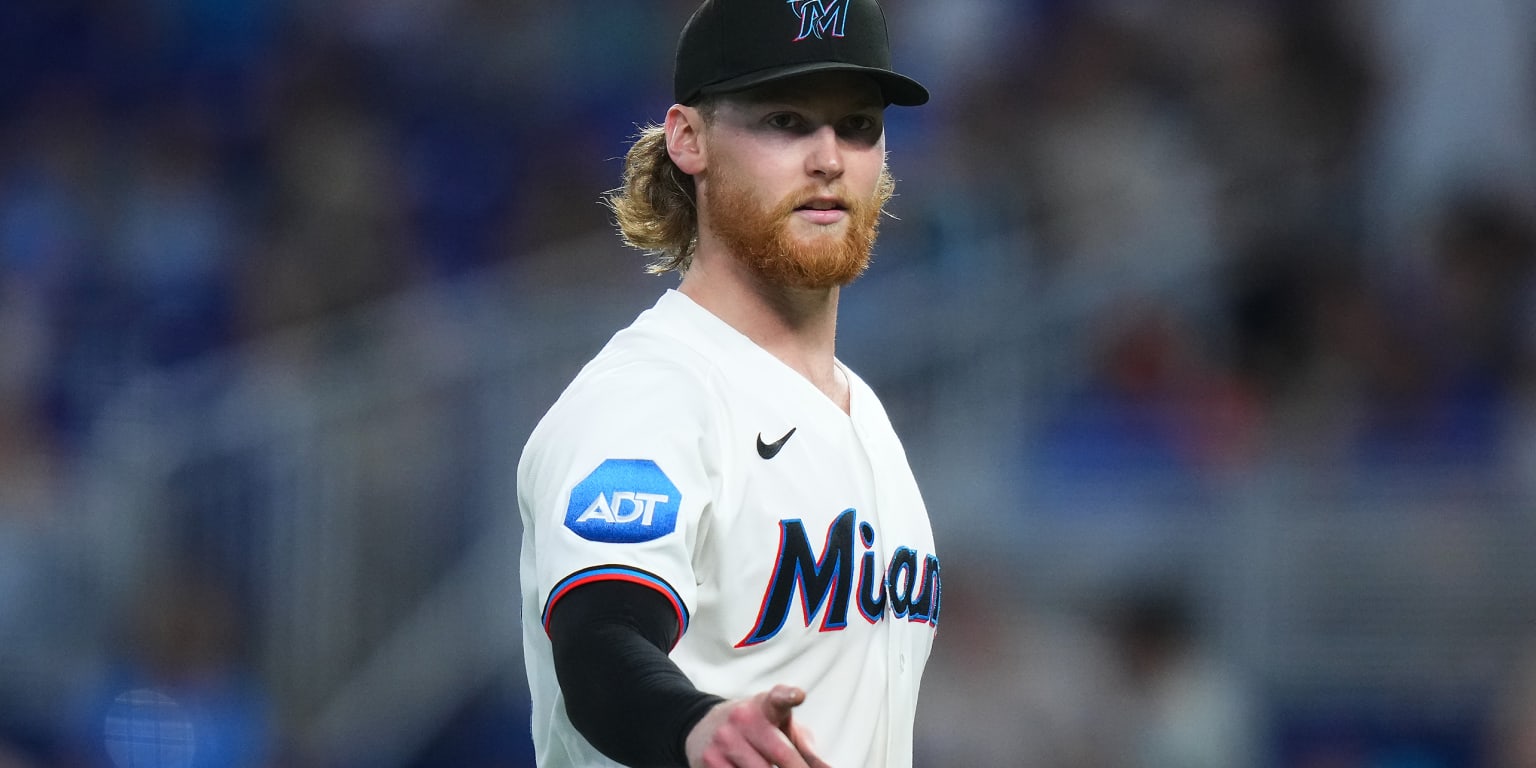
Max Meyer authored a near-perfect afternoon Saturday, allowing one hit across seven scoreless innings as Miami dismantled the Mets 4-1 at loanDepot park. The right-hander struck out eight, walked three, and induced a double play—mechanics that speak to command precision rather than pure stuff dominance. This performance dropped his season ERA to 2.52, ninth-lowest among National League starters with at least 10 starts, but the real story sits in his May trajectory: a 1.76 ERA across five starts spanning 30⅔ innings, with three scoreless outings including Saturday's seven-inning tie to his career high.
Meyer's control through the middle innings reveals a pitcher executing a repeatable game plan. He worked around baserunners in five of his seven frames—a sign he's not relying on perfect stuff, but rather sequencing and zone management. The Mets never advanced a runner into scoring position, which matters because it separates genuinely dominant performances from good outings that benefited from opponent mistakes. Meyer didn't dominate the zone through pure velocity; he neutralized it through precision. Liam Hicks' two-homer afternoon—his first multi-shot game—provided the run support, but Meyer's outing was architect-level pitching: eight strikeouts without walking the zone, working efficiently enough to clear seven frames on 97 pitches.
The betting angle hinges on strikeout volume consistency, not recency spike. Meyer's K-per-nine trajectory over 30+ May innings (1.76 ERA, six runs allowed) sits comfortably above his season average and reflects a sustained pattern, not a single outlier. Against an offense like New York's, which has struck out at a 25.2% rate this month, Meyer's ability to induce whiffs at his current pace carries predictive weight. His eight-strikeout outing against a team that struck out 11 times suggests the matchup advantage is real and measurable: the Mets rank in the bottom half of the league in contact rate, Meyer sits in the top quartile of strikeout consistency among mid-rotation starters, and that gap compounds across a seven-inning minimum.
Books will price Meyer's strikeout prop higher after Saturday—the line likely moved 0.5 to 1 full strikeout—but the underlying mechanism (elite contact-forcing rate against a high-strikeout opponent) persists beyond this single game. If Meyer faces another high-K% lineup in his next start, his strikeout line will carry edge even at inflated pricing, because the structural advantage (his command-over-velocity approach, opponent weakness in contact rate) doesn't evaporate with one adjustment. The risk: Meyer is a mid-rotation arm, not a top-tier ace, so variance in inning totals and opponent quality will compress edges over time. His May run is elite, but it's May—durability and regression to his season baseline (a still-respectable 2.52 ERA) remain open questions.