Wheeler's Dominance Masks a Mets Mismatch: Why the Over Survives Philadelphia's Bullpen Depth
By Ty Whitney ·
Zack Wheeler's 2.01 ERA looks dominant until you cross-reference it against the Mets lineup—and David Peterson's 5.91 ERA gives Philadelphia's offense the runway it needs to cash an over that's 5-1 in the Phillies' last six series finales.
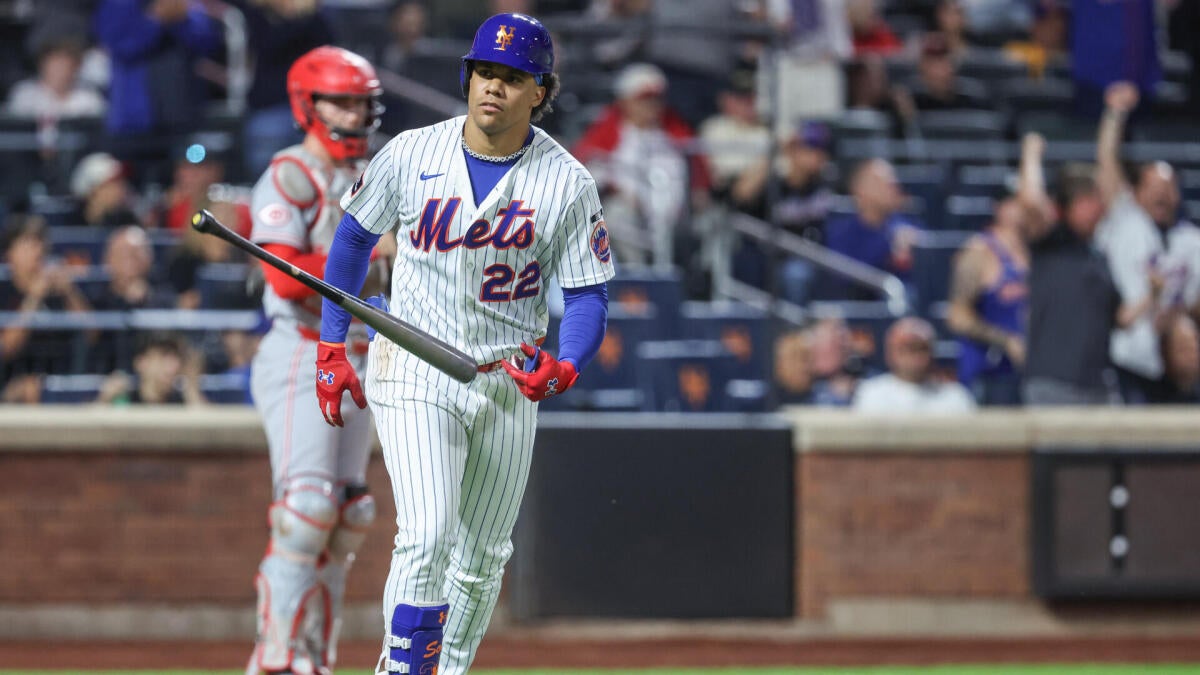
The Mets arrive in Philadelphia on Sunday night trailing a 15-3 blowout from Saturday, in which Bryce Harper carved through the Mets' bullpen with a cycle. Zack Wheeler takes the mound for the Phillies at 6-1 with a 2.01 ERA, facing David Peterson (3-5, 5.91), a pitcher ranking sixth-worst among qualifying starters this season. On paper, this is a Wheeler showcase. The mechanics tell a different story.
Mets batters hold an .803 OPS career versus Wheeler across the lineup, a statistical signal that his excellence this season hasn't translated to dominance over New York's actual roster. Peterson, meanwhile, has struggled uniformly—the 5.91 ERA is a floor, not a variance outlier. When a pitcher ranks in the bottom tier of ERA qualifiers, betting sheets typically price the opposing team's run potential down, but Peterson's track record this season doesn't warrant that discount. Philadelphia's offense has punished mid-rotation or struggling starters all season; adding Harper's momentum after a cycle is not incidental. The Phillies have played to the over in 4-of-4 of their last four games, and their last six series finales sit 5-1 to the over. Saturday's 15 combined runs was a statement, not an outlier.
The over/under is currently set at 8 runs. The model's simulation projects 8.9 combined runs—a subtle but consequential gap. With Peterson on the mound, the Mets' inability to generate offense becomes Philadelphia's margin of error. New York (34-42) trails the East and doesn't generate the kind of consistent run pressure that forces the Phillies' bullpen into high-leverage situations early. The series finale context matters: Philadelphia plays to finalize series with aggression, not consolidation. Wheeler will eat innings, but the Mets will struggle to manufacture runs against him; Peterson won't survive the fifth inning intact, and when the Phillies' offense gets clean looks at the Mets' relief corps—a group that surrendered 15 runs a day earlier—the total climbs into 9-10 range territory.
The 8-run line is priced for Wheeler's ERA dominance and Peterson's presence, not for the Phillies' actual run-generation pattern in series-finale contexts or the Mets' offensive helplessness. The over carries durable value because it's rooted in usage—Philadelphia's hitter aggression in close-out spots and the statistical reality that when Peterson pitches, runs accumulate. This isn't a single-game spike; it's a structural matchup embedded in both teams' recent patterns.
The moneyline sits at -188 Phillies, a steep but defensible number given Wheeler's form. The edge isn't on the spread or the line; it's on the total, where the market has underpriced Philadelphia's finish-strong tendency against a struggling starter.