Mets' Extra-Inning Surge Is Real, But Variance Is Doing the Heavy Lifting
By Erik Schwartz ·
New York has won six of seven with three extra-inning victories, but their 6-4 record in extras masks a fundamental question: are they a better team, or are they just capitalizing on opponent collapse in high-variance spots?
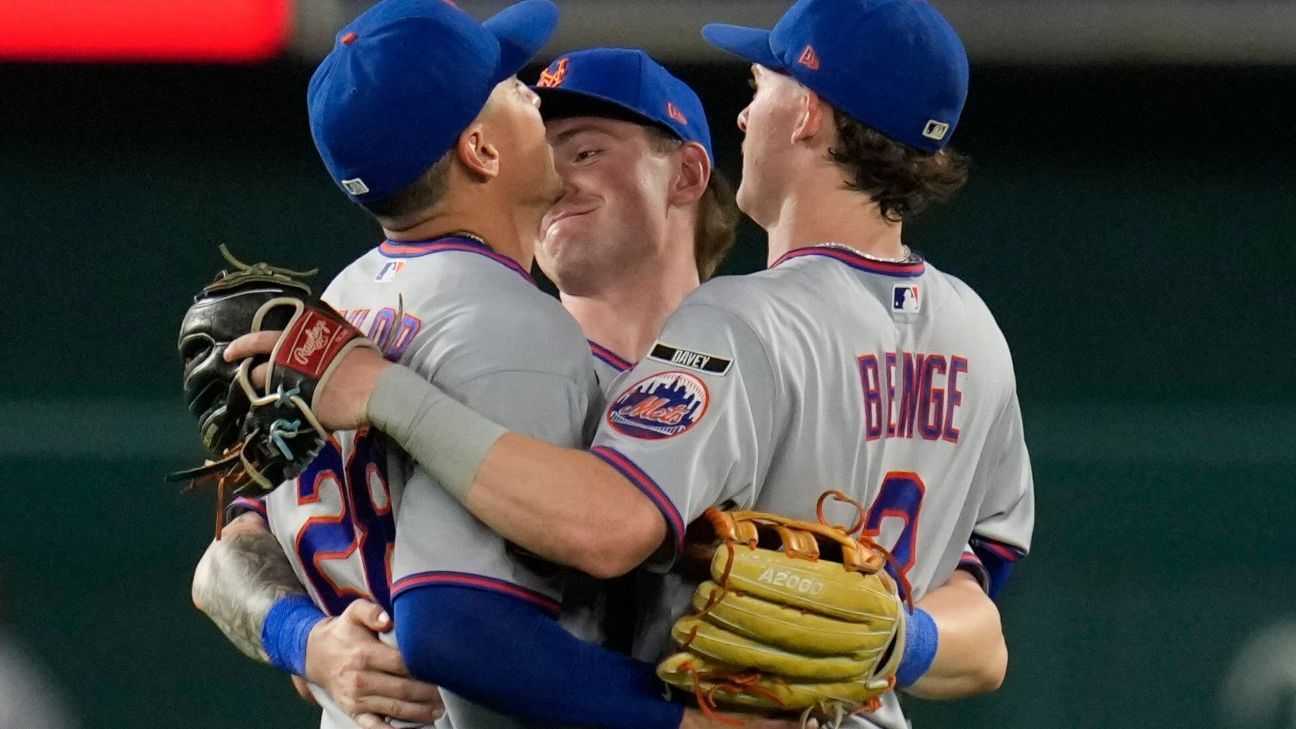
The Mets scored 10 runs in the 12th inning Monday night—the first National League team to do so since 1919—and beat Washington 16-7 in a game that hinged entirely on the Nationals' self-destruction. Four errors, 19 left on base, and eventually an infielder on the mound. This was not a display of offensive firepower; it was a gift, accepted with gratitude. Carson Benge went 2-for-1 in that inning alone (an RBI single and a two-run double), driving in four runs in the chaos. The larger pattern, though, tells a more complicated story about New York's recent 6-4 finish in extra innings—the best mark in baseball so far this season.
The Mets have won six of their last seven games, with three of those victories coming in extras. That's not sustainable offense; it's variance working in their favor. Extra-inning baseball tilts heavily toward team discipline, execution, and opponent error rather than raw offensive talent. Washington's meltdown in the 12th—moving an infielder to pitch, fumbling defensive assignments—is exactly the kind of outcome that inflates a team's record in high-leverage situations. The Mets kept punching and didn't go away, which is commendable. But the scoreline (16-7) obscures what happened: one team imploded in real time, and New York benefited. Manager Carlos Mendoza's message about "resilience and grit" is accurate as far as it goes; the team showed it didn't quit. But when you look at actual run production across the first nine innings, Monday's game was tighter than the final margin suggests.
The proposition angle here is counterintuitive. If you're holding Mets season-long overs or playoff futures, this streak is good news because it compounds their win total. But if you're looking at individual games or near-term prop markets, the risk is that the market has already priced in a "Mets momentum bump" that won't persist. A 6-4 extra-inning record is roughly 60% win rate in coin-flip situations; that regresses to 50% almost instantly. The Mets' actual run differential and offensive metrics haven't changed materially. Benge's heroics were real, but they're also the kind of single-game catalyst that books quickly account for in the next slate. If New York was -145 before Monday, they might be -155 Wednesday. The edge—if there is one—sits with fading Mets props in the near term (team totals, run-line spreads) as the line corrects upward without a corresponding improvement in their underlying offensive production.
The team does have genuine talent. Bo Bichette, Brett Baty, and Marcus Semien all contributed. But the win streak is partially an artifact of playing loose baseball after a crosstown Subway Series victory, and partially the Nationals playing at historically bad levels in the 12th. Neither ingredient is durable. The Mets' path out of last place in the NL East is real, but it requires consistency in regular innings, not redemption arcs in the 12th. The prop market will likely price Monday's game as a statement win. That's the overreaction to fade.