Soto's Second Calf Strain Reshapes Mets Endgame—and Betting Lines
By PropBetEdge Editorial Team ·
A Grade 2 left calf strain sidelines the Mets' lone All-Star until September, eliminating any offensive spark in a season already lost to the trade deadline.
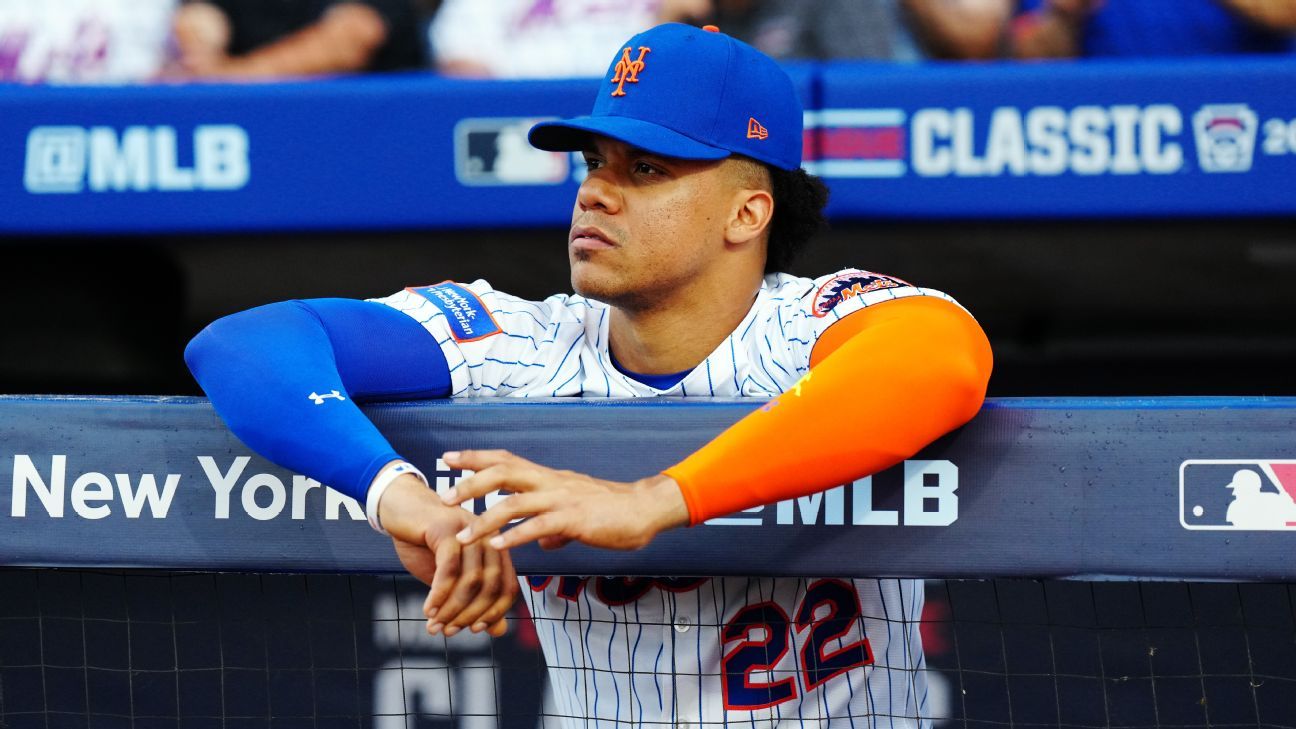
Juan Soto landed on the injured list for the second time in four months Monday, exiting Friday's game against Los Angeles after aggravating a left calf strain that now carries a Grade 2 diagnosis and a timeline stretching into September. The 27-year-old had been playing through nagging discomfort for a week before the injury worsened running the bases—a familiar pattern that has defined his otherwise injury-resistant career. Before 2026, Soto had missed only 52 games across his first seven full MLB seasons. This year, he's logged two separate IL stints for calf injuries in each leg, a recurrence that has visibly frustrated him and his organization.
The timing compounds the Mets' organizational crisis. New York sits in third-worst record territory despite fielding the second-highest payroll in baseball, positioning the front office to unload salary before next Monday's trade deadline. Peralta, Holmes, Minter, Raley, and Taylor are all potential departures. Soto's absence removes any remaining incentive to construct a competitive roster down the stretch—the team has no realistic path to October, and losing its marquee bat accelerates the rebuild mentality.
For bettors, Soto's sideline status doesn't move team-total lines in isolation because the Mets were already priced as dysfunction. What shifts, however, is the compositional risk of their lineup. The Mets will lean harder on aging complementary bats and younger depth—a rotation of hitters less capable of manufacturing runs in high-leverage spots. That pressure concentrates on the pitching staff to keep games tight, a burden compounded by the likelihood that ace-level arms (Kodwo, Peterson) will be rested or traded before the deadline. Unders on Mets team totals, already elevated given New York's sub-.500 run rate, gain structural support: fewer bats that can carry an inning, more games decided by attrition rather than offensive runs.
Soto's timeline to return—sometime in September—means his IL stint is no longer a short-term hedge; it's a season-altering subtraction. The market likely repriced Mets run-scoring floor downward within hours of the announcement, but the persistence of that edge depends on whether the front office makes additional subtractive moves before July 28. Watch the trade-deadline intel closely. If New York deals a second starting pitcher or moves a position player prospect, that accelerates the lean-under thesis for remaining Mets games through August. If the deadline passes with minimal departures, the edge softens—you're then betting against a team that's already priced to struggle, which is closer to consensus than opportunity.